Handan Botanical Garden
⭐ 3.80
South Side of West Renmin Road, Congtai District, Handan City, Hebei Province, China
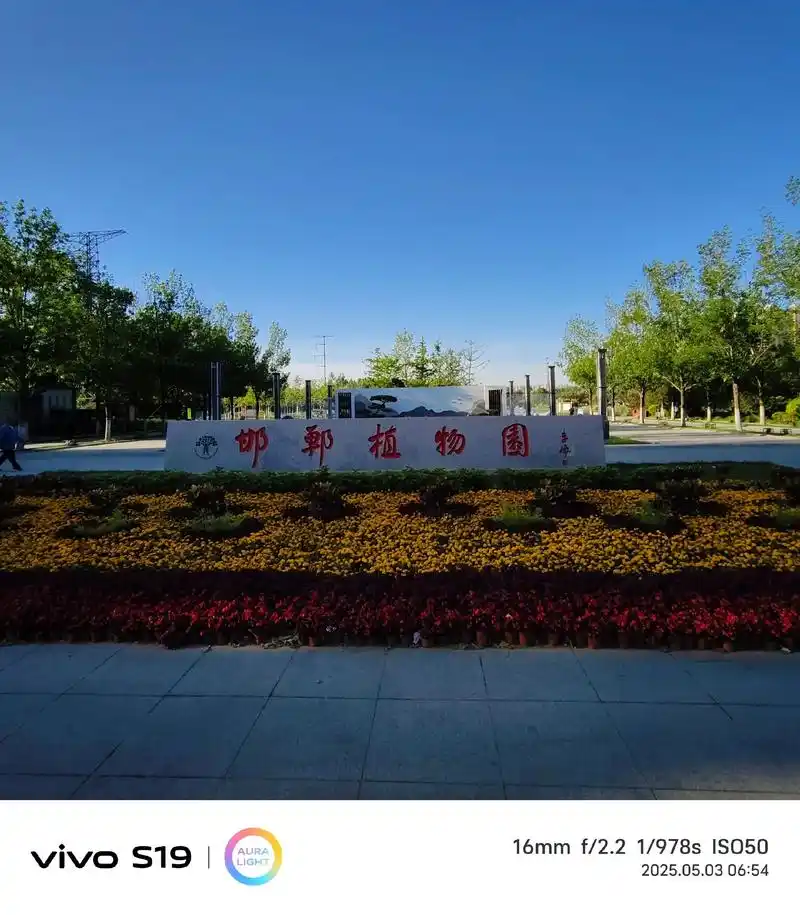 Handan is no ordinary backdrop for a botanical garden. As the ancient capital of the Zhao kingdom during China's Warring States period (475–221 BC), it was once a cultural magnet drawing scholars, diplomats, and poets from across the continent—older than Rome's earliest imperial forums. The city's most famous literary legacy, the idiom "the Handan dream," inspired playwrights from Shakespeare to the Tang dynasty, and even today the city's name still evokes a place of enchantment. The botanical garden, opened in 2020, offers a thoroughly modern counterpoint to that antiquity: a sprawling 1,315-acre refuge with free admission, set between the Beijing–Hong Kong–Macau Expressway and the high-speed rail station. Buses 4, 5, and 8 stop at the main south gate, and an eco-parking area welcomes drivers.
The garden's design borrows from the classical Chinese principle of a central lake anchoring themed pavilions, a layout echoed in imperial retreats like Beijing's Summer Palace, but executed here on a democratic, walkable scale. At its heart lies Ruyi Lake, covering 5.5 hectares, around which ten specialty gardens radiate: a rose garden, cherry grove, bamboo forest, plum orchard, medicinal herb plot, flower sea, rock-alpine garden, and more. Spring brings a riot of cherry and plum blossoms, summer delivers cascades of roses and wildflowers, and autumn cloaks the trees in fiery hues—a deliberate pursuit of the Chinese aesthetic "flowers three seasons, scenery four." Rare and endangered species number 78, and over 260 bird species have been recorded, making it a surprising biodiversity hotspot for a northern city park.
Where this park truly distinguishes itself is as a living classroom. The northern section houses a dedicated science-education zone with 450 QR-coded tree labels and over 50 interpretive panels—a concept comparable to the learning trails at London's Kew Gardens, but brought into a more interactive, smartphone-friendly register. Children delight in the cartoon-sculpture clusters and the "Academician Grove" displays, while parents appreciate how seamlessly botany weaves into the landscape itself. For Western families used to static museum signage, this scan-as-you-stroll approach feels refreshingly modern and intuitive.
For active visitors, the infrastructure is impressively thorough: a 3 km fitness path for joggers and a 2.1 km red-and-blue dual cycling loop wind through the grounds, both well-shaded in summer. Wide lawns invite picnics, and the absence of an entrance fee means families can return repeatedly without budget anxiety. Note that on-site dining options are limited, so bring water and snacks; midsummer visits are best attempted in the early morning or after 4 pm when the light softens and temperatures ease.
A few clarifications for travelers sorting fact from internet fiction: this is an ecological leisure park, not an amusement venue—there are no glass walkways, no paid greenhouse, and no evening light shows. What it offers instead is rarer in modern China: quiet, accessible, low-cost immersion in cultivated nature, threaded with subtle science learning. Visitors seeking thrills should look elsewhere, but those wanting a gentle half-day of flowers, birdsong, and easy exercise will find it one of the most rewarding urban green spaces in Hebei Province.
Handan is no ordinary backdrop for a botanical garden. As the ancient capital of the Zhao kingdom during China's Warring States period (475–221 BC), it was once a cultural magnet drawing scholars, diplomats, and poets from across the continent—older than Rome's earliest imperial forums. The city's most famous literary legacy, the idiom "the Handan dream," inspired playwrights from Shakespeare to the Tang dynasty, and even today the city's name still evokes a place of enchantment. The botanical garden, opened in 2020, offers a thoroughly modern counterpoint to that antiquity: a sprawling 1,315-acre refuge with free admission, set between the Beijing–Hong Kong–Macau Expressway and the high-speed rail station. Buses 4, 5, and 8 stop at the main south gate, and an eco-parking area welcomes drivers.
The garden's design borrows from the classical Chinese principle of a central lake anchoring themed pavilions, a layout echoed in imperial retreats like Beijing's Summer Palace, but executed here on a democratic, walkable scale. At its heart lies Ruyi Lake, covering 5.5 hectares, around which ten specialty gardens radiate: a rose garden, cherry grove, bamboo forest, plum orchard, medicinal herb plot, flower sea, rock-alpine garden, and more. Spring brings a riot of cherry and plum blossoms, summer delivers cascades of roses and wildflowers, and autumn cloaks the trees in fiery hues—a deliberate pursuit of the Chinese aesthetic "flowers three seasons, scenery four." Rare and endangered species number 78, and over 260 bird species have been recorded, making it a surprising biodiversity hotspot for a northern city park.
Where this park truly distinguishes itself is as a living classroom. The northern section houses a dedicated science-education zone with 450 QR-coded tree labels and over 50 interpretive panels—a concept comparable to the learning trails at London's Kew Gardens, but brought into a more interactive, smartphone-friendly register. Children delight in the cartoon-sculpture clusters and the "Academician Grove" displays, while parents appreciate how seamlessly botany weaves into the landscape itself. For Western families used to static museum signage, this scan-as-you-stroll approach feels refreshingly modern and intuitive.
For active visitors, the infrastructure is impressively thorough: a 3 km fitness path for joggers and a 2.1 km red-and-blue dual cycling loop wind through the grounds, both well-shaded in summer. Wide lawns invite picnics, and the absence of an entrance fee means families can return repeatedly without budget anxiety. Note that on-site dining options are limited, so bring water and snacks; midsummer visits are best attempted in the early morning or after 4 pm when the light softens and temperatures ease.
A few clarifications for travelers sorting fact from internet fiction: this is an ecological leisure park, not an amusement venue—there are no glass walkways, no paid greenhouse, and no evening light shows. What it offers instead is rarer in modern China: quiet, accessible, low-cost immersion in cultivated nature, threaded with subtle science learning. Visitors seeking thrills should look elsewhere, but those wanting a gentle half-day of flowers, birdsong, and easy exercise will find it one of the most rewarding urban green spaces in Hebei Province.