Handan Idiom and Allusion Garden
⭐ 3.60
Handan Idiom and Allusion Garden, Hanshan District, Handan City, Hebei Province, China
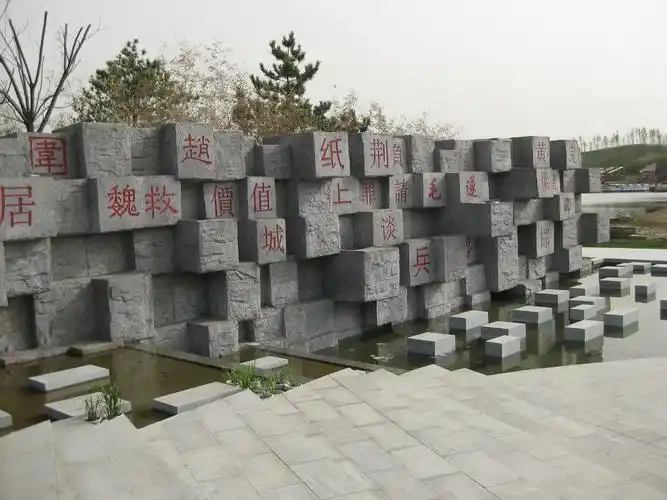 Handan served as the capital of the State of Zhao for 158 years during China's Warring States period (475–221 BCE), an era roughly contemporary with Classical Athens, the Roman Republic's early expansion, and the rise of Macedon. In diplomatic and military sophistication, Zhao stood shoulder-to-shoulder with its rival states Qin, Qi, and Chu. From this crucible emerged countless idioms still spoken daily in modern Chinese—"Returning the Jade Intact to Zhao" (a triumph of diplomacy comparable to Solon's cleverness), "Harmony Between Minister and General" (echoing Rome's legendary Cincinnatus tradition), and "Hushing the Drum to Rob the Camp." The garden gathers these stories into a single cultural landscape, much as the Forum in Rome once anchored civic memory.
The 68,000-square-meter complex is laid out in a "Nine Districts, One Axis" plan, with its architecture deliberately echoing Warring States aesthetics rather than imperial Chinese styles. A towering Zhao Ding tripod, modeled on the ancient ritual vessels of the early Zhou dynasty, anchors the entrance, while a monumental iron-cast relief depicts King Wuling's famous cavalry reforms—an 307 BCE military revolution on par with the Greek adoption of the Macedonian phalanx. Calligraphy by the late master Qi Gong graces the main halls, and ceramic-and-marble mural walls fuse calligraphy with narrative history. The overall mood is solemn yet contemplative, recalling the measured gravity of a European sculpture garden such as Versailles' Orangery.
More than a scenic spot, the garden functions as a provincial patriotism education base and a key part of a national AAAA-rated attraction. For Chinese visitors, recognizing a chengyu etched in stone transforms an abstract phrase learned in school into a vivid historical moment; for international travelers, it offers an accessible doorway into the moral logic and rhetorical elegance of classical Chinese thought. The park effectively does for the Chinese language what a memorial garden does for Western literature—making canonized phrases tangible, walkable, and emotionally resonant. School groups and culture enthusiasts are particularly well served, though anyone curious about Chinese civilization will find unexpected depth.
Visiting is refreshingly straightforward: the garden is free year-round and operates in sync with Zhao Yuan Park—5:00 to 21:00 in summer and 6:00 to 18:00 in winter, with no advance booking required. It sits in Handan's Fuxing District; bus 26 reaches the south gate, while routes 42 and 63 serve the north gate. Allow one to two hours, and consider pairing the visit with the nearby Chajianling archaeological site to see where Zhao warriors once trained. A QR-code digital guide is available throughout, with selected areas offering audio narration—smartphones and a modest data plan will significantly enrich the experience.
Plan a slow pace: this is a park meant to be read, not rushed. Stroll the inscribed corridors at leisure, pause at the lake where reflections double the visual poetry, and save the final hour for golden-hour light, when lanterns illuminate the bronze reliefs and the Warring States silhouettes gain cinematic drama—photographers will find the late-afternoon glow especially rewarding. Brief pre-reading on a handful of key idioms transforms the visit from pleasant sightseeing into genuine cultural discovery, allowing even first-time visitors to read Chinese history carved in stone.
[BRIEF]
Nestled within Zhao Yuan Park in Handan, the Idiom and Allusion Garden is a singular open-air cultural park showcasing more than a thousand classical Chinese idioms born from the ancient State of Zhao. Visitors wander among steles, reliefs, and bronze murals that dramatize legendary tales such as "Mao Sui Volunteering," "Bearing Brambles to Atonement," and "Wearing Hu-Style Cavalry." Blending Warring States architecture with modern digital guides, the garden offers a uniquely immersive way to encounter classical Chinese storytelling. Free to enter and easy to combine with the surrounding park, it rewards those who slow their pace.
[DETAILED]
Handan served as capital of the State of Zhao for 158 years during China's Warring States era (475–221 BCE)—a period roughly contemporary with Classical Athens, the early Roman Republic, and the rise of Macedon. Zhao rivaled Qin, Qi, and Chu in both diplomatic finesse and military might, and from its courts emerged idioms still spoken daily in modern Chinese: "Returning the Jade Intact to Zhao" (a diplomatic triumph on par with Solon's cunning), "Harmony Between Minister and General" (echoing Rome's Cincinnatus legend), and "Striking the Camp by Stealth." The garden consolidates these stories into a single walkable landscape, much as the Roman Forum once anchored civic memory.
The 68,000-square-meter complex follows a "Nine Districts, One Axis" plan, its architecture deliberately evoking Warring States aesthetics rather than later imperial styles. A towering Zhao Ding tripod, modeled on Zhou-dynasty ritual vessels, anchors the entrance, while a massive iron-cast relief depicts King Wuling's cavalry reforms—an 307 BCE military revolution comparable to Philip II's reorganization of the Macedonian phalanx. Calligraphy by the late master Qi Gong adorns the main halls, and ceramic-and-marble mural walls fuse script with narrative history. The overall mood, solemn yet contemplative, recalls the measured gravity of a European sculpture park such as Versailles' Orangery.
Beyond a scenic destination, the garden serves as a provincial patriotism education base and a cornerstone of a national AAAA-rated attraction. For Chinese visitors, recognizing a chengyu inscribed in stone transforms an abstract schoolroom phrase into living history; for international travelers, it provides an unusually accessible doorway into the moral logic of classical Chinese thought—comparable to walking through a literary memorial garden where canonized lines become tangible, walkable, and emotionally resonant. School groups and culture enthusiasts are particularly well served, but anyone curious about Chinese civilization will find unexpected depth.
Visiting is refreshingly simple: the garden is free year-round and operates with Zhao Yuan Park—5:00 to 21:00 in summer, 6:00 to 18:00 in winter—no booking required. Located in Handan's Fuxing District, bus 26 reaches the south gate while routes 42 and 63 serve the north. Allow one to two hours, and consider pairing the visit with the nearby Chajianling archaeological site, where Zhao warriors once trained. A QR-code digital guide works throughout the park, with select zones offering audio commentary—smartphones with modest data plans will significantly enrich the experience.
Plan to linger: this is a park meant to be read, not rushed. Stroll the inscribed corridors slowly, pause by the lake where reflections double the visual poetry, and reserve the final hour for golden-hour light, when lanterns illuminate the bronze reliefs and the silhouettes gain cinematic drama—photographers will find the late-afternoon glow especially rewarding. Brief pre-reading on a handful of key idioms transforms the visit from pleasant sightseeing into genuine cultural discovery, allowing even first-time visitors to read Chinese history carved in stone.
Handan served as the capital of the State of Zhao for 158 years during China's Warring States period (475–221 BCE), an era roughly contemporary with Classical Athens, the Roman Republic's early expansion, and the rise of Macedon. In diplomatic and military sophistication, Zhao stood shoulder-to-shoulder with its rival states Qin, Qi, and Chu. From this crucible emerged countless idioms still spoken daily in modern Chinese—"Returning the Jade Intact to Zhao" (a triumph of diplomacy comparable to Solon's cleverness), "Harmony Between Minister and General" (echoing Rome's legendary Cincinnatus tradition), and "Hushing the Drum to Rob the Camp." The garden gathers these stories into a single cultural landscape, much as the Forum in Rome once anchored civic memory.
The 68,000-square-meter complex is laid out in a "Nine Districts, One Axis" plan, with its architecture deliberately echoing Warring States aesthetics rather than imperial Chinese styles. A towering Zhao Ding tripod, modeled on the ancient ritual vessels of the early Zhou dynasty, anchors the entrance, while a monumental iron-cast relief depicts King Wuling's famous cavalry reforms—an 307 BCE military revolution on par with the Greek adoption of the Macedonian phalanx. Calligraphy by the late master Qi Gong graces the main halls, and ceramic-and-marble mural walls fuse calligraphy with narrative history. The overall mood is solemn yet contemplative, recalling the measured gravity of a European sculpture garden such as Versailles' Orangery.
More than a scenic spot, the garden functions as a provincial patriotism education base and a key part of a national AAAA-rated attraction. For Chinese visitors, recognizing a chengyu etched in stone transforms an abstract phrase learned in school into a vivid historical moment; for international travelers, it offers an accessible doorway into the moral logic and rhetorical elegance of classical Chinese thought. The park effectively does for the Chinese language what a memorial garden does for Western literature—making canonized phrases tangible, walkable, and emotionally resonant. School groups and culture enthusiasts are particularly well served, though anyone curious about Chinese civilization will find unexpected depth.
Visiting is refreshingly straightforward: the garden is free year-round and operates in sync with Zhao Yuan Park—5:00 to 21:00 in summer and 6:00 to 18:00 in winter, with no advance booking required. It sits in Handan's Fuxing District; bus 26 reaches the south gate, while routes 42 and 63 serve the north gate. Allow one to two hours, and consider pairing the visit with the nearby Chajianling archaeological site to see where Zhao warriors once trained. A QR-code digital guide is available throughout, with selected areas offering audio narration—smartphones and a modest data plan will significantly enrich the experience.
Plan a slow pace: this is a park meant to be read, not rushed. Stroll the inscribed corridors at leisure, pause at the lake where reflections double the visual poetry, and save the final hour for golden-hour light, when lanterns illuminate the bronze reliefs and the Warring States silhouettes gain cinematic drama—photographers will find the late-afternoon glow especially rewarding. Brief pre-reading on a handful of key idioms transforms the visit from pleasant sightseeing into genuine cultural discovery, allowing even first-time visitors to read Chinese history carved in stone.
[BRIEF]
Nestled within Zhao Yuan Park in Handan, the Idiom and Allusion Garden is a singular open-air cultural park showcasing more than a thousand classical Chinese idioms born from the ancient State of Zhao. Visitors wander among steles, reliefs, and bronze murals that dramatize legendary tales such as "Mao Sui Volunteering," "Bearing Brambles to Atonement," and "Wearing Hu-Style Cavalry." Blending Warring States architecture with modern digital guides, the garden offers a uniquely immersive way to encounter classical Chinese storytelling. Free to enter and easy to combine with the surrounding park, it rewards those who slow their pace.
[DETAILED]
Handan served as capital of the State of Zhao for 158 years during China's Warring States era (475–221 BCE)—a period roughly contemporary with Classical Athens, the early Roman Republic, and the rise of Macedon. Zhao rivaled Qin, Qi, and Chu in both diplomatic finesse and military might, and from its courts emerged idioms still spoken daily in modern Chinese: "Returning the Jade Intact to Zhao" (a diplomatic triumph on par with Solon's cunning), "Harmony Between Minister and General" (echoing Rome's Cincinnatus legend), and "Striking the Camp by Stealth." The garden consolidates these stories into a single walkable landscape, much as the Roman Forum once anchored civic memory.
The 68,000-square-meter complex follows a "Nine Districts, One Axis" plan, its architecture deliberately evoking Warring States aesthetics rather than later imperial styles. A towering Zhao Ding tripod, modeled on Zhou-dynasty ritual vessels, anchors the entrance, while a massive iron-cast relief depicts King Wuling's cavalry reforms—an 307 BCE military revolution comparable to Philip II's reorganization of the Macedonian phalanx. Calligraphy by the late master Qi Gong adorns the main halls, and ceramic-and-marble mural walls fuse script with narrative history. The overall mood, solemn yet contemplative, recalls the measured gravity of a European sculpture park such as Versailles' Orangery.
Beyond a scenic destination, the garden serves as a provincial patriotism education base and a cornerstone of a national AAAA-rated attraction. For Chinese visitors, recognizing a chengyu inscribed in stone transforms an abstract schoolroom phrase into living history; for international travelers, it provides an unusually accessible doorway into the moral logic of classical Chinese thought—comparable to walking through a literary memorial garden where canonized lines become tangible, walkable, and emotionally resonant. School groups and culture enthusiasts are particularly well served, but anyone curious about Chinese civilization will find unexpected depth.
Visiting is refreshingly simple: the garden is free year-round and operates with Zhao Yuan Park—5:00 to 21:00 in summer, 6:00 to 18:00 in winter—no booking required. Located in Handan's Fuxing District, bus 26 reaches the south gate while routes 42 and 63 serve the north. Allow one to two hours, and consider pairing the visit with the nearby Chajianling archaeological site, where Zhao warriors once trained. A QR-code digital guide works throughout the park, with select zones offering audio commentary—smartphones with modest data plans will significantly enrich the experience.
Plan to linger: this is a park meant to be read, not rushed. Stroll the inscribed corridors slowly, pause by the lake where reflections double the visual poetry, and reserve the final hour for golden-hour light, when lanterns illuminate the bronze reliefs and the silhouettes gain cinematic drama—photographers will find the late-afternoon glow especially rewarding. Brief pre-reading on a handful of key idioms transforms the visit from pleasant sightseeing into genuine cultural discovery, allowing even first-time visitors to read Chinese history carved in stone.