Shangcheng Ancient City Ruins
⭐ 3.50
Shangcheng Ancient City Ruins, Shangcheng County, Xinyang City, Henan Province, China
 **Historical Context**
Dating back several thousand years to the Shang and Zhou dynasties, Shangcheng represents one of southern Henan's most significant pre-Qin urban settlements, marking the pivotal transition from scattered village life to organized city-state society. Comparable in historical weight to early Etruscan hill towns in pre-Roman Italy, the site bridges Central Plains political traditions with the distinctive cultural sphere of the Chu realm to the south. Its excavation has filled critical gaps in understanding how urban governance, trade, and ritual life took root in the transitional zone between China's Yellow River heartland and its southern frontier, offering a striking counterpoint to the better-known Shang dynasty capitals at Anyang.
**Architectural Remains**
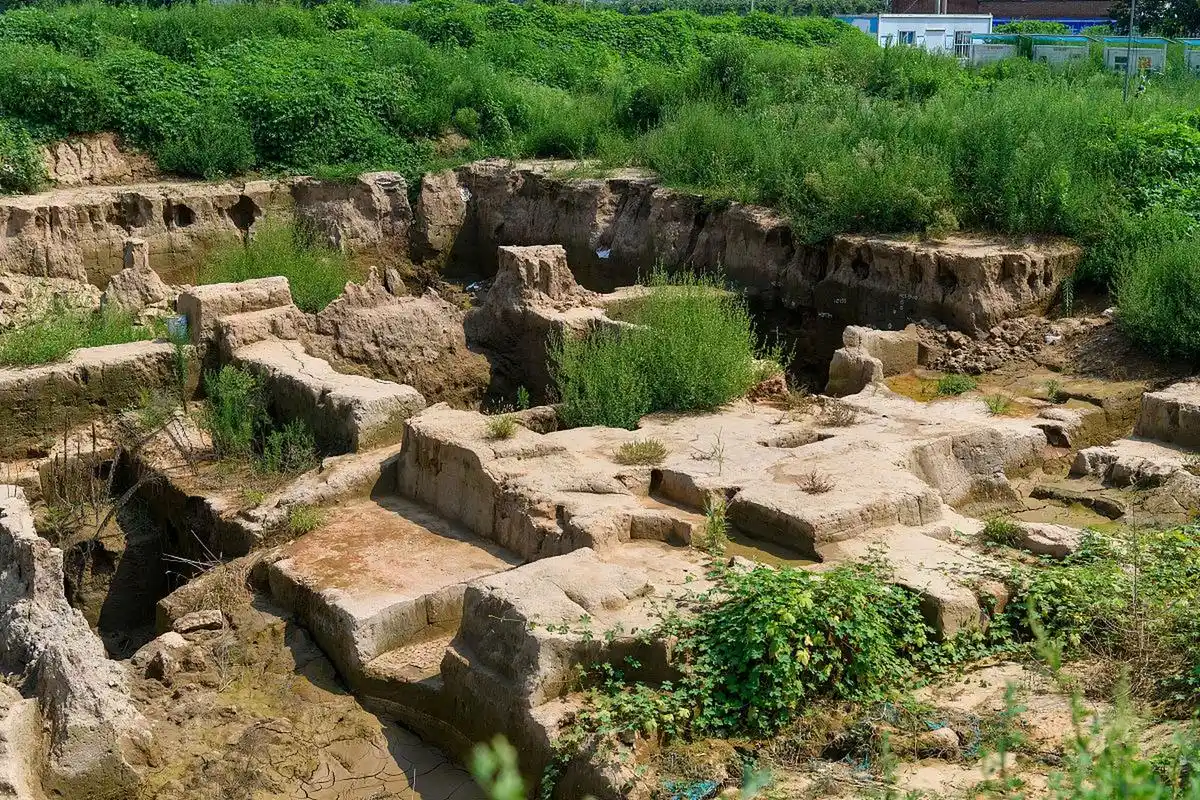
The site's centerpiece is a substantial section of rammed-earth city wall, built layer by layer using the same labor-intensive technique that produced China's most enduring ancient fortifications. The thick, compacted earthen ramparts demonstrate sophisticated engineering knowledge, not unlike the surviving defensive walls of pre-Roman Mediterranean settlements. Within the excavated trenches, visitors can observe clearly defined stratigraphy—cultural layers stacked like pages of a history book—where pottery shards and bronze fragments remain in situ, offering tangible connections to communities that thrived here millennia ago.
**Cultural Significance**
Shangcheng embodies the dynamic cultural fusion between northern Central Plains ritual order and the more lyrical, nature-infused aesthetic of Chu civilization, a synthesis that would shape southern Chinese identity for centuries. The site's continuous occupation across multiple dynasties illustrates the "diversity within unity" principle central to Chinese civilization, much as Roman provincial towns in Gaul evolved through successive cultural overlays. Surrounding traditional villages and contemporary market life create a living dialogue with the ancient foundations, transforming the location into an open-air laboratory for understanding regional Chinese cultural formation.
**Practical Visit Information**
The site and its accompanying cultural park are freely accessible year-round. From Xinyang city center, the drive takes approximately one hour via the Shanghai-Shaanxi Expressway, branching onto the Anluo Expressway—road signs are adequate though a Chinese navigation app is advisable. A visitor service center provides basic amenities, and nearby accommodations and restaurants in Shangcheng County town are comfortable and affordable. Allow two to three hours for a satisfying visit, and consider combining your trip with the local heritage exhibition hall for fuller context.
**Why Visit**
For travelers seeking experiences beyond the well-trodden Great Wall and Terracotta Warriors circuits, Shangcheng offers an authentic, uncrowded encounter with deep antiquity in a scenic landscape of low mountains and green fields. Few sites in China allow such direct, tactile engagement with the country's formative urban era without barriers or glass cases. Combined with regional culinary specialties like Tongsun fresh fish and Suxianshi stinky tofu, and opportunities to wander neighboring mountain villages where Han-era rural traditions persist, a visit rewards cultural enthusiasts with one of central China's most genuinely off-the-beaten-path heritage experiences.
**Historical Context**
Dating back several thousand years to the Shang and Zhou dynasties, Shangcheng represents one of southern Henan's most significant pre-Qin urban settlements, marking the pivotal transition from scattered village life to organized city-state society. Comparable in historical weight to early Etruscan hill towns in pre-Roman Italy, the site bridges Central Plains political traditions with the distinctive cultural sphere of the Chu realm to the south. Its excavation has filled critical gaps in understanding how urban governance, trade, and ritual life took root in the transitional zone between China's Yellow River heartland and its southern frontier, offering a striking counterpoint to the better-known Shang dynasty capitals at Anyang.
**Architectural Remains**
The site's centerpiece is a substantial section of rammed-earth city wall, built layer by layer using the same labor-intensive technique that produced China's most enduring ancient fortifications. The thick, compacted earthen ramparts demonstrate sophisticated engineering knowledge, not unlike the surviving defensive walls of pre-Roman Mediterranean settlements. Within the excavated trenches, visitors can observe clearly defined stratigraphy—cultural layers stacked like pages of a history book—where pottery shards and bronze fragments remain in situ, offering tangible connections to communities that thrived here millennia ago.
**Cultural Significance**
Shangcheng embodies the dynamic cultural fusion between northern Central Plains ritual order and the more lyrical, nature-infused aesthetic of Chu civilization, a synthesis that would shape southern Chinese identity for centuries. The site's continuous occupation across multiple dynasties illustrates the "diversity within unity" principle central to Chinese civilization, much as Roman provincial towns in Gaul evolved through successive cultural overlays. Surrounding traditional villages and contemporary market life create a living dialogue with the ancient foundations, transforming the location into an open-air laboratory for understanding regional Chinese cultural formation.
**Practical Visit Information**
The site and its accompanying cultural park are freely accessible year-round. From Xinyang city center, the drive takes approximately one hour via the Shanghai-Shaanxi Expressway, branching onto the Anluo Expressway—road signs are adequate though a Chinese navigation app is advisable. A visitor service center provides basic amenities, and nearby accommodations and restaurants in Shangcheng County town are comfortable and affordable. Allow two to three hours for a satisfying visit, and consider combining your trip with the local heritage exhibition hall for fuller context.
**Why Visit**
For travelers seeking experiences beyond the well-trodden Great Wall and Terracotta Warriors circuits, Shangcheng offers an authentic, uncrowded encounter with deep antiquity in a scenic landscape of low mountains and green fields. Few sites in China allow such direct, tactile engagement with the country's formative urban era without barriers or glass cases. Combined with regional culinary specialties like Tongsun fresh fish and Suxianshi stinky tofu, and opportunities to wander neighboring mountain villages where Han-era rural traditions persist, a visit rewards cultural enthusiasts with one of central China's most genuinely off-the-beaten-path heritage experiences.