Cishan Cultural Site
⭐ 3.80
Cishan Cultural Site, Ci County, Handan City, Hebei Province, China
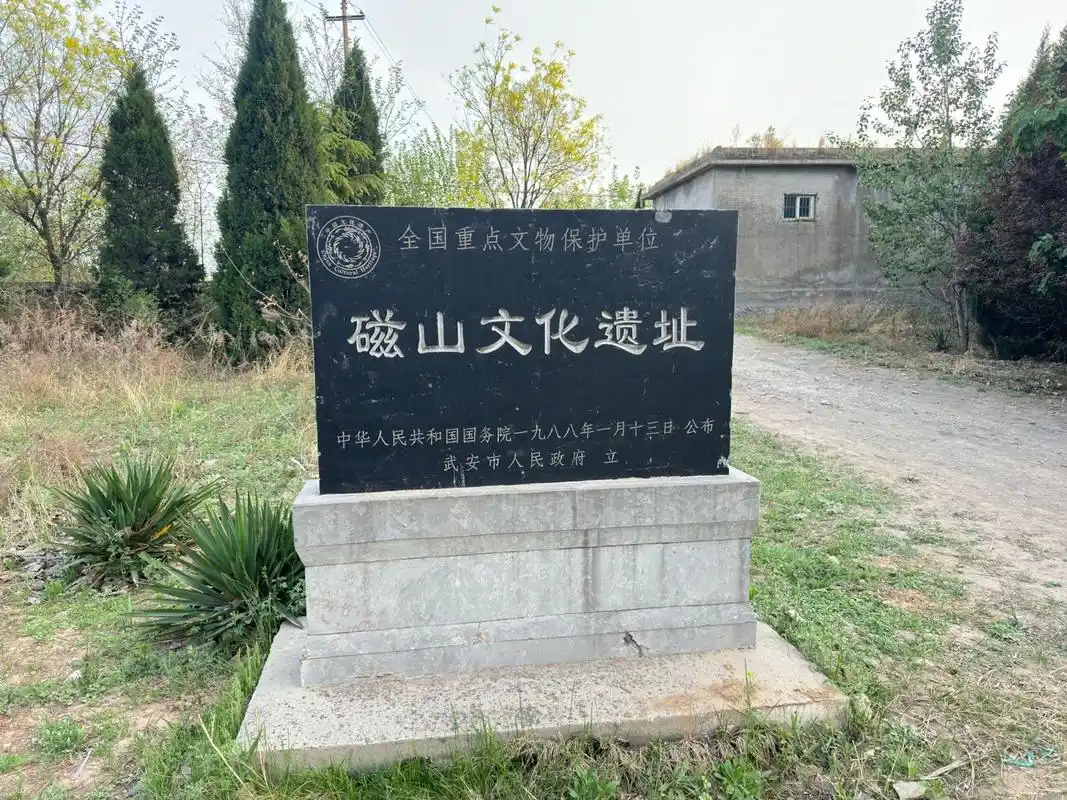 At roughly 7,500 to 10,000 years old, the Cishan Cultural Site is contemporary with early Neolithic settlements such as Jericho in the Levant and Çatalhöyük in Anatolia—places where humanity first exchanged nomadic life for farming villages. Excavated systematically since the 1970s, Cishan predates China's celebrated Yangshao culture and fills a critical gap in our understanding of early East Asian prehistory. In 2021, it joined China's "100 Greatest Archaeological Discoveries of the Century," cementing its academic importance. For Western visitors familiar with European prehistoric sites like Skara Brae or the megalithic tombs of Brittany, Cishan offers an equally profound window into humanity's earliest agricultural experiments—half a world away from the Fertile Crescent.
Cishan's three landmark discoveries fundamentally reshaped the global agricultural timeline. Storage pits revealed millet grain deposits up to two meters thick—the oldest confirmed evidence of foxtail and broomcorn millet cultivation anywhere on Earth. The site's chicken bones, subjected to modern scientific analysis, pushed back the domestication of chickens by thousands of years, challenging earlier assumptions rooted in Southeast Asia. Walnut shells preserved at Cishan likewise represent the earliest known example of walnut cultivation. Together, these findings place northern China alongside the Fertile Crescent as one of humanity's independent cradles of farming civilization.
The 10,800-square-meter Cishan Culture Museum houses 975 artifacts that bring this prehistoric world vividly to life. Exhibits feature stone grinding slabs, ceramic pot stands, and reconstructed grain storage vessels—everyday tools that narrate the story of humanity's first farmers. Dioramas and restored scenes depict ancestors at work, transforming abstract archaeology into something tangible and moving. Entry is free, making this an accessible cultural stop. The museum presents information primarily in Chinese, so booking an English-speaking guide in advance or using a translation app is strongly recommended for international visitors.
Located about 50 minutes' drive from Handan city center in the town of Wuan, the site is best reached by private car or chartered vehicle, as public transport requires transfers through Wuan town. The museum typically operates from 9:00 AM to 5:00 PM and closes on Mondays; valid photo ID is required for registration, and groups should reserve ahead. The outdoor archaeological area can be viewed at any time, though the earthwork itself has limited visual impact from outside—guided tours or audio guides are essential for proper understanding. Photography is permitted without flash, but touching artifacts is strictly prohibited.
For history enthusiasts, families on educational trips, and thoughtful travelers, Cishan delivers a quieter, more contemplative experience than China's bustling urban landmarks. Plan to combine your visit with a half-day excursion to nearby Jingniang Lake, a scenic mountain reservoir offering boat rides and dramatic karst scenery that beautifully complements a day of cultural exploration. Bring water and a light jacket—the museum's air conditioning can feel brisk even in summer—and allow at least two to three hours to absorb the exhibits fully. Approach the site with curiosity rather than checklist urgency, and you will be rewarded with a rare glimpse into the ten-thousand-year-old roots of Chinese civilization.
At roughly 7,500 to 10,000 years old, the Cishan Cultural Site is contemporary with early Neolithic settlements such as Jericho in the Levant and Çatalhöyük in Anatolia—places where humanity first exchanged nomadic life for farming villages. Excavated systematically since the 1970s, Cishan predates China's celebrated Yangshao culture and fills a critical gap in our understanding of early East Asian prehistory. In 2021, it joined China's "100 Greatest Archaeological Discoveries of the Century," cementing its academic importance. For Western visitors familiar with European prehistoric sites like Skara Brae or the megalithic tombs of Brittany, Cishan offers an equally profound window into humanity's earliest agricultural experiments—half a world away from the Fertile Crescent.
Cishan's three landmark discoveries fundamentally reshaped the global agricultural timeline. Storage pits revealed millet grain deposits up to two meters thick—the oldest confirmed evidence of foxtail and broomcorn millet cultivation anywhere on Earth. The site's chicken bones, subjected to modern scientific analysis, pushed back the domestication of chickens by thousands of years, challenging earlier assumptions rooted in Southeast Asia. Walnut shells preserved at Cishan likewise represent the earliest known example of walnut cultivation. Together, these findings place northern China alongside the Fertile Crescent as one of humanity's independent cradles of farming civilization.
The 10,800-square-meter Cishan Culture Museum houses 975 artifacts that bring this prehistoric world vividly to life. Exhibits feature stone grinding slabs, ceramic pot stands, and reconstructed grain storage vessels—everyday tools that narrate the story of humanity's first farmers. Dioramas and restored scenes depict ancestors at work, transforming abstract archaeology into something tangible and moving. Entry is free, making this an accessible cultural stop. The museum presents information primarily in Chinese, so booking an English-speaking guide in advance or using a translation app is strongly recommended for international visitors.
Located about 50 minutes' drive from Handan city center in the town of Wuan, the site is best reached by private car or chartered vehicle, as public transport requires transfers through Wuan town. The museum typically operates from 9:00 AM to 5:00 PM and closes on Mondays; valid photo ID is required for registration, and groups should reserve ahead. The outdoor archaeological area can be viewed at any time, though the earthwork itself has limited visual impact from outside—guided tours or audio guides are essential for proper understanding. Photography is permitted without flash, but touching artifacts is strictly prohibited.
For history enthusiasts, families on educational trips, and thoughtful travelers, Cishan delivers a quieter, more contemplative experience than China's bustling urban landmarks. Plan to combine your visit with a half-day excursion to nearby Jingniang Lake, a scenic mountain reservoir offering boat rides and dramatic karst scenery that beautifully complements a day of cultural exploration. Bring water and a light jacket—the museum's air conditioning can feel brisk even in summer—and allow at least two to three hours to absorb the exhibits fully. Approach the site with curiosity rather than checklist urgency, and you will be rewarded with a rare glimpse into the ten-thousand-year-old roots of Chinese civilization.