Xingtai People's Park
⭐ 3.60
People's Park, Qiaodong District, Xingtai City, Hebei Province, China
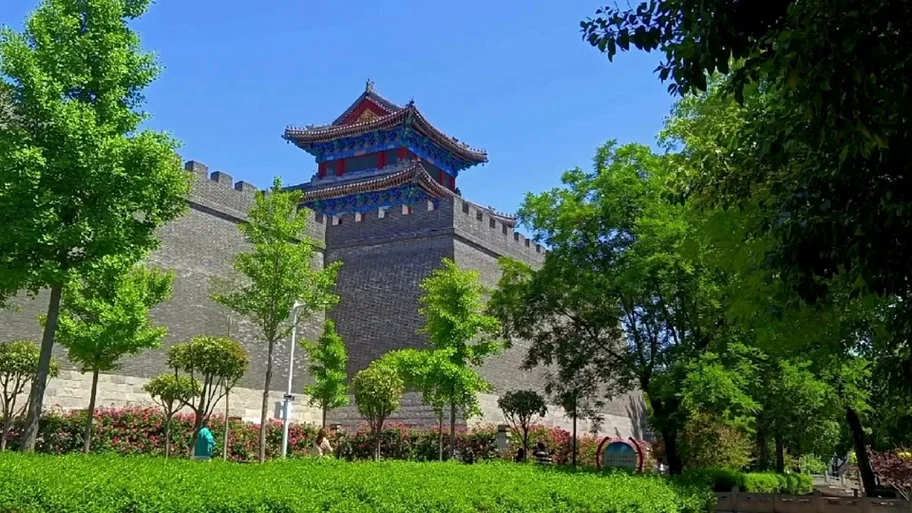 Xingtai carries one of northern China's oldest continuous urban traditions, earning the poetic nickname "City of the Sleeping Ox" from a Tang Dynasty legend. The park occupies a particularly historic corner where the Ming-era Shunde Prefecture fortress once stood strong against invading armies. Refashioned from a traditional pleasure garden into a cultural showcase beginning in 2005, the site preserves fragments of the original defensive walls alongside modern commemorative art, much like how many European cities have integrated medieval ruins into contemporary public squares such as Rome's Parco Archeologico or Istanbul's outer Theodosian walls.
The park's most arresting feature is the towering Liberation Monument near the south entrance, designed by Beijing's prestigious Central Academy of Fine Arts. Its bold V-shaped silhouette honors the 1945 liberation of Xingtai, the first major city south of the Great Wall to fall to communist forces in the final campaign against Japanese occupation. Just beyond lies a remarkably intact right-angle segment of the Ming Dynasty city wall, its weathered brickwork bearing silent witness to centuries of garrison life and providing visitors with the same tangible connection to dynastic history that tourists feel when walking along Prague's fortifications or York's medieval bars.
The crown jewel is undoubtedly the sweeping 12-panel white marble relief corridor, often called the park's open-air history library. These exquisitely carved panels narrate Xingtai's epic saga across three millennia, beginning with the legendary visit of Emperor Yao for sacred mountain rituals, continuing through the founding of the ancient Xing vassal state, and culminating in the Boxer Rebellion, the anti-Japanese resistance, and final Liberation. For Western visitors familiar with Trajan's Column in Rome or the Albert Memorial in London, this cultural wall functions in much the same way: a monumental visual chronicle transforming complex history into accessible storytelling. A relocated Ming-era honorific archway, the Tianmu Renxin Fang, originally belonging to a martial temple, adds further architectural gravitas.
Practical planning is refreshingly straightforward. Admission is completely free, with summer hours running 5:30 AM to 9:00 PM and winter hours 6:00 AM to 8:30 PM. The park does not offer multilingual signage or refreshment kiosks, so travelers should bring drinking water, comfortable walking shoes, and a translation app to fully appreciate the relief narratives. Locals flock here at dawn and dusk for tai chi and walking, creating an authentic slice of contemporary Chinese urban life alongside the historical monuments.
The optimal visit begins at the south gate, proceeding past the Liberation Monument to the relief wall corridor, then looping eastward to examine the Ming wall remnants and the relocated archway before completing the circular promenade. Spring and autumn bring especially pleasant temperatures and the best foliage displays. History enthusiasts can extend their itinerary with a ten-minute walk to the nearby Qingfeng Tower, a remarkably preserved Ming-era drum tower comparable to Xi'an's famous Bell Tower, or continue to Dahuo Spring Park. Travelers should note that a different "People's Park" exists in Xingtai's Renze District, but that venue focuses on sports facilities and lacks the historical treasures described here.
[BRIEF]
Xingtai Historical and Cultural Park, rebranded in 2008 from the old People's Park, occupies the southeastern corner of the ancient Shunde Prefecture citadel in Hebei Province. Visitors discover preserved Ming Dynasty city wall remnants, a dramatic V-shaped Liberation Monument marking the 1945 communist victory, and an open-air gallery of 12 white marble relief walls depicting 3,000 years of local history. Admission is free, making this an ideal half-day cultural stroll through the legendary "City of the Sleeping Ox."
[DETAILED]
Xingtai claims one of northern China's oldest continuous urban traditions, earning the poetic nickname "City of the Sleeping Ox" from a Tang Dynasty legend about divine protection. The park occupies a particularly historic corner where the Ming-era Shunde Prefecture fortress once guarded the southern approaches to the North China Plain. Converted from a conventional pleasure garden into a heritage showcase beginning in 2005, the site preserves fragments of original defensive walls alongside modern commemorative art, much like how European cities such as Rome, York, and Istanbul have integrated medieval fortifications into contemporary public spaces.
The park's most striking feature is the towering Liberation Monument near the south entrance, designed by the prestigious Central Academy of Fine Arts in Beijing. Its bold V-shaped silhouette honors the 1945 liberation of Xingtai, the first major city south of the Great Wall to fall to communist forces during the final campaign against Japanese occupation. Just beyond rises a remarkably intact right-angle segment of Ming Dynasty city wall, its weathered brickwork offering the same tangible connection to dynastic history that visitors experience when walking along Prague's fortifications or the surviving towers of Carcassonne in southern France.
The crown jewel is the sweeping 12-panel white marble relief corridor, functioning as an outdoor history library. These exquisitely carved panels narrate Xingtai's epic saga across three millennia, beginning with the legendary visit of Emperor Yao for sacred mountain rituals, continuing through the founding of the ancient Xing vassal state, and culminating in the Boxer Rebellion, the anti-Japanese resistance, and the 1945 Liberation. For Western travelers familiar with Trajan's Column in Rome or the Bayeux Tapestry in Normandy, this cultural wall serves a parallel purpose: monumental visual storytelling that transforms complex history into accessible narrative. A relocated Ming-era honorific archway, the Tianmu Renxin Fang, originally gracing a martial temple, adds further architectural gravitas.
Planning a visit is refreshingly simple. Admission is completely free, with summer hours from 5:30 AM to 9:00 PM and winter hours from 6:00 AM to 8:30 PM. The park provides no multilingual signage or refreshment kiosks, so travelers should bring drinking water, comfortable walking shoes, and a translation app to fully appreciate the relief narratives. Locals gather here at dawn and dusk for tai chi and leisurely walks, creating an authentic glimpse of contemporary Chinese urban life alongside the historical monuments.
The optimal route begins at the south gate, proceeding past the Liberation Monument to the relief wall corridor, then looping eastward to the Ming wall remnants and the relocated archway before completing the circular promenade. Spring and autumn offer the most pleasant temperatures and attractive foliage. History enthusiasts can extend their itinerary with a ten-minute walk to the nearby Qingfeng Tower, a well-preserved Ming-era drum tower comparable to Xi'an's famous Bell Tower, or continue onward to Dahuo Spring Park. Travelers should note that a separately located "People's Park" exists in Xingtai's Renze District, but that venue focuses on sports facilities and entirely lacks the historical treasures described here.
Xingtai carries one of northern China's oldest continuous urban traditions, earning the poetic nickname "City of the Sleeping Ox" from a Tang Dynasty legend. The park occupies a particularly historic corner where the Ming-era Shunde Prefecture fortress once stood strong against invading armies. Refashioned from a traditional pleasure garden into a cultural showcase beginning in 2005, the site preserves fragments of the original defensive walls alongside modern commemorative art, much like how many European cities have integrated medieval ruins into contemporary public squares such as Rome's Parco Archeologico or Istanbul's outer Theodosian walls.
The park's most arresting feature is the towering Liberation Monument near the south entrance, designed by Beijing's prestigious Central Academy of Fine Arts. Its bold V-shaped silhouette honors the 1945 liberation of Xingtai, the first major city south of the Great Wall to fall to communist forces in the final campaign against Japanese occupation. Just beyond lies a remarkably intact right-angle segment of the Ming Dynasty city wall, its weathered brickwork bearing silent witness to centuries of garrison life and providing visitors with the same tangible connection to dynastic history that tourists feel when walking along Prague's fortifications or York's medieval bars.
The crown jewel is undoubtedly the sweeping 12-panel white marble relief corridor, often called the park's open-air history library. These exquisitely carved panels narrate Xingtai's epic saga across three millennia, beginning with the legendary visit of Emperor Yao for sacred mountain rituals, continuing through the founding of the ancient Xing vassal state, and culminating in the Boxer Rebellion, the anti-Japanese resistance, and final Liberation. For Western visitors familiar with Trajan's Column in Rome or the Albert Memorial in London, this cultural wall functions in much the same way: a monumental visual chronicle transforming complex history into accessible storytelling. A relocated Ming-era honorific archway, the Tianmu Renxin Fang, originally belonging to a martial temple, adds further architectural gravitas.
Practical planning is refreshingly straightforward. Admission is completely free, with summer hours running 5:30 AM to 9:00 PM and winter hours 6:00 AM to 8:30 PM. The park does not offer multilingual signage or refreshment kiosks, so travelers should bring drinking water, comfortable walking shoes, and a translation app to fully appreciate the relief narratives. Locals flock here at dawn and dusk for tai chi and walking, creating an authentic slice of contemporary Chinese urban life alongside the historical monuments.
The optimal visit begins at the south gate, proceeding past the Liberation Monument to the relief wall corridor, then looping eastward to examine the Ming wall remnants and the relocated archway before completing the circular promenade. Spring and autumn bring especially pleasant temperatures and the best foliage displays. History enthusiasts can extend their itinerary with a ten-minute walk to the nearby Qingfeng Tower, a remarkably preserved Ming-era drum tower comparable to Xi'an's famous Bell Tower, or continue to Dahuo Spring Park. Travelers should note that a different "People's Park" exists in Xingtai's Renze District, but that venue focuses on sports facilities and lacks the historical treasures described here.
[BRIEF]
Xingtai Historical and Cultural Park, rebranded in 2008 from the old People's Park, occupies the southeastern corner of the ancient Shunde Prefecture citadel in Hebei Province. Visitors discover preserved Ming Dynasty city wall remnants, a dramatic V-shaped Liberation Monument marking the 1945 communist victory, and an open-air gallery of 12 white marble relief walls depicting 3,000 years of local history. Admission is free, making this an ideal half-day cultural stroll through the legendary "City of the Sleeping Ox."
[DETAILED]
Xingtai claims one of northern China's oldest continuous urban traditions, earning the poetic nickname "City of the Sleeping Ox" from a Tang Dynasty legend about divine protection. The park occupies a particularly historic corner where the Ming-era Shunde Prefecture fortress once guarded the southern approaches to the North China Plain. Converted from a conventional pleasure garden into a heritage showcase beginning in 2005, the site preserves fragments of original defensive walls alongside modern commemorative art, much like how European cities such as Rome, York, and Istanbul have integrated medieval fortifications into contemporary public spaces.
The park's most striking feature is the towering Liberation Monument near the south entrance, designed by the prestigious Central Academy of Fine Arts in Beijing. Its bold V-shaped silhouette honors the 1945 liberation of Xingtai, the first major city south of the Great Wall to fall to communist forces during the final campaign against Japanese occupation. Just beyond rises a remarkably intact right-angle segment of Ming Dynasty city wall, its weathered brickwork offering the same tangible connection to dynastic history that visitors experience when walking along Prague's fortifications or the surviving towers of Carcassonne in southern France.
The crown jewel is the sweeping 12-panel white marble relief corridor, functioning as an outdoor history library. These exquisitely carved panels narrate Xingtai's epic saga across three millennia, beginning with the legendary visit of Emperor Yao for sacred mountain rituals, continuing through the founding of the ancient Xing vassal state, and culminating in the Boxer Rebellion, the anti-Japanese resistance, and the 1945 Liberation. For Western travelers familiar with Trajan's Column in Rome or the Bayeux Tapestry in Normandy, this cultural wall serves a parallel purpose: monumental visual storytelling that transforms complex history into accessible narrative. A relocated Ming-era honorific archway, the Tianmu Renxin Fang, originally gracing a martial temple, adds further architectural gravitas.
Planning a visit is refreshingly simple. Admission is completely free, with summer hours from 5:30 AM to 9:00 PM and winter hours from 6:00 AM to 8:30 PM. The park provides no multilingual signage or refreshment kiosks, so travelers should bring drinking water, comfortable walking shoes, and a translation app to fully appreciate the relief narratives. Locals gather here at dawn and dusk for tai chi and leisurely walks, creating an authentic glimpse of contemporary Chinese urban life alongside the historical monuments.
The optimal route begins at the south gate, proceeding past the Liberation Monument to the relief wall corridor, then looping eastward to the Ming wall remnants and the relocated archway before completing the circular promenade. Spring and autumn offer the most pleasant temperatures and attractive foliage. History enthusiasts can extend their itinerary with a ten-minute walk to the nearby Qingfeng Tower, a well-preserved Ming-era drum tower comparable to Xi'an's famous Bell Tower, or continue onward to Dahuo Spring Park. Travelers should note that a separately located "People's Park" exists in Xingtai's Renze District, but that venue focuses on sports facilities and entirely lacks the historical treasures described here.