Nanwan Lake
⭐ 4.00
Nanwan Lake Scenic Area, Shihe District, Xinyang City, Henan Province, China
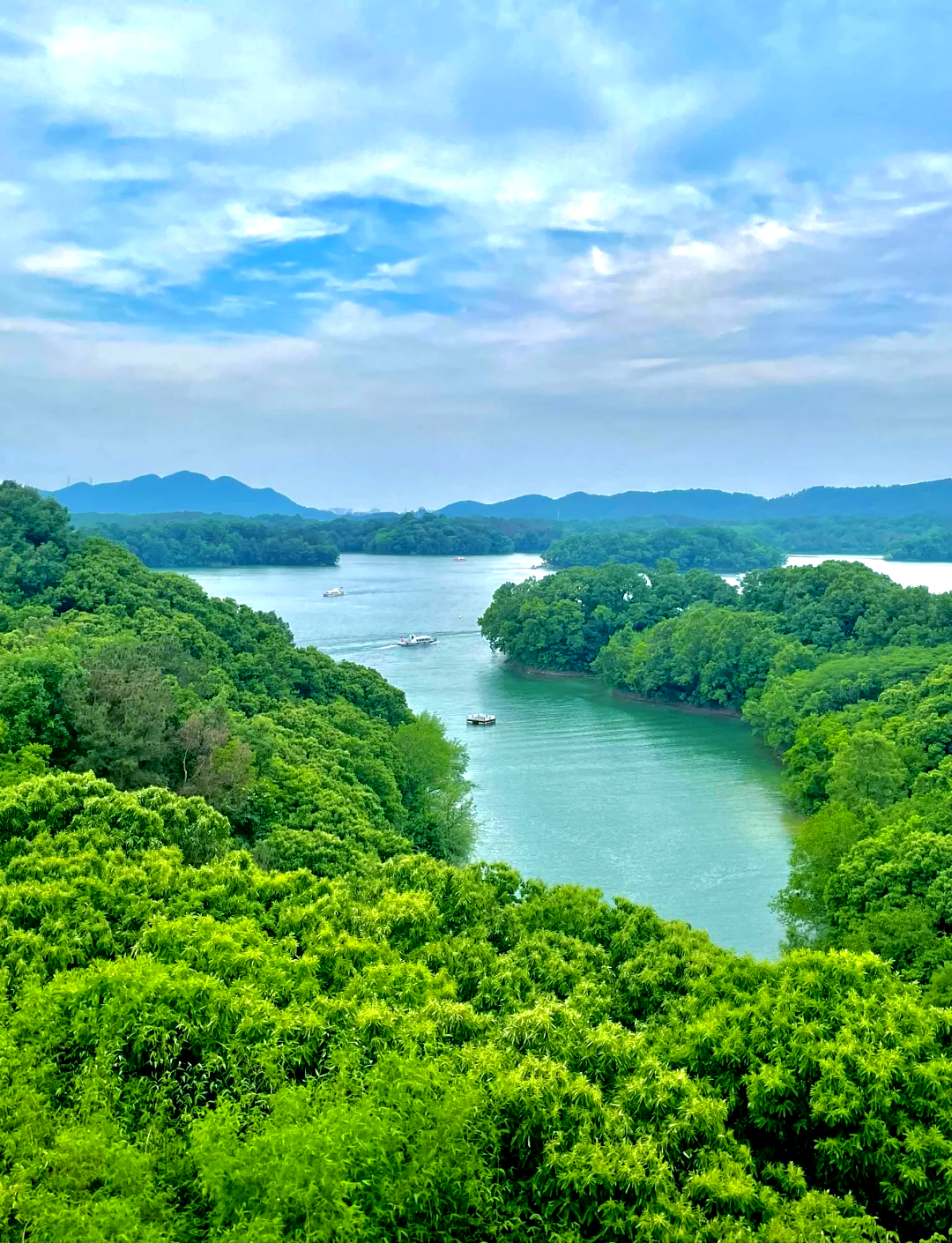 Nanwan Lake emerged as one of the great water-conservancy projects of the new China, its 816-meter-long dam rising from the foothills of the Dabie Mountains in the 1950s. Like contemporaries such as America's Hoover Dam, it was conceived as both a flood-control triumph for the upper Huai River basin and a symbol of national modernization. Today, the dam remains an imposing sight, straddling a mountain valley with the reflective lake spreading behind it. Climbing the dam wall rewards visitors with a sweeping panorama of forested islets—an arresting contrast to the region's millennia-old cultural landscape that cradles ancient Luoyang and Kaifeng nearby.
The lake's scale is best appreciated from its 5-kilometer lakeside boardwalk, a flat path threading through towering dawn redwoods and bamboo groves where oxygen-rich air and birdsong create a natural sanctuary. Comparable in feel to a Scandinavian fjord walk but with subtropical flora, the trail offers gentle hiking suitable for families. With 89% forest coverage and Class II water quality—clean enough to drink straight from the source—Nanwan rivals ecological destinations like Slovenia's Lake Bled for pristine air and water, yet remains delightfully uncrowded by international standards.
The lake's 61 islands are the heart of any visit, and three stand out. Tea Island, the largest, marries manicured tea gardens with traditional architecture: visitors can pick spring shoots, watch age-old tea-roasting techniques, and ascend a viewing tower to count the scattered isles stretching to the horizon. Monkey Island hosts free-roaming wild macaques transplanted from the Taihang Mountains—delightful to watch, though guests should keep snacks securely stowed. Bird Island becomes a raucous heronry each spring and summer, drawing photographers eager to capture thousands of egrets and night herons at roost.
Xinyang Maojian ranks among China's most prestigious green teas, often mentioned alongside West Lake Longjing and comparable in reputation to Japan's Uji matcha or India's Darjeeling first flush. The lake sits at the heart of this protected tea-growing region, where misty slopes and cool mountain air produce the tea's signature sweet, lingering finish. A hands-on picking session on Tea Island—followed by a steaming cup brewed from your own harvest—offers an intimacy rarely found in commercial tea tourism. Evening performances of ancient bianzhong bronze bells and flowing tea ceremonies deepen the cultural immersion, echoing Tang dynasty court rituals of a thousand years past.
The park opens daily from 8:00 a.m. to 6:00 p.m. Adult combo tickets, including the mandatory boat shuttle between islands, run about 100 RMB. Arrive by 8:30 a.m. to comfortably complete the three-island circuit before crowds build. Spring (March through May) is the prime tea-picking season, while summer temperatures sit 5–8°C cooler than the surrounding plains, making the lake a popular escape from central China's sweltering cities. Holiday weekends bring heavy crowds, so weekdays are far calmer. Don't leave without sampling Nanwan fish head soup at a lakeside farmhouse restaurant—a local specialty prized for its clear, sweet broth and the complete absence of any muddy taste.
Nanwan Lake emerged as one of the great water-conservancy projects of the new China, its 816-meter-long dam rising from the foothills of the Dabie Mountains in the 1950s. Like contemporaries such as America's Hoover Dam, it was conceived as both a flood-control triumph for the upper Huai River basin and a symbol of national modernization. Today, the dam remains an imposing sight, straddling a mountain valley with the reflective lake spreading behind it. Climbing the dam wall rewards visitors with a sweeping panorama of forested islets—an arresting contrast to the region's millennia-old cultural landscape that cradles ancient Luoyang and Kaifeng nearby.
The lake's scale is best appreciated from its 5-kilometer lakeside boardwalk, a flat path threading through towering dawn redwoods and bamboo groves where oxygen-rich air and birdsong create a natural sanctuary. Comparable in feel to a Scandinavian fjord walk but with subtropical flora, the trail offers gentle hiking suitable for families. With 89% forest coverage and Class II water quality—clean enough to drink straight from the source—Nanwan rivals ecological destinations like Slovenia's Lake Bled for pristine air and water, yet remains delightfully uncrowded by international standards.
The lake's 61 islands are the heart of any visit, and three stand out. Tea Island, the largest, marries manicured tea gardens with traditional architecture: visitors can pick spring shoots, watch age-old tea-roasting techniques, and ascend a viewing tower to count the scattered isles stretching to the horizon. Monkey Island hosts free-roaming wild macaques transplanted from the Taihang Mountains—delightful to watch, though guests should keep snacks securely stowed. Bird Island becomes a raucous heronry each spring and summer, drawing photographers eager to capture thousands of egrets and night herons at roost.
Xinyang Maojian ranks among China's most prestigious green teas, often mentioned alongside West Lake Longjing and comparable in reputation to Japan's Uji matcha or India's Darjeeling first flush. The lake sits at the heart of this protected tea-growing region, where misty slopes and cool mountain air produce the tea's signature sweet, lingering finish. A hands-on picking session on Tea Island—followed by a steaming cup brewed from your own harvest—offers an intimacy rarely found in commercial tea tourism. Evening performances of ancient bianzhong bronze bells and flowing tea ceremonies deepen the cultural immersion, echoing Tang dynasty court rituals of a thousand years past.
The park opens daily from 8:00 a.m. to 6:00 p.m. Adult combo tickets, including the mandatory boat shuttle between islands, run about 100 RMB. Arrive by 8:30 a.m. to comfortably complete the three-island circuit before crowds build. Spring (March through May) is the prime tea-picking season, while summer temperatures sit 5–8°C cooler than the surrounding plains, making the lake a popular escape from central China's sweltering cities. Holiday weekends bring heavy crowds, so weekdays are far calmer. Don't leave without sampling Nanwan fish head soup at a lakeside farmhouse restaurant—a local specialty prized for its clear, sweet broth and the complete absence of any muddy taste.