Jiulong Gorge Scenic Area
⭐ 4.30
Jiulong Gorge Scenic Area, Xindu District, Xingtai City, Hebei Province, China
 Jiulong Gorge sits within the historical territory of the ancient State of Xing, one of the small polities of the Zhou Dynasty era (roughly contemporary with ancient Greek city-states), and later became the cradle of the Later Zhao kingdom founded by the Jie warlord Shi Le in 319 AD—a tumultuous period that coincided with the decline of the Western Roman Empire. The gorge also sheltered the Anti-Japanese Military and Political University during the 1930s–40s, training resistance fighters in remote mountain classrooms. Ming Dynasty Great Wall remnants, including the Zhi-guo Ridge fortifications, recall Europe's Hadrian's Wall in scale and ambition, though perched far more precariously along knife-edge ridges.
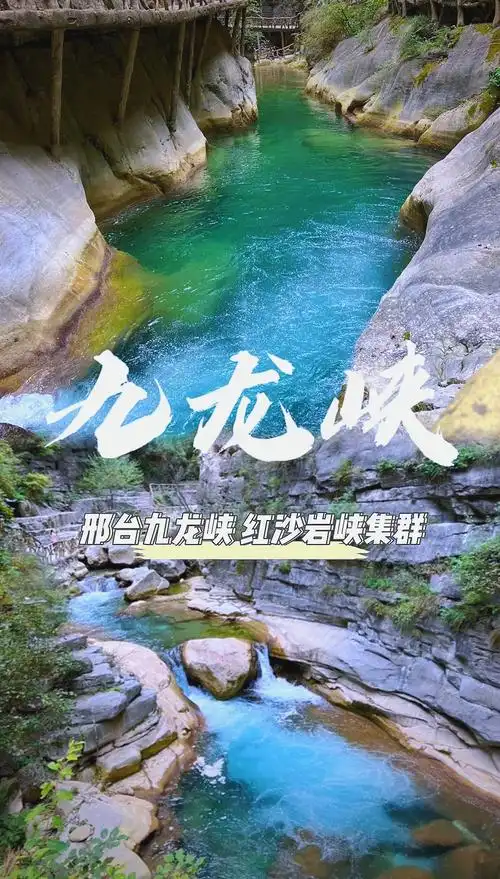
The park's geological signature is its red-sandstone canyon complex, the largest of its kind in northern China. Comparable in drama to France's Gorges du Verdon or America's Antelope Canyon, the formations have been carved by millennia of water erosion into sheer walls punctuated by "sky wells," natural rock corridors, and the celebrated Nine Waterfalls and Eighteen Pools system. The crown jewel, Laolongtan Waterfall, plunges more than 100 meters, often throwing rainbows into its swirling mist.
Culturally, Jiulong Gorge functions as both a recreational escape and an outdoor classroom. Geological signage explains the sandstone origins, while red tourism trails wind past anti-Japanese resistance sites where lectures once echoed across the cliffs. The cliff-hugging wooden boardwalks and glass-floored viewing platforms—echoing contemporary designs seen at Norway's Trolltunga—allow visitors to traverse otherwise impassable terrain safely. Camping, photography workshops, and geology field studies are all actively encouraged.
Seasonality shapes every visit. Late March through mid-April brings the legendary wild peach blossom festival, when ten thousand acres of trees explode in pink—comparable in spectacle to Japan's sakura season but far less crowded. Summer offers cool hiking and waterfall swimming, autumn sets the sumac-covered ridges ablaze in crimson, and winter transforms the cliffs into glittering ice sculptures. At the summit of Wangmao Peak (1,800 m), grassy meadows reward climbers with cloud-sea sunrises reminiscent of Scottish Highland vistas.
Practical access is straightforward. Adult entry runs ¥55–60 with student and child discounts, while cable cars, shuttle buses, and alpine slides cost extra. The park opens daily 08:00–18:00 year-round. Self-drivers should navigate to "Jiulong Gorge Scenic Area East Gate" or "Xialongmen Parking"; the drive from Xingtai city takes roughly 90 minutes. Direct buses depart from Xingtai West Bus Station. Plan at least half a day, though a full day allows time for the four-to-five-hour trail loop. Spring blossoms, summer waterfalls, and autumn foliage represent the prime visiting windows.
Jiulong Gorge sits within the historical territory of the ancient State of Xing, one of the small polities of the Zhou Dynasty era (roughly contemporary with ancient Greek city-states), and later became the cradle of the Later Zhao kingdom founded by the Jie warlord Shi Le in 319 AD—a tumultuous period that coincided with the decline of the Western Roman Empire. The gorge also sheltered the Anti-Japanese Military and Political University during the 1930s–40s, training resistance fighters in remote mountain classrooms. Ming Dynasty Great Wall remnants, including the Zhi-guo Ridge fortifications, recall Europe's Hadrian's Wall in scale and ambition, though perched far more precariously along knife-edge ridges.
The park's geological signature is its red-sandstone canyon complex, the largest of its kind in northern China. Comparable in drama to France's Gorges du Verdon or America's Antelope Canyon, the formations have been carved by millennia of water erosion into sheer walls punctuated by "sky wells," natural rock corridors, and the celebrated Nine Waterfalls and Eighteen Pools system. The crown jewel, Laolongtan Waterfall, plunges more than 100 meters, often throwing rainbows into its swirling mist.
Culturally, Jiulong Gorge functions as both a recreational escape and an outdoor classroom. Geological signage explains the sandstone origins, while red tourism trails wind past anti-Japanese resistance sites where lectures once echoed across the cliffs. The cliff-hugging wooden boardwalks and glass-floored viewing platforms—echoing contemporary designs seen at Norway's Trolltunga—allow visitors to traverse otherwise impassable terrain safely. Camping, photography workshops, and geology field studies are all actively encouraged.
Seasonality shapes every visit. Late March through mid-April brings the legendary wild peach blossom festival, when ten thousand acres of trees explode in pink—comparable in spectacle to Japan's sakura season but far less crowded. Summer offers cool hiking and waterfall swimming, autumn sets the sumac-covered ridges ablaze in crimson, and winter transforms the cliffs into glittering ice sculptures. At the summit of Wangmao Peak (1,800 m), grassy meadows reward climbers with cloud-sea sunrises reminiscent of Scottish Highland vistas.
Practical access is straightforward. Adult entry runs ¥55–60 with student and child discounts, while cable cars, shuttle buses, and alpine slides cost extra. The park opens daily 08:00–18:00 year-round. Self-drivers should navigate to "Jiulong Gorge Scenic Area East Gate" or "Xialongmen Parking"; the drive from Xingtai city takes roughly 90 minutes. Direct buses depart from Xingtai West Bus Station. Plan at least half a day, though a full day allows time for the four-to-five-hour trail loop. Spring blossoms, summer waterfalls, and autumn foliage represent the prime visiting windows.