**Historical Context and Significance**
Zunyi Museum chronicles over four millennia of northern Guizhou's civilization with the gravitas of a European regional collection such as Strasbourg's Musée Historique. Its most politically charged holdings document the January 1935 Zunyi Conference, where Mao Zedong assumed military command of the Red Army, an event compared in Chinese communist lore to the strategic turning points of Stalingrad or D-Day in deciding a war's outcome. Equally compelling is the archaeological record of the Yang clan, Tusi chieftains who governed Bozhou from the Tang dynasty until their dramatic downfall in 1600 during Ming pacification campaigns.
**Architecture and Space**
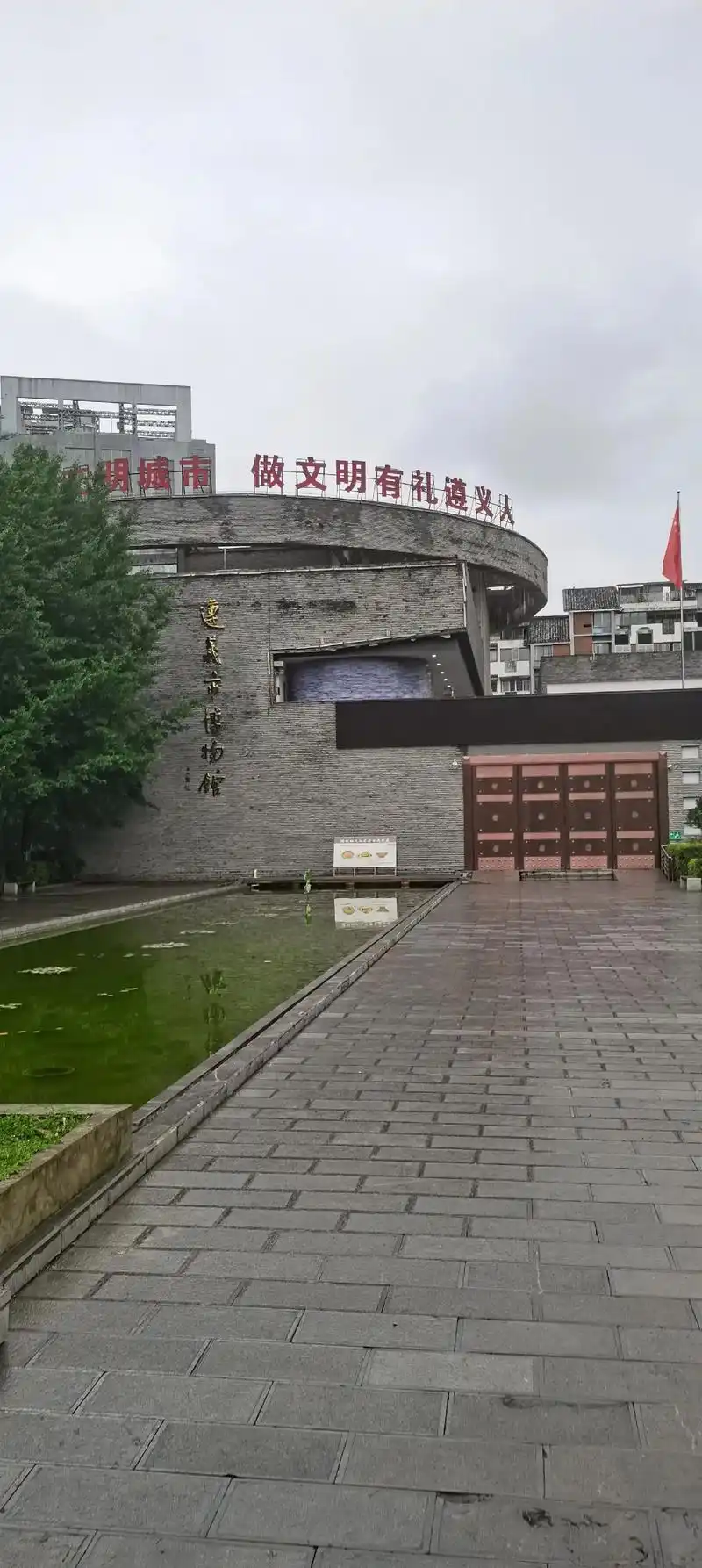
The building embraces the classical Chinese philosophy of tianyuan difang, or "round heaven, square earth," with crimson facades rising against landscaped greenery. Comparable in ambition to London's Design Museum or Bilbao's Guggenheim in marrying form to function, the interior offers climate-controlled galleries arranged chronologically to prevent the fatigue common in encyclopedic institutions. Wide corridors and intuitive flow ensure visitors move effortlessly from prehistoric pottery shards to revolutionary uniforms to gleaming copper stills.
**Core Collections and Highlights**
Three permanent exhibitions anchor the experience. The history gallery showcases Han dynasty celestial artifacts and a Southern Song gilded plate chased with crimson dragon motifs, comparable in craftsmanship to items in the British Museum's Asian wing. A remarkable section recreates the burial archaeology of the Bozhou Tusi alongside a detailed scale model of Hailongtun, a Ming citadel now inscribed as a UNESCO World Heritage Site. The revolutionary hall displays original documents and personal effects from the Long March, while the liquor gallery traces a thousand years of maotai-style sorghum distillation.
**Interactive Experiences and Public Programs**
Weekend paper-cutting sessions, rubbing demonstrations, and fan-painting workshops bring intangible heritage to life, much like craft programs at Paris's Musée des Arts Décoratifs. Volunteer teen-docents lead energetic tours for younger visitors, while select galleries incorporate glasses-free 3D displays to dramatize battle scenes and ancient rituals. These thoughtful touches transform a museum visit into an active cultural immersion, particularly rewarding for multigenerational groups and curious children.
**Practical Visitor Information**
The museum opens Tuesday through Sunday from 9:00 AM to 5:00 PM, with final admission at 4:30 PM, and closes on Mondays. Entry is free with a passport or ID card, though booking via the official WeChat account is wise during peak periods such as International Museum Day in May or summer holidays. Allow two to three hours for a full circuit at a relaxed pace. Bring a light cardigan; air-conditioning runs briskly even in summer, and the polished floors favor comfortable walking shoes.
**Recommended Itinerary and Connections**
Pair the museum with the Zunyi Conference Site, just a twenty-minute drive away, for an illuminating half-day immersion in revolutionary history. Afterward, wander into nearby Laosha Alley or Xinpu Food Street to sample Guizhou's exuberant regional cuisine, from silky douhua noodles to bubbling suancai fish hotpot. This combination of culture, cuisine, and urban vitality makes Zunyi a rewarding detour for travelers exploring the historically rich highlands between Chongqing and Kunming, and a perfect complement to a southern China circuit.