Kweichow Moutai Distillery
⭐ 2.00
Maotai Town, Renhuai City, Zunyi City, Guizhou Province, China
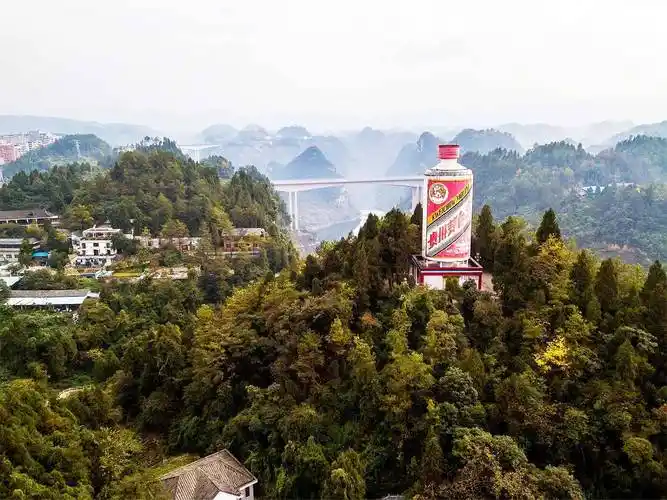 To grasp Maotai's significance, think of it as China's answer to the great wine chateaux of Bordeaux or the whiskey distilleries of Speyside: a single product so tied to place and tradition that it has become a national emblem. The distillery traces its roots to the Chengyi, Ronghe, and Hengxing作坊 of the Ming and Qing dynasties, which merged in 1951 under state ownership. Its global breakthrough came in 1915 at the Panama-Pacific International Exposition in San Francisco, where Maotai's distinctive sauce-aroma baijiu won a gold medal, an achievement still celebrated today by a monumental sculpture in the town's main square.
The geography here is as much the secret as the recipe. Sitting at 423 meters above sea level along the serpentine Chishui River, the valley's microclimate, iron-rich red soil, and unique microbial ecosystem create conditions that cannot be replicated elsewhere, similar to how the chalk soils of Champagne or the peat bogs of Islay define their regional spirits. The traditional solid-state fermentation, repeated distillation, and years-long aging in clay pots yield the pungent, complex jiangxiang style at 53% ABV, a strength that rewards careful sipping.
The distillery's production halls are classified as restricted industrial zones, so independent exploration is impossible, and any informal offers to "sneak you inside" are typically scams. The real attraction lies in the surrounding cultural cluster: the China Liquor Culture City, billed as the world's largest baijiu-themed museum, traces three centuries of brewing heritage; Yangliuwan Ancient Street preserves the original作坊 alleyways with tasting rooms and craft shops; and the Tianniang Scenic Area connects viewpoints via cable car, offering sweeping vistas of the Chishui's dramatic S-bends.
Maotai Town also carries profound historical weight beyond its famous spirit. In 1935, Mao Zedong's Red Army crossed the Chishui River four times during the Long March, and the free Red Army Crossing Memorial Park commemorates these campaigns, functioning as both a pilgrimage site and an outdoor museum. By evening, the 1915 Plaza erupts into a choreographed fountain-and-light show set against the illuminated riverfront, the air faintly perfumed with fermenting grain, a sensory experience that blends spectacle, history, and place in a way few distillery towns can match.
Practical planning is essential. Fly into Maotai Airport or take the high-speed rail to Zunyi and connect by bus. Set aside at least one full day: arrive mid-afternoon for the museum and old street, catch sunset at the memorial park, ride the cable car at dusk, and end with the night fountain show. Stay at one of the riverside hotels for easy after-dark strolls. Book any legitimate distillery tour through official channels well in advance, and remember that the 53% proof demands respect: pace yourself with water, never drive after tasting, and keep in mind that most signage is Chinese-only, so an English-speaking guide or translation app is strongly recommended.
To grasp Maotai's significance, think of it as China's answer to the great wine chateaux of Bordeaux or the whiskey distilleries of Speyside: a single product so tied to place and tradition that it has become a national emblem. The distillery traces its roots to the Chengyi, Ronghe, and Hengxing作坊 of the Ming and Qing dynasties, which merged in 1951 under state ownership. Its global breakthrough came in 1915 at the Panama-Pacific International Exposition in San Francisco, where Maotai's distinctive sauce-aroma baijiu won a gold medal, an achievement still celebrated today by a monumental sculpture in the town's main square.
The geography here is as much the secret as the recipe. Sitting at 423 meters above sea level along the serpentine Chishui River, the valley's microclimate, iron-rich red soil, and unique microbial ecosystem create conditions that cannot be replicated elsewhere, similar to how the chalk soils of Champagne or the peat bogs of Islay define their regional spirits. The traditional solid-state fermentation, repeated distillation, and years-long aging in clay pots yield the pungent, complex jiangxiang style at 53% ABV, a strength that rewards careful sipping.
The distillery's production halls are classified as restricted industrial zones, so independent exploration is impossible, and any informal offers to "sneak you inside" are typically scams. The real attraction lies in the surrounding cultural cluster: the China Liquor Culture City, billed as the world's largest baijiu-themed museum, traces three centuries of brewing heritage; Yangliuwan Ancient Street preserves the original作坊 alleyways with tasting rooms and craft shops; and the Tianniang Scenic Area connects viewpoints via cable car, offering sweeping vistas of the Chishui's dramatic S-bends.
Maotai Town also carries profound historical weight beyond its famous spirit. In 1935, Mao Zedong's Red Army crossed the Chishui River four times during the Long March, and the free Red Army Crossing Memorial Park commemorates these campaigns, functioning as both a pilgrimage site and an outdoor museum. By evening, the 1915 Plaza erupts into a choreographed fountain-and-light show set against the illuminated riverfront, the air faintly perfumed with fermenting grain, a sensory experience that blends spectacle, history, and place in a way few distillery towns can match.
Practical planning is essential. Fly into Maotai Airport or take the high-speed rail to Zunyi and connect by bus. Set aside at least one full day: arrive mid-afternoon for the museum and old street, catch sunset at the memorial park, ride the cable car at dusk, and end with the night fountain show. Stay at one of the riverside hotels for easy after-dark strolls. Book any legitimate distillery tour through official channels well in advance, and remember that the 53% proof demands respect: pace yourself with water, never drive after tasting, and keep in mind that most signage is Chinese-only, so an English-speaking guide or translation app is strongly recommended.