Phoenix Mountain Forest Park
⭐ 3.80
Fenghuang Mountain Forest Park Scenic Area, Hengkou Town, Hanbin District, Ankang City, Shaanxi Province, China
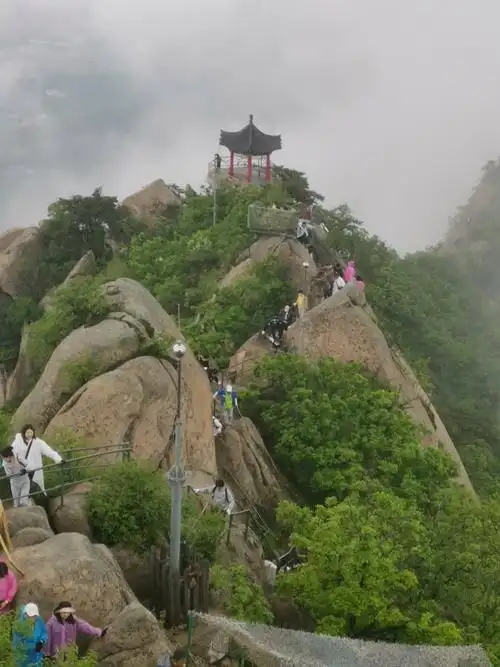 Phoenix Mountain rises as an isolated horst—a block of ancient bedrock thrust upward between China's two great mountain spines, the Qinling to the north and the Daba to the south. Geologists compare the formation to the Vosges massif of France or Germany's Black Forest: a tilted slab whittled by time into layered ridges. At 8,235 hectares, the park dwarfs many established European nature reserves and rivals Slovenia's Triglav National Park in scale. Beyond geology, its slopes have sheltered pilgrims, monks, and farmers for centuries; the Iron Tile Hall (Tiewadian), the small stone temple crowning the summit, has stood for generations, with local sources tracing its origins to the Ming dynasty.
The park's most arresting cultural neighbor is the Fengyan Ancient Terraced Fields, first carved into the hillsides by Hunanese immigrants who settled Hanyin during the Qing dynasty around 1725. They now appear on the World Heritage Irrigation Structures list alongside Vietnam's rice terraces and Iran's qanat systems. Seen from Phoenix Mountain's mid-slope platforms, these amber-and-emerald paddies echo the man-made landscapes of Italy's Cinque Terre or the steep vineyards of Germany's Moselle: generations of farmers coaxing harvests from slopes that would otherwise lie barren. Together, mountain, terrace, and the silver bend of the Han River below form a "mountain–field–river" vista celebrated in local poetry.
The signature spectacle here is the "Phoenix Sea of Clouds"—an ocean of white vapor that floods the valleys at dawn after summer rains, with the rising sun pouring through the mist like a lantern. Comparable to the cloud inversions that draw hikers to Scotland's Cairngorms or the Brocken Specter legends of Germany's Harz Mountains, the phenomenon reaches its peak between late June and September. The 1,100-meter average elevation keeps the summit refreshingly cool—often 6 to 8 °C below the river valleys—making Phoenix Mountain a favored escape for residents of Xi'an, some 250 kilometers to the east, when the central plains swelter.
Phoenix Mountain National Forest Park sits roughly 35 kilometers north of Hanyin County town. There is no public bus service, so most travelers hire a car from the county or drive themselves; from central Xi'an, allow about 3.5 hours via the G7011 expressway. Set navigation to "Shaanxi Hanyin Phoenix Mountain National Forest Park." Inside, paved forest paths and bamboo boardwalks thread between four sub-areas—Cloud Mist Mountain, River-Viewing Pass, Grotto Hill, and Bamboo Garden—each easily a half-day walk. With almost no vendors on the mountain, bring water, snacks, sunscreen, and a rain jacket; sturdy shoes are essential on upper ridgelines where granite steps can be slick with morning dew.
Entry costs about 50 yuan in peak season (July–September) and 40 yuan in the off-season; confirm current prices at the gate. There are no thrill rides or cable cars to chase here—this is a destination for slow travelers, photographers, and families wanting their children to breathe real mountain air. Local lore holds that a celestial phoenix once flew here carrying a jade sash in its beak, and where the ribbon touched earth, the Han River was born. For Western visitors seeking China's greener, quieter side, Phoenix Mountain delivers exactly that: pure air, profound silence, and landscapes stitched together by five centuries of human story.
Phoenix Mountain rises as an isolated horst—a block of ancient bedrock thrust upward between China's two great mountain spines, the Qinling to the north and the Daba to the south. Geologists compare the formation to the Vosges massif of France or Germany's Black Forest: a tilted slab whittled by time into layered ridges. At 8,235 hectares, the park dwarfs many established European nature reserves and rivals Slovenia's Triglav National Park in scale. Beyond geology, its slopes have sheltered pilgrims, monks, and farmers for centuries; the Iron Tile Hall (Tiewadian), the small stone temple crowning the summit, has stood for generations, with local sources tracing its origins to the Ming dynasty.
The park's most arresting cultural neighbor is the Fengyan Ancient Terraced Fields, first carved into the hillsides by Hunanese immigrants who settled Hanyin during the Qing dynasty around 1725. They now appear on the World Heritage Irrigation Structures list alongside Vietnam's rice terraces and Iran's qanat systems. Seen from Phoenix Mountain's mid-slope platforms, these amber-and-emerald paddies echo the man-made landscapes of Italy's Cinque Terre or the steep vineyards of Germany's Moselle: generations of farmers coaxing harvests from slopes that would otherwise lie barren. Together, mountain, terrace, and the silver bend of the Han River below form a "mountain–field–river" vista celebrated in local poetry.
The signature spectacle here is the "Phoenix Sea of Clouds"—an ocean of white vapor that floods the valleys at dawn after summer rains, with the rising sun pouring through the mist like a lantern. Comparable to the cloud inversions that draw hikers to Scotland's Cairngorms or the Brocken Specter legends of Germany's Harz Mountains, the phenomenon reaches its peak between late June and September. The 1,100-meter average elevation keeps the summit refreshingly cool—often 6 to 8 °C below the river valleys—making Phoenix Mountain a favored escape for residents of Xi'an, some 250 kilometers to the east, when the central plains swelter.
Phoenix Mountain National Forest Park sits roughly 35 kilometers north of Hanyin County town. There is no public bus service, so most travelers hire a car from the county or drive themselves; from central Xi'an, allow about 3.5 hours via the G7011 expressway. Set navigation to "Shaanxi Hanyin Phoenix Mountain National Forest Park." Inside, paved forest paths and bamboo boardwalks thread between four sub-areas—Cloud Mist Mountain, River-Viewing Pass, Grotto Hill, and Bamboo Garden—each easily a half-day walk. With almost no vendors on the mountain, bring water, snacks, sunscreen, and a rain jacket; sturdy shoes are essential on upper ridgelines where granite steps can be slick with morning dew.
Entry costs about 50 yuan in peak season (July–September) and 40 yuan in the off-season; confirm current prices at the gate. There are no thrill rides or cable cars to chase here—this is a destination for slow travelers, photographers, and families wanting their children to breathe real mountain air. Local lore holds that a celestial phoenix once flew here carrying a jade sash in its beak, and where the ribbon touched earth, the Han River was born. For Western visitors seeking China's greener, quieter side, Phoenix Mountain delivers exactly that: pure air, profound silence, and landscapes stitched together by five centuries of human story.