Baishi Mountain
⭐ 4.70
Laiyuan County, Baoding City, Hebei Province, China
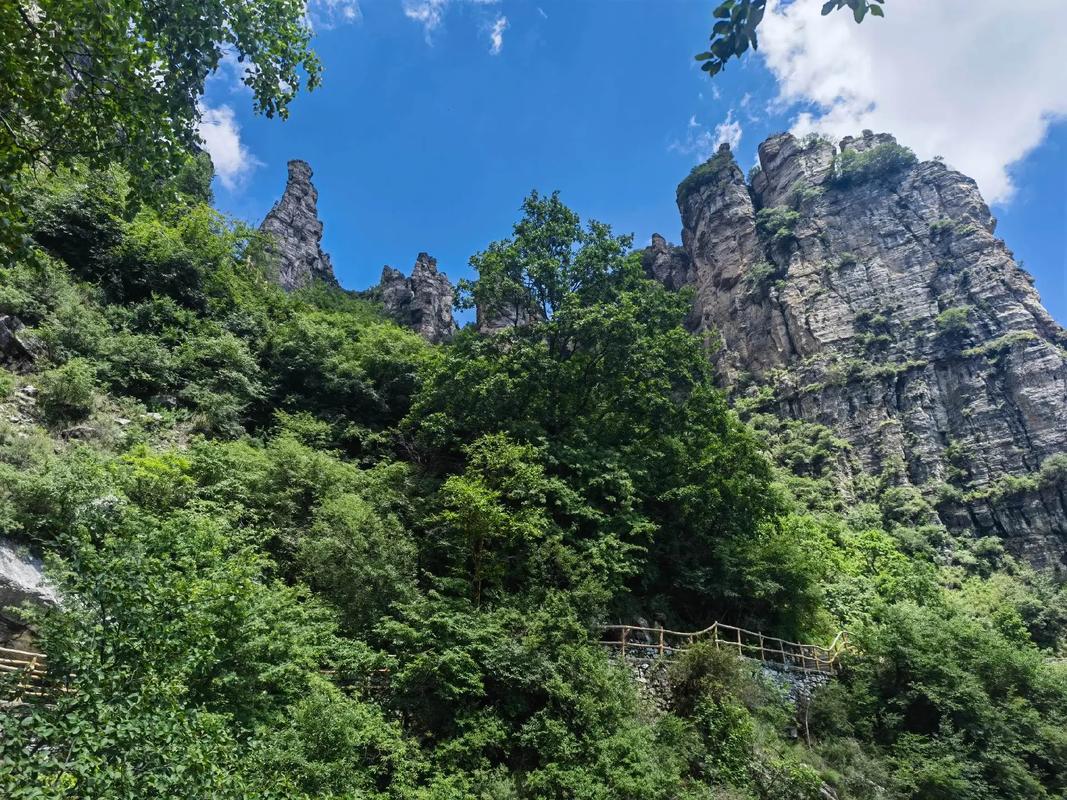 Baishi Mountain's story begins 1.4 billion years ago, when its white marble sediments accumulated on the floor of an ancient sea—predating the dinosaurs by over a billion years. Subsequent tectonic upheavals through the Paleozoic and Mesozoic eras slowly hoisted these seabeds skyward, while glacial and chemical weathering sculpted the stone into today's fantastical peaks. Geologists have dubbed the range "the natural geological museum at the northern tip of the Taihang Mountains," and the formations invite comparison with Italy's Dolomites or Slovenia's Julian Alps, though their pure white marble composition is virtually unique on Earth.
The mountain's signature features include towering stone columns, natural walls, and rock arches named for their resemblance to everyday objects. "Double Heroes Rock," "Chive Garden," and "Compass Peak" rank among the most photographed formations, each a sculpted masterpiece of erosion. With forest cover exceeding 82 percent, the slopes harbor ancient red birch woodlands that blaze in gold and crimson each autumn, while "Ten Waterfall Gorge" threads its way through the lower elevations. The interplay of jagged white pinnacles against dense green forest creates a visual drama reminiscent of classical Chinese landscape paintings brought vividly to life.
For thrill-seekers, the park boasts China's highest double-deck glass skywalk system. The Double Heroes Glass Walkway stretches 95 meters along a 1,900-meter ridge, while the Flying Fox Double Glass Bridge cantileers dramatically over a 1,600-meter cliff face. Walking these transparent paths feels like floating among clouds, with sheer drops and layered peaks far below. Adventurous visitors can also try cloud-level via ferrata climbing, sky-high cycling, or zip-lining—activities that have made Baishi Mountain the Beijing region's premier destination for adrenaline sports, comparable in nerve-testing appeal to Norway's Trolltunga or the Grand Canyon Skywalk.
Summer temperatures hovering around 21°C make Baishi Mountain a celebrated escape from the sweltering North China Plain, earning it a reputation as a premier "summer resort" comparable to alpine retreats in Switzerland or Austria. Morning cloud seas roll across the peaks after summer rains, particularly from Chive Garden to Foguang Peak—a phenomenon photographers prize for its almost mystical quality. April and May bring wildflower blooms, while September and October transform the birch forests into a golden tapestry. Visitors seeking the cloud seas should monitor humidity (below 90% is ideal) and plan to arrive in the morning.
Most visitors enter via the East Gate, taking the Xiangyun Cable Car to save energy for the scenic loop, which takes five to seven hours at a comfortable pace. Even in summer, summit temperatures can drop sharply, so a windproof jacket is essential. The glass walkways require rented shoe covers (around 5 yuan), and high heels, sandals, and umbrellas are prohibited for safety reasons. Mountain-top food and water are limited, so pack your own supplies. During thunderstorms, all high-altitude activities are suspended. Tickets can be purchased through the official WeChat account or platforms like Trip.com in advance.
Baishi Mountain's story begins 1.4 billion years ago, when its white marble sediments accumulated on the floor of an ancient sea—predating the dinosaurs by over a billion years. Subsequent tectonic upheavals through the Paleozoic and Mesozoic eras slowly hoisted these seabeds skyward, while glacial and chemical weathering sculpted the stone into today's fantastical peaks. Geologists have dubbed the range "the natural geological museum at the northern tip of the Taihang Mountains," and the formations invite comparison with Italy's Dolomites or Slovenia's Julian Alps, though their pure white marble composition is virtually unique on Earth.
The mountain's signature features include towering stone columns, natural walls, and rock arches named for their resemblance to everyday objects. "Double Heroes Rock," "Chive Garden," and "Compass Peak" rank among the most photographed formations, each a sculpted masterpiece of erosion. With forest cover exceeding 82 percent, the slopes harbor ancient red birch woodlands that blaze in gold and crimson each autumn, while "Ten Waterfall Gorge" threads its way through the lower elevations. The interplay of jagged white pinnacles against dense green forest creates a visual drama reminiscent of classical Chinese landscape paintings brought vividly to life.
For thrill-seekers, the park boasts China's highest double-deck glass skywalk system. The Double Heroes Glass Walkway stretches 95 meters along a 1,900-meter ridge, while the Flying Fox Double Glass Bridge cantileers dramatically over a 1,600-meter cliff face. Walking these transparent paths feels like floating among clouds, with sheer drops and layered peaks far below. Adventurous visitors can also try cloud-level via ferrata climbing, sky-high cycling, or zip-lining—activities that have made Baishi Mountain the Beijing region's premier destination for adrenaline sports, comparable in nerve-testing appeal to Norway's Trolltunga or the Grand Canyon Skywalk.
Summer temperatures hovering around 21°C make Baishi Mountain a celebrated escape from the sweltering North China Plain, earning it a reputation as a premier "summer resort" comparable to alpine retreats in Switzerland or Austria. Morning cloud seas roll across the peaks after summer rains, particularly from Chive Garden to Foguang Peak—a phenomenon photographers prize for its almost mystical quality. April and May bring wildflower blooms, while September and October transform the birch forests into a golden tapestry. Visitors seeking the cloud seas should monitor humidity (below 90% is ideal) and plan to arrive in the morning.
Most visitors enter via the East Gate, taking the Xiangyun Cable Car to save energy for the scenic loop, which takes five to seven hours at a comfortable pace. Even in summer, summit temperatures can drop sharply, so a windproof jacket is essential. The glass walkways require rented shoe covers (around 5 yuan), and high heels, sandals, and umbrellas are prohibited for safety reasons. Mountain-top food and water are limited, so pack your own supplies. During thunderstorms, all high-altitude activities are suspended. Tickets can be purchased through the official WeChat account or platforms like Trip.com in advance.