Baoding Ancient Architecture Complex
⭐ 4.20
Zhili Governor-General's Office Museum, Lianchi District, Baoding City, Hebei Province, China
 The Zhili Governor-General's Office stands as the most intact Qing-dynasty provincial administrative complex in China, comparable in completeness to a Baroque-era European governor's palace. Its symmetrical layout along a central axis reflects Confucian principles of order—think Palladian logic translated into timber and brick. From 1801 onward, this was the seat of the viceroy governing the province surrounding Beijing. Officials such as Zeng Guofan and Li Hongzhang directed pivotal late-imperial affairs from these very halls, including suppression of the Taiping Rebellion (1850–1864). Allow roughly 90 minutes and request the guided tour.
Just a short stroll east, the Lotus Pond Garden ranks among northern China's earliest classical gardens, founded during the Yuan dynasty. It served successive roles as a private academy and a Qing imperial waystation, blending the geometric grandeur of northern landscaping with the intimate, water-laced charm of Jiangnan gardens south of the Yangtze. The twelve named vistas, including the celebrated "Summer Lotus Ripples," frame pavilions inscribed with imperial calligraphy. Visit in July or August when lotuses bloom, though winter snow transforms the scene into a living Chinese ink painting.
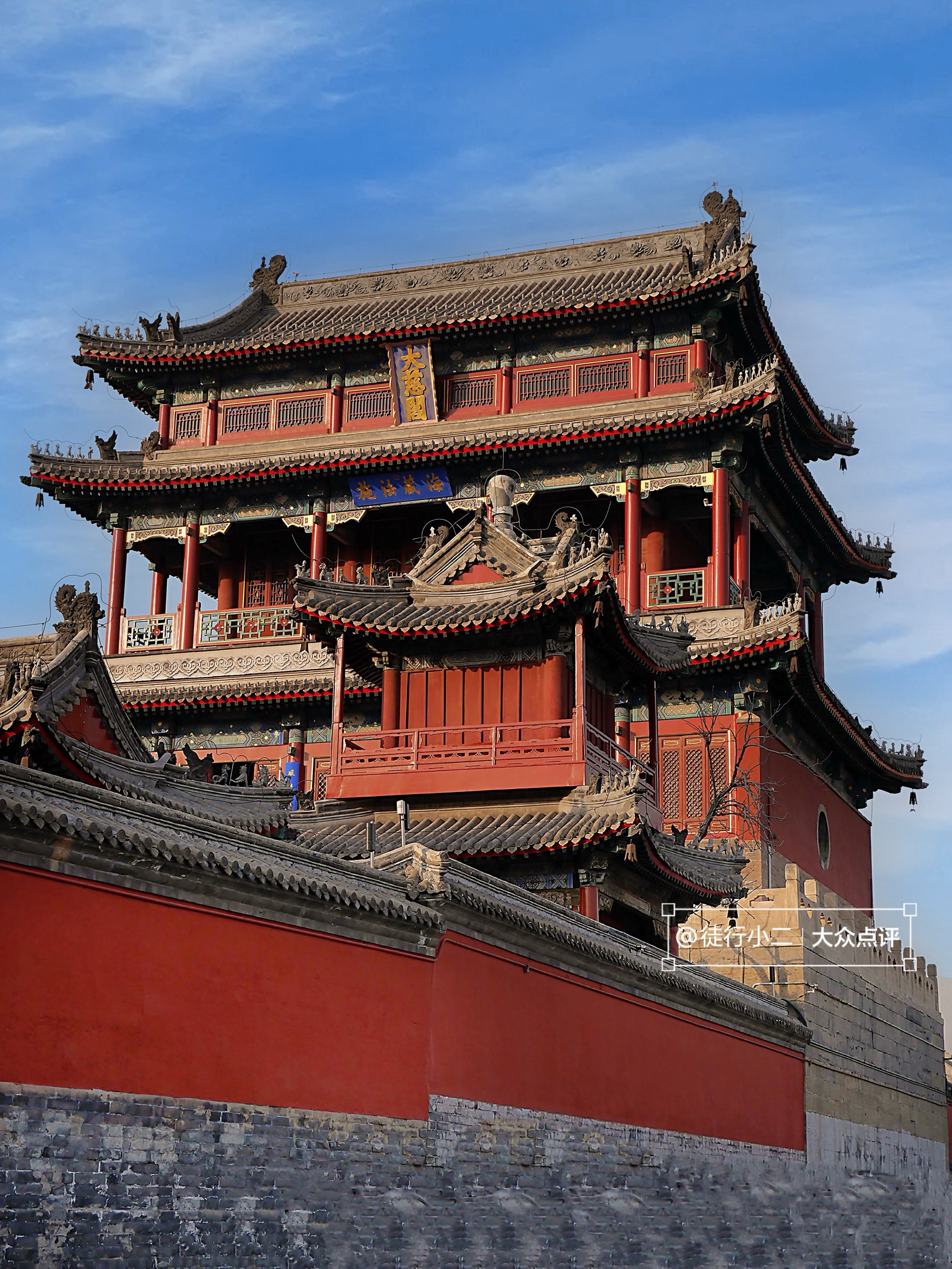
Towering above the old city, Daci Pavilion—originally the Buddhist Temple of True Enlightenment—has anchored Baoding's skyline since the Yuan era. Its double-eaved hip-and-gable roof, decorated with intricate xuanzi polychrome painting, exemplifies the fusion of Yuan carpentry and Qing restoration. Inside rests a 5.5-meter carved wooden Guanyin with a thousand arms, evoking the spiritual gravitas of a European cathedral's high altar. Climb to the upper gallery for panoramic views over the old town and, on clear days, glimpses toward distant mountain ridges.
Further afield lies the Huai Army Guildhall, a rare architectural hybrid blending Huizhou-style merchants' architecture—familiar to anyone who has visited Anhui's UNESCO-listed Hongcun villages—with the courtyard plans of Beijing's siheyuan mansions. Its showpiece is China's largest surviving enclosed Qing-era theater, where a coffered caisson ceiling produces acoustics engineers compare to the refinement of ancient Greek amphitheaters. Intricate woodcarvings throughout the courtyards reward anyone interested in opera culture or decorative arts.
The three core sites connect on foot within half an hour and cost roughly 30–40 yuan apiece. Most close on Mondays, so plan midweek visits. A sensible itinerary covers the governor's office in the morning, the lotus garden after lunch, and the pavilion at dusk when the old city glows against the darkening sky. Finish your day on West Street, where local snacks and street life continue a tradition stretching back centuries—offering the perfect close to an unhurried immersion into old Baoding.
The Zhili Governor-General's Office stands as the most intact Qing-dynasty provincial administrative complex in China, comparable in completeness to a Baroque-era European governor's palace. Its symmetrical layout along a central axis reflects Confucian principles of order—think Palladian logic translated into timber and brick. From 1801 onward, this was the seat of the viceroy governing the province surrounding Beijing. Officials such as Zeng Guofan and Li Hongzhang directed pivotal late-imperial affairs from these very halls, including suppression of the Taiping Rebellion (1850–1864). Allow roughly 90 minutes and request the guided tour.
Just a short stroll east, the Lotus Pond Garden ranks among northern China's earliest classical gardens, founded during the Yuan dynasty. It served successive roles as a private academy and a Qing imperial waystation, blending the geometric grandeur of northern landscaping with the intimate, water-laced charm of Jiangnan gardens south of the Yangtze. The twelve named vistas, including the celebrated "Summer Lotus Ripples," frame pavilions inscribed with imperial calligraphy. Visit in July or August when lotuses bloom, though winter snow transforms the scene into a living Chinese ink painting.
Towering above the old city, Daci Pavilion—originally the Buddhist Temple of True Enlightenment—has anchored Baoding's skyline since the Yuan era. Its double-eaved hip-and-gable roof, decorated with intricate xuanzi polychrome painting, exemplifies the fusion of Yuan carpentry and Qing restoration. Inside rests a 5.5-meter carved wooden Guanyin with a thousand arms, evoking the spiritual gravitas of a European cathedral's high altar. Climb to the upper gallery for panoramic views over the old town and, on clear days, glimpses toward distant mountain ridges.
Further afield lies the Huai Army Guildhall, a rare architectural hybrid blending Huizhou-style merchants' architecture—familiar to anyone who has visited Anhui's UNESCO-listed Hongcun villages—with the courtyard plans of Beijing's siheyuan mansions. Its showpiece is China's largest surviving enclosed Qing-era theater, where a coffered caisson ceiling produces acoustics engineers compare to the refinement of ancient Greek amphitheaters. Intricate woodcarvings throughout the courtyards reward anyone interested in opera culture or decorative arts.
The three core sites connect on foot within half an hour and cost roughly 30–40 yuan apiece. Most close on Mondays, so plan midweek visits. A sensible itinerary covers the governor's office in the morning, the lotus garden after lunch, and the pavilion at dusk when the old city glows against the darkening sky. Finish your day on West Street, where local snacks and street life continue a tradition stretching back centuries—offering the perfect close to an unhurried immersion into old Baoding.