Loushan Pass
⭐ 4.50
Loushan Pass Scenic Area, Loushan Pass Subdistrict, Huichuan District, Zunyi City, Guizhou Province, China
 **A Red Army Thermopylae**
Lou Mountain Pass occupies a place in Chinese revolutionary history comparable to Thermopylae in European memory—a narrow strategic chokepoint where outnumbered defenders turned the tide of a larger conflict. In February 1935, Mao Zedong's Red Army, exhausted and pursued after the Long March, inflicted a decisive defeat on Nationalist forces here, making it the first major triumph following the pivotal Zunyi Conference that reshaped CCP leadership. This battle effectively saved the expedition from collapse and set the stage for the Long March's legendary continuation to Yan'an. Few battlefields in the world combine such profound political consequence with such accessible terrain for modern visitors.
**Stairways, Stone, and Inscribed Verse**
The mountain itself acts as a vertical museum. The Hundred-Pace Stairway climbs 365 granite steps, one for each day of the Long March's grueling first year—an exhausting, symbolic ascent similar in atmosphere to scaling Rome's Scala Santa. Midway, visitors pass trench remnants on Small Pointed Hill and fortifications that still bear pockmarks from 1930s combat. Near the summit rises a monumental calligraphy wall: 396 marble panels inscribing Mao's "Remembering Qin'e" in characters bold enough to rival the cliff-carved legends of ancient Persia, alongside the weathered brushwork of Shu Tong's "Lou Mountain Pass" inscription carved directly into living rock.
**West Wind Terrace: A Stage Above the Clouds**
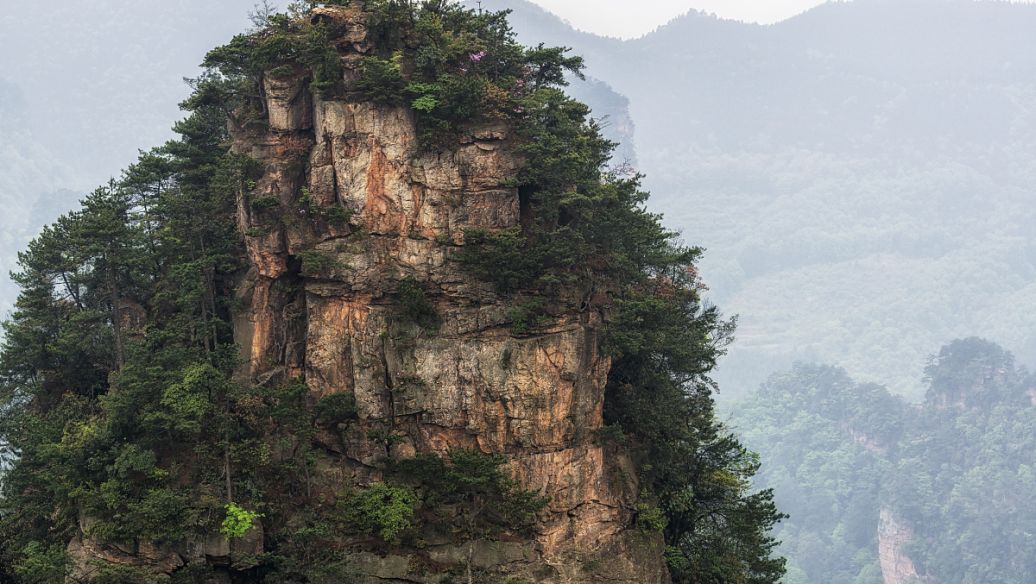
The pass's natural apex, West Wind Terrace at 1,779 meters, offers Guizhou's signature karst spectacle—towering limestone pinnacles rising like ruined Gothic cathedrals from a sea of cloud. After rain, dawn fog rolls between the peaks much as it does over China's Yellow Mountain or the karst towers of Guilin, while evening light ignites the horizon in the very crimson hues Mao immortalized. A 97-meter-long aerial bridge spans a gorge for adrenaline-seekers, a nearby observation tower rewards patient cloud watchers, and a small mountaintop café serves coffee as the sun sinks—perhaps the highest caffeine in the province.
**The Battle Brought to Life**
Those seeking immersive theater should reserve seats for the 60-minute "Great Victory at Lou Mountain Pass" outdoor performance, which deploys live actors, blank-fire pyrotechnics, and battlefield sound design to recreate the 1935 assault in vivid detail. Performed primarily in Mandarin, the production relies heavily on physical staging, explosions, and period costume—so even non-Chinese-speaking audiences can follow the heroic arc intuitively. Advance booking is strongly recommended, as the limited amphitheater fills quickly during peak season.
**Planning Your Visit**
The core battle-site and memorial zones are free; a sightseeing shuttle running between scenic highlights costs around 50 RMB round-trip, the Poetry Hall adds about 20 RMB, and the battle show is a separately ticketed experience. From central Zunyi, self-driving takes roughly 40 minutes—public transport is infrequent and inconvenient, so a private car or hired driver is ideal. The site closes at 18:00, and the main Memorial Hall is closed on Mondays. Temperatures at the summit run roughly 4°C cooler than in the city below, so bring a light jacket and sturdy anti-slip footwear; during fog or rain, prioritize the indoor exhibits before tackling the open-air summit trail. Respect the revolutionary heritage—stay on designated paths, and treat all monuments with the reverence their history deserves.
**A Red Army Thermopylae**
Lou Mountain Pass occupies a place in Chinese revolutionary history comparable to Thermopylae in European memory—a narrow strategic chokepoint where outnumbered defenders turned the tide of a larger conflict. In February 1935, Mao Zedong's Red Army, exhausted and pursued after the Long March, inflicted a decisive defeat on Nationalist forces here, making it the first major triumph following the pivotal Zunyi Conference that reshaped CCP leadership. This battle effectively saved the expedition from collapse and set the stage for the Long March's legendary continuation to Yan'an. Few battlefields in the world combine such profound political consequence with such accessible terrain for modern visitors.
**Stairways, Stone, and Inscribed Verse**
The mountain itself acts as a vertical museum. The Hundred-Pace Stairway climbs 365 granite steps, one for each day of the Long March's grueling first year—an exhausting, symbolic ascent similar in atmosphere to scaling Rome's Scala Santa. Midway, visitors pass trench remnants on Small Pointed Hill and fortifications that still bear pockmarks from 1930s combat. Near the summit rises a monumental calligraphy wall: 396 marble panels inscribing Mao's "Remembering Qin'e" in characters bold enough to rival the cliff-carved legends of ancient Persia, alongside the weathered brushwork of Shu Tong's "Lou Mountain Pass" inscription carved directly into living rock.
**West Wind Terrace: A Stage Above the Clouds**
The pass's natural apex, West Wind Terrace at 1,779 meters, offers Guizhou's signature karst spectacle—towering limestone pinnacles rising like ruined Gothic cathedrals from a sea of cloud. After rain, dawn fog rolls between the peaks much as it does over China's Yellow Mountain or the karst towers of Guilin, while evening light ignites the horizon in the very crimson hues Mao immortalized. A 97-meter-long aerial bridge spans a gorge for adrenaline-seekers, a nearby observation tower rewards patient cloud watchers, and a small mountaintop café serves coffee as the sun sinks—perhaps the highest caffeine in the province.
**The Battle Brought to Life**
Those seeking immersive theater should reserve seats for the 60-minute "Great Victory at Lou Mountain Pass" outdoor performance, which deploys live actors, blank-fire pyrotechnics, and battlefield sound design to recreate the 1935 assault in vivid detail. Performed primarily in Mandarin, the production relies heavily on physical staging, explosions, and period costume—so even non-Chinese-speaking audiences can follow the heroic arc intuitively. Advance booking is strongly recommended, as the limited amphitheater fills quickly during peak season.
**Planning Your Visit**
The core battle-site and memorial zones are free; a sightseeing shuttle running between scenic highlights costs around 50 RMB round-trip, the Poetry Hall adds about 20 RMB, and the battle show is a separately ticketed experience. From central Zunyi, self-driving takes roughly 40 minutes—public transport is infrequent and inconvenient, so a private car or hired driver is ideal. The site closes at 18:00, and the main Memorial Hall is closed on Mondays. Temperatures at the summit run roughly 4°C cooler than in the city below, so bring a light jacket and sturdy anti-slip footwear; during fog or rain, prioritize the indoor exhibits before tackling the open-air summit trail. Respect the revolutionary heritage—stay on designated paths, and treat all monuments with the reverence their history deserves.