Zhanggong District Riverside Walkway
⭐ 4.20
Riverside Walkway, Zhanggong District, Ganzhou City, Jiangxi Province, China
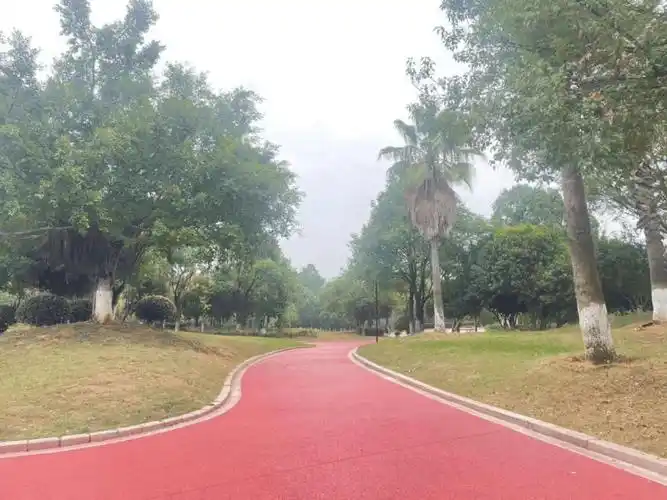 The promenade traces a living thread through one of southern China's most important Song-era frontier strongholds. Ganzhou's city wall was first raised in the Northern Song period (roughly 1050 CE), at a moment when Europe was rebuilding after the collapse of the Roman world and Norman knights were still half a century from conquering England. The surviving bricks still bear inscriptions such as "Qianzhou," the city's ancient name, and kiln marks from outlying counties, much like Roman bricks stamped with legionary names. The wall once guarded the southern marches of the empire, a buffer zone where Han Chinese settlers met incoming Hakka migrations from the north—a story inscribed into every gateway along this walk.
Compared with Europe's familiar medieval walls, Ganzhou's ramparts feel almost minimalist: low, broad, and built for endurance rather than spectacle. Walkers pass distinctive "horse-face" bastions—projecting defensive spurs that resemble the angular bastions of later European star forts such as those at Palmanova in Italy. These bastions allowed defenders to cover blind spots with flanking fire, a tactical principle that would reappear in European military architecture centuries later. The brickwork's weathered patina, set against glass-fronted high-rises on the opposite riverbank, creates a visual conversation between past and present that rivals the Thames embankments in London for sheer contrast.
The promenade links four key heritage nodes: Bajing Terrace, where the Zhang and Gong rivers merge into the Gan; Yugu Terrace, celebrated by the Southern Song poet Xin Qiji ("Beneath Yugu Terrace, the clear river flows..."); Guijiao Wei at the river's tail; and the Nanhe Bridge area. Together they form a public stage where local opera, morning tai chi, and evening dance troupes animate the same stones that once saw imperial couriers and Hakka settlers pass through. For travelers interested in literary China, this is essentially the open-air museum of Xin Qiji's most quoted verse.
Entry is free and the path is wheelchair-accessible throughout most sections. Plan two to three hours for a comfortable stroll, or longer if cycling. The best window is between 18:30 and 21:30, when sunset and the lighting show turn the ramparts golden; early mornings are quieter and ideal for jogging. Bring water and light snacks—convenience stores are sparse along the way—and wear grippy soles, especially after rain, since stone steps near the walls become slick.
Three easy routes suit different interests. Culture lovers should follow the classic heritage line from Bajing Terrace along the ancient wall to Nanhe Bridge (3–4 km). Night owls can head straight to Huangjin Bridge for the light display and riverside picnic. Fitness enthusiasts will appreciate the flat, barrier-free stretch perfect for cycling or jogging, suitable even for beginners. Nearby Old Town eateries serve Hakka staples such as stuffed tofu and three-cup chicken, a regional riff that compares favorably with any home-cooked meal in Tuscany.
Several sections along the water's edge lack railings, so keep children close. In summer, carry mosquito repellent, as vegetation near the river is thick. Public buses 5 and 28 reach the promenade, and free parking is available near the ancient wall section. Whether you come for history, photography, or simply an evening stroll beside illuminated Song-era masonry, this riverside walkway delivers one of Jiangnan's most under-the-radar experiences.
The promenade traces a living thread through one of southern China's most important Song-era frontier strongholds. Ganzhou's city wall was first raised in the Northern Song period (roughly 1050 CE), at a moment when Europe was rebuilding after the collapse of the Roman world and Norman knights were still half a century from conquering England. The surviving bricks still bear inscriptions such as "Qianzhou," the city's ancient name, and kiln marks from outlying counties, much like Roman bricks stamped with legionary names. The wall once guarded the southern marches of the empire, a buffer zone where Han Chinese settlers met incoming Hakka migrations from the north—a story inscribed into every gateway along this walk.
Compared with Europe's familiar medieval walls, Ganzhou's ramparts feel almost minimalist: low, broad, and built for endurance rather than spectacle. Walkers pass distinctive "horse-face" bastions—projecting defensive spurs that resemble the angular bastions of later European star forts such as those at Palmanova in Italy. These bastions allowed defenders to cover blind spots with flanking fire, a tactical principle that would reappear in European military architecture centuries later. The brickwork's weathered patina, set against glass-fronted high-rises on the opposite riverbank, creates a visual conversation between past and present that rivals the Thames embankments in London for sheer contrast.
The promenade links four key heritage nodes: Bajing Terrace, where the Zhang and Gong rivers merge into the Gan; Yugu Terrace, celebrated by the Southern Song poet Xin Qiji ("Beneath Yugu Terrace, the clear river flows..."); Guijiao Wei at the river's tail; and the Nanhe Bridge area. Together they form a public stage where local opera, morning tai chi, and evening dance troupes animate the same stones that once saw imperial couriers and Hakka settlers pass through. For travelers interested in literary China, this is essentially the open-air museum of Xin Qiji's most quoted verse.
Entry is free and the path is wheelchair-accessible throughout most sections. Plan two to three hours for a comfortable stroll, or longer if cycling. The best window is between 18:30 and 21:30, when sunset and the lighting show turn the ramparts golden; early mornings are quieter and ideal for jogging. Bring water and light snacks—convenience stores are sparse along the way—and wear grippy soles, especially after rain, since stone steps near the walls become slick.
Three easy routes suit different interests. Culture lovers should follow the classic heritage line from Bajing Terrace along the ancient wall to Nanhe Bridge (3–4 km). Night owls can head straight to Huangjin Bridge for the light display and riverside picnic. Fitness enthusiasts will appreciate the flat, barrier-free stretch perfect for cycling or jogging, suitable even for beginners. Nearby Old Town eateries serve Hakka staples such as stuffed tofu and three-cup chicken, a regional riff that compares favorably with any home-cooked meal in Tuscany.
Several sections along the water's edge lack railings, so keep children close. In summer, carry mosquito repellent, as vegetation near the river is thick. Public buses 5 and 28 reach the promenade, and free parking is available near the ancient wall section. Whether you come for history, photography, or simply an evening stroll beside illuminated Song-era masonry, this riverside walkway delivers one of Jiangnan's most under-the-radar experiences.