Ganzhou Museum
⭐ 4.50
No. 19, Changzheng Avenue, Zhanggong District, Ganzhou City, Jiangxi Province, China
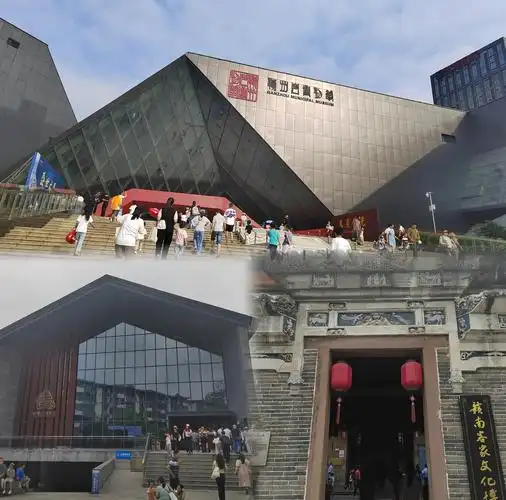 Rising beside the leafy Zhangjiang New District Central Park, the Ganzhou Museum's contemporary architecture—sleek lines of glass and stone—provides a fitting contrast to the ancient city it interprets. Its six permanent halls chart a sweeping journey from prehistoric times through the Song dynasty and into the modern era. For visitors familiar with London's British Museum or the Louvre's grand narrative approach, the experience here is more intimate but equally ambitious, weaving archaeology, ethnography, and natural history into a single regional tapestry.
The "Cradle of Hakka—Ganzhou" gallery is a highlight, using scale models and immersive half-painting dioramas to depict the migration of the Hakka people and their distinctive rammed-earth walled villages, known as *weiwu*. These fortified communal dwellings, unique to southern China, bear comparison to the bastide towns of medieval France or the trulli of Puglia in their organic, defensive design. The gallery illuminates how Ganzhou became the cultural heartland of the Hakka, one of China's most influential diaspora communities, whose descendants now stretch from Taiwan to Toronto.
Equally compelling is the Qilizhen Kiln gallery, which recreates a Song dynasty dragon kiln and displays exquisite bluish-white ceramics. Ganzhou stood along the ancient Maritime Silk Road, and its porcelain once traded alongside Song wares from Jingdezhen, the imperial kiln. Western visitors will recognize the refined aesthetic blue-white glazes that later inspired Delftware in the Netherlands and Savona maiolica in Italy, tracing a remarkable thread of cross-cultural design influence.
The dinosaur hall thrills families with full skeletal mounts and egg nest fossils of *Qianzhousaurus sinensis* (affectionately nicknamed "Pinocchio Rex"), discovered in Ganzhou's red sandstone basins. This paleontological bounty comes from the same Late Cretaceous deposits that have made southern China the world's most important window into the final age of dinosaurs—a legacy comparable to Montana's Hell Creek Formation or Mongolia's Gobi Desert sites.
The museum is free to enter but requires advance booking through the official WeChat account; foreign visitors may simply present a passport at the service desk for walk-in entry. Opening hours are Tuesday to Sunday, 9:00 to 17:00 (last entry 16:30), with extended hours to 18:00 during summer and holidays. Multilingual QR codes beside each exhibit provide instant translations, and free drinking water and phone charging stations are available throughout. Plan two to three hours for a full visit.
After exploring, stroll fifteen minutes eastward to Ganzhou's magnificent Song dynasty city wall—among the best-preserved brick fortifications in China, rivalling Xi'an's—and the remarkable Floating Bridge, a 400-meter chain of wooden pontoons crossing the Gong River that has served travelers since the 12th century. Together, the museum and its ancient neighbors form a complete day-long exploration of this often-overlooked Jiangxi gem.
Rising beside the leafy Zhangjiang New District Central Park, the Ganzhou Museum's contemporary architecture—sleek lines of glass and stone—provides a fitting contrast to the ancient city it interprets. Its six permanent halls chart a sweeping journey from prehistoric times through the Song dynasty and into the modern era. For visitors familiar with London's British Museum or the Louvre's grand narrative approach, the experience here is more intimate but equally ambitious, weaving archaeology, ethnography, and natural history into a single regional tapestry.
The "Cradle of Hakka—Ganzhou" gallery is a highlight, using scale models and immersive half-painting dioramas to depict the migration of the Hakka people and their distinctive rammed-earth walled villages, known as *weiwu*. These fortified communal dwellings, unique to southern China, bear comparison to the bastide towns of medieval France or the trulli of Puglia in their organic, defensive design. The gallery illuminates how Ganzhou became the cultural heartland of the Hakka, one of China's most influential diaspora communities, whose descendants now stretch from Taiwan to Toronto.
Equally compelling is the Qilizhen Kiln gallery, which recreates a Song dynasty dragon kiln and displays exquisite bluish-white ceramics. Ganzhou stood along the ancient Maritime Silk Road, and its porcelain once traded alongside Song wares from Jingdezhen, the imperial kiln. Western visitors will recognize the refined aesthetic blue-white glazes that later inspired Delftware in the Netherlands and Savona maiolica in Italy, tracing a remarkable thread of cross-cultural design influence.
The dinosaur hall thrills families with full skeletal mounts and egg nest fossils of *Qianzhousaurus sinensis* (affectionately nicknamed "Pinocchio Rex"), discovered in Ganzhou's red sandstone basins. This paleontological bounty comes from the same Late Cretaceous deposits that have made southern China the world's most important window into the final age of dinosaurs—a legacy comparable to Montana's Hell Creek Formation or Mongolia's Gobi Desert sites.
The museum is free to enter but requires advance booking through the official WeChat account; foreign visitors may simply present a passport at the service desk for walk-in entry. Opening hours are Tuesday to Sunday, 9:00 to 17:00 (last entry 16:30), with extended hours to 18:00 during summer and holidays. Multilingual QR codes beside each exhibit provide instant translations, and free drinking water and phone charging stations are available throughout. Plan two to three hours for a full visit.
After exploring, stroll fifteen minutes eastward to Ganzhou's magnificent Song dynasty city wall—among the best-preserved brick fortifications in China, rivalling Xi'an's—and the remarkable Floating Bridge, a 400-meter chain of wooden pontoons crossing the Gong River that has served travelers since the 12th century. Together, the museum and its ancient neighbors form a complete day-long exploration of this often-overlooked Jiangxi gem.