Yugu Terrace
⭐ 4.20
Yugu Terrace, Zhanggong District, Ganzhou City, Jiangxi Province, China
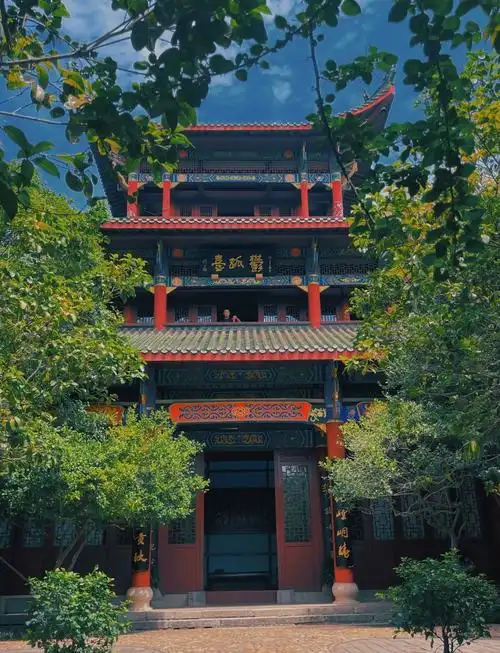 Built originally during the Tang Dynasty and rebuilt many times since, Yugu Terrace—literally "Gloomy Solitary Terrace"—earned its enduring fame in the late 12th century, when Southern Song poet Xin Qiji composed his poignant ci poem here while serving as a military commander. His verses about lost northern territory still belong to every educated Chinese reader's memory. Cast him as the Chinese contemporary of Richard the Lionheart—a soldier-poet channeling grief into art, much like Europe's troubadours of the same era. The current pavilion was rebuilt in 1983 following Qing-era architectural blueprints and is now a provincially protected monument.
The three-story wooden pavilion rises 17 meters, its upturned eaves and bracketed roofs recalling Song-dynasty scroll paintings rather than the stone fortresses of medieval Europe. Crowning Helan Mountain at 131 meters, it served as Ganzhou's natural watchtower for centuries. From the top floor, visitors gaze over the dramatic confluence of the Zhang and Gong rivers forming the mighty Gan River, China's longest tributary of the Yangtze. Surrounded by dense mountain vegetation, the hilltop setting feels closer to a Tuscan hill town than a typical Chinese city park.
Yugu Terrace anchors Ganzhou's "Jiangnan Song City" tourism district, an open-air museum linking Song-era city walls, the ingenious Fushou drainage network (predating London's Victorian sewers), the Eight-Scene Terrace, and Zaoer Xiang's narrow lanes. Within the terrace gardens, a bronze statue of Xin Qiji presides over poetic lantern banners that glow at dusk. The surrounding streets host evening light projections, intangible-heritage performances, and hanfu processions that transport visitors directly into Song-era market life, blending Hakka folk culture with imperial-era sophistication.
The terrace and surrounding leisure district sit at 2 Xijin Road, Zhanggong District, Ganzhou, Jiangxi, and admission is free, though a few small exhibition halls charge modest fees. Opening hours generally run 08:00 to 21:00—check local notices before visiting. Bus 26 stops at "Jiangnan Song City · Yugu Terrace" station, while a taxi from downtown takes about 15 minutes. Driving is discouraged; Ganzhou's old-town lanes are narrow and notoriously gridlocked. Signage is bilingual, but shopkeepers rarely speak English, so a translation app is essential.
For travelers seeking China's living history beyond the Forbidden City and Terracotta Warriors, Yugu Terrace offers something rarer: an authentic regional cultural landscape where 12th-century verse still shapes daily life. Arrive around 17:30 to catch the sunset over the Gan River, then wander lantern-lit streets sampling Hakka specialties—stuffed tofu pockets, river-fish stir-fries, steamed rice noodles. Budget two hours for the essentials, or pair the terrace with the Fushou Drainage Museum and Zaoer Xiang for a rich half-day. Hanfu enthusiasts and photographers will find exceptional shooting opportunities throughout.
Built originally during the Tang Dynasty and rebuilt many times since, Yugu Terrace—literally "Gloomy Solitary Terrace"—earned its enduring fame in the late 12th century, when Southern Song poet Xin Qiji composed his poignant ci poem here while serving as a military commander. His verses about lost northern territory still belong to every educated Chinese reader's memory. Cast him as the Chinese contemporary of Richard the Lionheart—a soldier-poet channeling grief into art, much like Europe's troubadours of the same era. The current pavilion was rebuilt in 1983 following Qing-era architectural blueprints and is now a provincially protected monument.
The three-story wooden pavilion rises 17 meters, its upturned eaves and bracketed roofs recalling Song-dynasty scroll paintings rather than the stone fortresses of medieval Europe. Crowning Helan Mountain at 131 meters, it served as Ganzhou's natural watchtower for centuries. From the top floor, visitors gaze over the dramatic confluence of the Zhang and Gong rivers forming the mighty Gan River, China's longest tributary of the Yangtze. Surrounded by dense mountain vegetation, the hilltop setting feels closer to a Tuscan hill town than a typical Chinese city park.
Yugu Terrace anchors Ganzhou's "Jiangnan Song City" tourism district, an open-air museum linking Song-era city walls, the ingenious Fushou drainage network (predating London's Victorian sewers), the Eight-Scene Terrace, and Zaoer Xiang's narrow lanes. Within the terrace gardens, a bronze statue of Xin Qiji presides over poetic lantern banners that glow at dusk. The surrounding streets host evening light projections, intangible-heritage performances, and hanfu processions that transport visitors directly into Song-era market life, blending Hakka folk culture with imperial-era sophistication.
The terrace and surrounding leisure district sit at 2 Xijin Road, Zhanggong District, Ganzhou, Jiangxi, and admission is free, though a few small exhibition halls charge modest fees. Opening hours generally run 08:00 to 21:00—check local notices before visiting. Bus 26 stops at "Jiangnan Song City · Yugu Terrace" station, while a taxi from downtown takes about 15 minutes. Driving is discouraged; Ganzhou's old-town lanes are narrow and notoriously gridlocked. Signage is bilingual, but shopkeepers rarely speak English, so a translation app is essential.
For travelers seeking China's living history beyond the Forbidden City and Terracotta Warriors, Yugu Terrace offers something rarer: an authentic regional cultural landscape where 12th-century verse still shapes daily life. Arrive around 17:30 to catch the sunset over the Gan River, then wander lantern-lit streets sampling Hakka specialties—stuffed tofu pockets, river-fish stir-fries, steamed rice noodles. Budget two hours for the essentials, or pair the terrace with the Fushou Drainage Museum and Zaoer Xiang for a rich half-day. Hanfu enthusiasts and photographers will find exceptional shooting opportunities throughout.