Ganzhou Ancient City Wall
⭐ 4.20
Zhanggong District, Ganzhou, Jiangxi, China
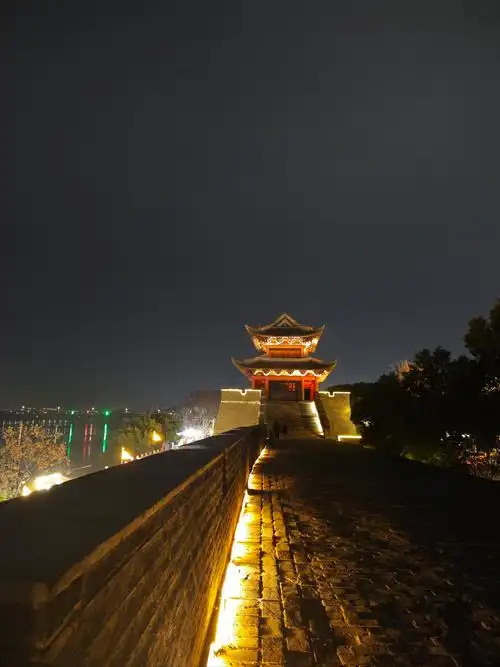 Rising from the banks where the Zhang and Gong rivers converge, the Ganzhou City Wall claims the distinction of being southern China's earliest large-scale brick fortification, rebuilt in fired brick during the Northern Song Dynasty (1056-1063) under Prefect Liu Yi, roughly contemporary with the construction of Europe's Norman cathedrals and shortly before the founding of the first Polish cities. Its 5-to-7-meter height and 4-to-6-meter width recall the scale of medieval European walled cities like Carcassonne, though Ganzhou's monument weaves Song engineering genius into its very fabric.
The wall's most extraordinary feature lies in its 521 documented varieties of inscription bricks, bearing dates, names of craftsmen, and official stamps from the Song era through the Qing Dynasty. Walking along the rampart is like reading a three-dimensional historical archive, where each brick tells a story of imperial labor, taxation, and civic pride. Four original gate towers survive, including Yongjin and Jianchun Gates, along with two gunpowder bastions housing the Bajing Terrace and Xijin Gate positions.
Beyond its military heritage, this wall performs an extraordinary dual function: it remains an active flood barrier, working in concert with the 11th-century Fushou Ditch drainage system, a sophisticated underground network that still prevents the riverside city from drowning during monsoon seasons. This makes Ganzhou one of the world's rare examples of living heritage infrastructure, comparable in functional longevity to ancient Roman aqueducts that still carry water in Spain or Turkey.
The complete circuit is free to access and rewards visitors with panoramic river views, especially at sunset when the stonework glows amber against the water. Photography enthusiasts and hanfu-dressed visitors flock here at golden hour, while history buffs can climb Bajing Terrace for a small fee of 10-20 yuan. Plan a half-day journey starting from Bajing Terrace, walking westward along the wall, descending through Jianchun Gate to reach the charming pontoon bridge across the Gong River, and finishing at Yugu Terrace where the Song poet Xin Qiji composed his famous verses.
Practical considerations matter when exploring this open-air monument: bring water and sun protection in summer, wear sturdy shoes since some sections lack railings, and visit early morning or late afternoon to avoid both heat and crowds. The ancient wall seamlessly connects with Ganzhou's other Song-era treasures, making it the essential starting point for understanding why this Jiangxi city is marketed as "Jiangnan Song City."
Rising from the banks where the Zhang and Gong rivers converge, the Ganzhou City Wall claims the distinction of being southern China's earliest large-scale brick fortification, rebuilt in fired brick during the Northern Song Dynasty (1056-1063) under Prefect Liu Yi, roughly contemporary with the construction of Europe's Norman cathedrals and shortly before the founding of the first Polish cities. Its 5-to-7-meter height and 4-to-6-meter width recall the scale of medieval European walled cities like Carcassonne, though Ganzhou's monument weaves Song engineering genius into its very fabric.
The wall's most extraordinary feature lies in its 521 documented varieties of inscription bricks, bearing dates, names of craftsmen, and official stamps from the Song era through the Qing Dynasty. Walking along the rampart is like reading a three-dimensional historical archive, where each brick tells a story of imperial labor, taxation, and civic pride. Four original gate towers survive, including Yongjin and Jianchun Gates, along with two gunpowder bastions housing the Bajing Terrace and Xijin Gate positions.
Beyond its military heritage, this wall performs an extraordinary dual function: it remains an active flood barrier, working in concert with the 11th-century Fushou Ditch drainage system, a sophisticated underground network that still prevents the riverside city from drowning during monsoon seasons. This makes Ganzhou one of the world's rare examples of living heritage infrastructure, comparable in functional longevity to ancient Roman aqueducts that still carry water in Spain or Turkey.
The complete circuit is free to access and rewards visitors with panoramic river views, especially at sunset when the stonework glows amber against the water. Photography enthusiasts and hanfu-dressed visitors flock here at golden hour, while history buffs can climb Bajing Terrace for a small fee of 10-20 yuan. Plan a half-day journey starting from Bajing Terrace, walking westward along the wall, descending through Jianchun Gate to reach the charming pontoon bridge across the Gong River, and finishing at Yugu Terrace where the Song poet Xin Qiji composed his famous verses.
Practical considerations matter when exploring this open-air monument: bring water and sun protection in summer, wear sturdy shoes since some sections lack railings, and visit early morning or late afternoon to avoid both heat and crowds. The ancient wall seamlessly connects with Ganzhou's other Song-era treasures, making it the essential starting point for understanding why this Jiangxi city is marketed as "Jiangnan Song City."