Xifeng Concentration Camp Revolutionary History Memorial
⭐ 4.20
Maodong Village, Yongyang Subdistrict, Xifeng County, Guiyang, Guizhou Province, China
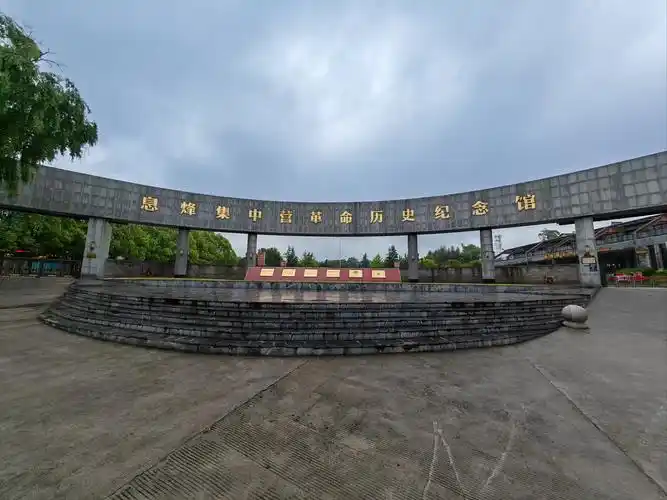 The Xifeng camp was established in 1938 as the most feared of three secret Kuomintang prisons. Within its walls were held some of twentieth-century China's most prominent political prisoners: Communist Party leaders Luo Shiweng and Che Yaoxian, General Yang Hucheng—the very figure whose 1936 Xi'an Incident helped halt the civil war and unite China against Japan—as well as General Huang Xiansheng and countless resistance fighters. The camp's history invites comparison with Europe's wartime political prisons, sharing the same grim logic of authoritarian regimes determined to silence opposition by any means necessary.
The surviving complex juxtaposes raw wartime austerity with contemporary museum design. The original prison comprises low, dimly lit timber cells whose cramped wooden bunks and heavy iron restraints have been painstakingly restored. Just uphill lies the infamous "Cat Cave," a natural limestone grotto repurposed as a torture chamber—its claustrophobic passages and rough stone walls remain chillingly intact. Nearby, the "Loyalty, Filial Piety, Benevolence and Love" study rooms betray dark irony, named after Confucian virtues while imprisoning those who fought for freedom. The modern memorial hall features four themed galleries anchored by the poignant "Song of Loyal Souls" sculptural ensemble.
Designated a national key cultural relic protection site and a model patriotism education base, the memorial carries profound symbolic weight in contemporary China. Rare artifacts, including a surviving copy of the "Resurrection Monthly" magazine, convey the unyielding spirit of those who refused to surrender their convictions. For international visitors, the site functions as a counterpart to memorials like Dachau in Bavaria or the House of Terror in Budapest—places where nations confront the violence of their own recent past and reaffirm democratic values.
Admission is free, but visitors must present a passport or ID card for advance reservation. The site opens Tuesday through Sunday from 8:30 a.m. to 4:30 p.m. and closes on Mondays. Group guided tours cost approximately 180 yuan per session and should be booked ahead. Interpretive materials are primarily in Chinese, so non-Mandarin speakers are strongly advised to arrange a bilingual guide or rent a translation device. Appropriate, respectful attire is required, and photography of certain sensitive exhibits is restricted.
Plan to arrive between 9:00 and 11:00 a.m. when natural light filters beautifully into the cells and visitor traffic remains light—allow two to three hours for a thorough visit. The memorial lies roughly a one-hour drive from Guiyang via the Guizun Expressway; high-speed rail to Xifeng Station followed by a local bus is an excellent alternative. Some displays depicting interrogation methods are graphically intense, so sensitive travelers may wish to pace themselves. Afterwards, the renowned Xifeng hot springs offer a soothing contrast and a chance to reflect on this sobering chapter of history.
The Xifeng camp was established in 1938 as the most feared of three secret Kuomintang prisons. Within its walls were held some of twentieth-century China's most prominent political prisoners: Communist Party leaders Luo Shiweng and Che Yaoxian, General Yang Hucheng—the very figure whose 1936 Xi'an Incident helped halt the civil war and unite China against Japan—as well as General Huang Xiansheng and countless resistance fighters. The camp's history invites comparison with Europe's wartime political prisons, sharing the same grim logic of authoritarian regimes determined to silence opposition by any means necessary.
The surviving complex juxtaposes raw wartime austerity with contemporary museum design. The original prison comprises low, dimly lit timber cells whose cramped wooden bunks and heavy iron restraints have been painstakingly restored. Just uphill lies the infamous "Cat Cave," a natural limestone grotto repurposed as a torture chamber—its claustrophobic passages and rough stone walls remain chillingly intact. Nearby, the "Loyalty, Filial Piety, Benevolence and Love" study rooms betray dark irony, named after Confucian virtues while imprisoning those who fought for freedom. The modern memorial hall features four themed galleries anchored by the poignant "Song of Loyal Souls" sculptural ensemble.
Designated a national key cultural relic protection site and a model patriotism education base, the memorial carries profound symbolic weight in contemporary China. Rare artifacts, including a surviving copy of the "Resurrection Monthly" magazine, convey the unyielding spirit of those who refused to surrender their convictions. For international visitors, the site functions as a counterpart to memorials like Dachau in Bavaria or the House of Terror in Budapest—places where nations confront the violence of their own recent past and reaffirm democratic values.
Admission is free, but visitors must present a passport or ID card for advance reservation. The site opens Tuesday through Sunday from 8:30 a.m. to 4:30 p.m. and closes on Mondays. Group guided tours cost approximately 180 yuan per session and should be booked ahead. Interpretive materials are primarily in Chinese, so non-Mandarin speakers are strongly advised to arrange a bilingual guide or rent a translation device. Appropriate, respectful attire is required, and photography of certain sensitive exhibits is restricted.
Plan to arrive between 9:00 and 11:00 a.m. when natural light filters beautifully into the cells and visitor traffic remains light—allow two to three hours for a thorough visit. The memorial lies roughly a one-hour drive from Guiyang via the Guizun Expressway; high-speed rail to Xifeng Station followed by a local bus is an excellent alternative. Some displays depicting interrogation methods are graphically intense, so sensitive travelers may wish to pace themselves. Afterwards, the renowned Xifeng hot springs offer a soothing contrast and a chance to reflect on this sobering chapter of history.