Daming Palace National Heritage Park
⭐ 4.10
Ziqiang East Road, Xincheng District, Xi'an, Shaanxi, China
 Dating to 634 CE, Daming Palace served as China's imperial seat for over 220 years—the era when Chang'an rivaled Constantinople and Baghdad as the globe's premier capitals. Built by Emperor Taizong of the newly unified Tang, the palace hosted audiences where dozens of foreign embassies were received in a single day. A UNESCO World Heritage Site since 2014 as part of the "Sild Roads: Chang'an–Tianshan Corridor," the complex once administered a cosmopolitan realm stretching from Korea to Central Asia. What Tang poets called the "Palace of Palaces" survives today primarily as excavated foundations—making it one of the most consequential archaeological sites on earth.
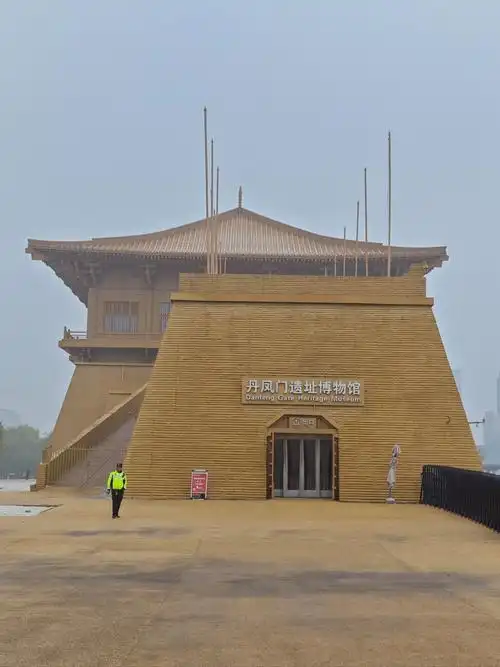
The palace's architectural footprint follows a strict north-south axis like the grand perspective at Versailles—but Versailles came some 800 years later. The three principal audience halls—Hanyuan, Xuanzheng, and Zichen—survive only as massive rammed-earth platforms 10 to 15 meters high. The crown jewel is Danfeng Gate: architects wrapped a sleek contemporary steel shell around the surviving earthen base, creating the park's only fully reconstructed structure without falsifying the original archaeology. A 1:15 scale model of the entire precinct helps visitors envision a complex that once numbered 30 halls, with private wings for the imperial family stretching across what is now open grassland.
Tang Chang'an anchored the eastern terminus of the Silk Road, and Daming Palace was its ceremonial power center. The court shaped diplomatic ties with the Tibetan Empire, Nara Japan, Abbasid Persia, and the Türk khaganates, while exporting architectural ideas: the courtyard prototypes reappear in Kyoto's Heian palaces and Seoul's Joseon royal compounds. On-site highlights include an Archaeological Discovery Center where children can try simulated excavation pits and traditional mortise-and-tenon joinery, plus a museum featuring Tang tri-color (sancai) tomb figurines alongside VR reconstructions. For anyone interested in pre-modern globalization, this is where East-West exchange was literally orchestrated.
Core-zone admission runs 60 yuan (students half price), covering the Danfeng Gate Museum, three-hall ruins, and main museum; surrounding gardens are free and open around the clock. Standard hours run 8:30 a.m. to 6 p.m., extended to 7 p.m. from mid-April to mid-October. Take Xi'an Metro Line 4 to Hanyuan Hall Station or Line 2 to Daming Palace West Station, then enter through the south Danfeng Gate for the natural chronological route. With nearly four square kilometers to cover, an electric sightseeing cart (about 30 yuan) is strongly recommended. An audio guide or pre-booked official docent is essential—without context, earthen mounds can feel deceptively sparse.
Daming Palace rewards travelers who prefer layered ruins to polished reconstructions. Sites like Datong's Yungang Grottoes impress through carved stone; Hengdian dazzles with reconstructed pageantry; here you stand on the original footprint—sun-baked earth where Emperor Xuanzong reigned during the An Lushan Rebellion, and corridors where Li Bai might have strolled after court banquets. Photographers love the long sightlines and golden light on the platforms; families enjoy the Discovery Center's hands-on activities plus picnic-friendly lawns around Taiye Pool. Allow three to four hours and you'll leave with an unshakable sense of what a "golden age" actually looks like on the ground.
Dating to 634 CE, Daming Palace served as China's imperial seat for over 220 years—the era when Chang'an rivaled Constantinople and Baghdad as the globe's premier capitals. Built by Emperor Taizong of the newly unified Tang, the palace hosted audiences where dozens of foreign embassies were received in a single day. A UNESCO World Heritage Site since 2014 as part of the "Sild Roads: Chang'an–Tianshan Corridor," the complex once administered a cosmopolitan realm stretching from Korea to Central Asia. What Tang poets called the "Palace of Palaces" survives today primarily as excavated foundations—making it one of the most consequential archaeological sites on earth.
The palace's architectural footprint follows a strict north-south axis like the grand perspective at Versailles—but Versailles came some 800 years later. The three principal audience halls—Hanyuan, Xuanzheng, and Zichen—survive only as massive rammed-earth platforms 10 to 15 meters high. The crown jewel is Danfeng Gate: architects wrapped a sleek contemporary steel shell around the surviving earthen base, creating the park's only fully reconstructed structure without falsifying the original archaeology. A 1:15 scale model of the entire precinct helps visitors envision a complex that once numbered 30 halls, with private wings for the imperial family stretching across what is now open grassland.
Tang Chang'an anchored the eastern terminus of the Silk Road, and Daming Palace was its ceremonial power center. The court shaped diplomatic ties with the Tibetan Empire, Nara Japan, Abbasid Persia, and the Türk khaganates, while exporting architectural ideas: the courtyard prototypes reappear in Kyoto's Heian palaces and Seoul's Joseon royal compounds. On-site highlights include an Archaeological Discovery Center where children can try simulated excavation pits and traditional mortise-and-tenon joinery, plus a museum featuring Tang tri-color (sancai) tomb figurines alongside VR reconstructions. For anyone interested in pre-modern globalization, this is where East-West exchange was literally orchestrated.
Core-zone admission runs 60 yuan (students half price), covering the Danfeng Gate Museum, three-hall ruins, and main museum; surrounding gardens are free and open around the clock. Standard hours run 8:30 a.m. to 6 p.m., extended to 7 p.m. from mid-April to mid-October. Take Xi'an Metro Line 4 to Hanyuan Hall Station or Line 2 to Daming Palace West Station, then enter through the south Danfeng Gate for the natural chronological route. With nearly four square kilometers to cover, an electric sightseeing cart (about 30 yuan) is strongly recommended. An audio guide or pre-booked official docent is essential—without context, earthen mounds can feel deceptively sparse.
Daming Palace rewards travelers who prefer layered ruins to polished reconstructions. Sites like Datong's Yungang Grottoes impress through carved stone; Hengdian dazzles with reconstructed pageantry; here you stand on the original footprint—sun-baked earth where Emperor Xuanzong reigned during the An Lushan Rebellion, and corridors where Li Bai might have strolled after court banquets. Photographers love the long sightlines and golden light on the platforms; families enjoy the Discovery Center's hands-on activities plus picnic-friendly lawns around Taiye Pool. Allow three to four hours and you'll leave with an unshakable sense of what a "golden age" actually looks like on the ground.