Qinqiang Theater
⭐ 4.80
Nanmenli, Beilin District, Xi'an, Shaanxi, China
 Qinqiang, often called the "ancestor of Chinese opera," is one of Asia's oldest theatrical traditions, with roots stretching back over two millennia to the Qin and Han dynasties. As the cradle of Peking Opera and dozens of regional styles, it shares a cultural lineage with Italian *commedia dell'arte* in its bold archetypes, exaggerated gestures, and instantly recognizable vocal conventions. Xi'an, the ancient imperial capital along the Silk Road, has long been its spiritual home, and the city's theater troupe is the leading custodian of this living heritage.
Founded by merging two storied troupes, the company carries forward a legacy as weighty as any European national theater. The Yisu Society (1912) was a crucible of literary innovation, championed by progressive intellectuals in the twilight of the Qing dynasty, while the Sanyi Society (1895) preserved the raw, rustic vigor of village folk opera. Their 2005 unification mirrors the way Italy's La Scala absorbed rival opera houses to become a single cultural flagship. Today, the troupe boasts multiple Plum Blossom Award winners, China's highest theatrical honor, including the celebrated Hou Hongqin.
Architecture and theatrical craft blend tradition with accessibility. The Yisu Grand Theater, a short walk from the Bell Tower, retains a vintage charm reminiscent of a 19th-century European playhouse, yet offers modern touches: LED supertitles in Chinese and rental translation glasses for foreign visitors. On stage, prepare for dramatic fire-breathing, lightning-fast sleeve flourishes, and acrobatic tumbles, techniques that have thrilled audiences since the days of Caravaggio's theatrical Rome. The orchestra's nasal, high-pitched vocals may feel foreign to Western ears, but the emotional intensity is universal.
Practical planning is straightforward. Performances typically begin at 7:30 PM and run 2 to 2.5 hours, with tickets available on Ctrip, Damai, or the "Xiyan LIVE" mini-program. The theater sits steps from Dachaishi Station on Metro Line 6, making it easy to pair with an evening stroll to the illuminated Bell Tower or a nightcap in the Muslim Quarter. Arrive 30 minutes early; once the curtain rises, remain seated and silent during arias.
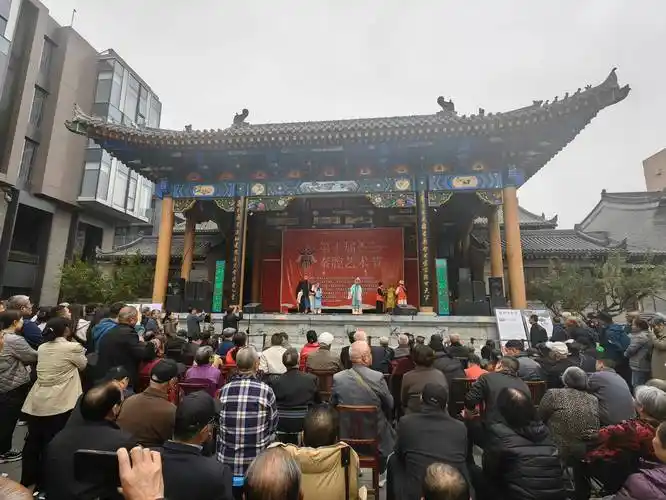
For daytime visitors, the free Qinqiang Art Museum in the surrounding Yisu Cultural Block offers a fascinating prelude, displaying century-old costumes, vintage playbills, and historic stage photos. An open-air pavilion often hosts free *zhezixi* excerpts, perfect for sampling the art form before committing to a full evening performance. First-timers should seek these shorter showcases; the condensed storylines ease newcomers into the stylized world of painted-face heroes, scheming officials, and tragic maidens.
This is more than entertainment: it is a living thread connecting modern Xi'an to the Silk Road era when caravans carried goods, ideas, and performing troupes across Eurasia. Watching Qinqiang in its birthplace offers the same unfiltered cultural immersion as hearing flamenco in Andalusia or opera in Verona, an encounter with an art form so deeply rooted in place that it can only be fully understood on its home soil.
Qinqiang, often called the "ancestor of Chinese opera," is one of Asia's oldest theatrical traditions, with roots stretching back over two millennia to the Qin and Han dynasties. As the cradle of Peking Opera and dozens of regional styles, it shares a cultural lineage with Italian *commedia dell'arte* in its bold archetypes, exaggerated gestures, and instantly recognizable vocal conventions. Xi'an, the ancient imperial capital along the Silk Road, has long been its spiritual home, and the city's theater troupe is the leading custodian of this living heritage.
Founded by merging two storied troupes, the company carries forward a legacy as weighty as any European national theater. The Yisu Society (1912) was a crucible of literary innovation, championed by progressive intellectuals in the twilight of the Qing dynasty, while the Sanyi Society (1895) preserved the raw, rustic vigor of village folk opera. Their 2005 unification mirrors the way Italy's La Scala absorbed rival opera houses to become a single cultural flagship. Today, the troupe boasts multiple Plum Blossom Award winners, China's highest theatrical honor, including the celebrated Hou Hongqin.
Architecture and theatrical craft blend tradition with accessibility. The Yisu Grand Theater, a short walk from the Bell Tower, retains a vintage charm reminiscent of a 19th-century European playhouse, yet offers modern touches: LED supertitles in Chinese and rental translation glasses for foreign visitors. On stage, prepare for dramatic fire-breathing, lightning-fast sleeve flourishes, and acrobatic tumbles, techniques that have thrilled audiences since the days of Caravaggio's theatrical Rome. The orchestra's nasal, high-pitched vocals may feel foreign to Western ears, but the emotional intensity is universal.
Practical planning is straightforward. Performances typically begin at 7:30 PM and run 2 to 2.5 hours, with tickets available on Ctrip, Damai, or the "Xiyan LIVE" mini-program. The theater sits steps from Dachaishi Station on Metro Line 6, making it easy to pair with an evening stroll to the illuminated Bell Tower or a nightcap in the Muslim Quarter. Arrive 30 minutes early; once the curtain rises, remain seated and silent during arias.
For daytime visitors, the free Qinqiang Art Museum in the surrounding Yisu Cultural Block offers a fascinating prelude, displaying century-old costumes, vintage playbills, and historic stage photos. An open-air pavilion often hosts free *zhezixi* excerpts, perfect for sampling the art form before committing to a full evening performance. First-timers should seek these shorter showcases; the condensed storylines ease newcomers into the stylized world of painted-face heroes, scheming officials, and tragic maidens.
This is more than entertainment: it is a living thread connecting modern Xi'an to the Silk Road era when caravans carried goods, ideas, and performing troupes across Eurasia. Watching Qinqiang in its birthplace offers the same unfiltered cultural immersion as hearing flamenco in Andalusia or opera in Verona, an encounter with an art form so deeply rooted in place that it can only be fully understood on its home soil.