Shaanxi History Museum
⭐ 4.80
No. 91, Xiaozhai East Road, Yanta District, Xi'an City, Shaanxi Province, China
 For Western travelers, the Shaanxi History Museum offers something no European counterpart can: an unbroken narrative of Chinese civilization from the Bronze Age to the Tang golden age, all under one roof. Where the British Museum surveys four continents and the Pergamon dazzles with plundered antiquities, this museum tells the story of one place—Xi'an, formerly Chang'an—once the largest, wealthiest, and most cosmopolitan city on earth, larger than Rome at its peak and the eastern terminus of the Silk Road. Its 1.7 million artifacts trace a hundred thousand years of human history, from prehistoric stone tools to the gold and silver masterworks of the Tang Dynasty (618–907 CE), when China led the world in technology, trade, and the arts.
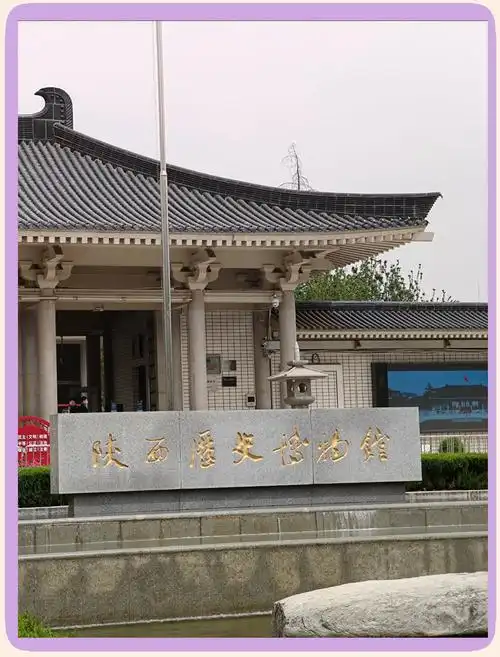
The building itself is worth admiring, designed in a stately Tang palace style that echoes the imperial halls that once stood nearby. The central rotunda takes its form from a royal crown, blending traditional Chinese architectural aesthetics with modern museum design—comparable in ambition to the I. M. Pei pyramid at the Louvre, but rooted firmly in Chinese visual tradition. Calligraphy by the renowned scholar Qi Gong adorns the museum's nameplate above the entrance, adding a literary gravitas to the façade. The result is one of Xi'an's defining cultural landmarks, instantly recognizable to anyone familiar with the city's skyline.
Culturally, the museum's strength lies in four signature collections: Zhou and Shang dynasty bronzes rivaling the finest Greek and Etruscan metalwork; thousands of terracotta warriors and tomb figures predating the famous army at the nearby emperor's mausoleum; Han and Tang gold and silverware showing astonishing technical refinement; and vivid Tang dynasty tomb murals depicting court life, hunting scenes, and diplomatic envoys from across Asia. The so-called "Four Great Treasures"—the agate cup with a beast-head gold mount, the polychrome camel bearing five musicians (a miniature orchestra frozen in glazed clay), the grape-and-bird silver incense ball using a gyroscopic mechanism more advanced than anything in contemporary Europe, and the gold bowl with mandarin-duck lotus petals—are so precious that two cannot leave China.
Visiting requires advance planning but is refreshingly affordable. Admission is free, but tickets must be reserved through the museum's official WeChat account exactly five days ahead at 5:00 PM sharp, with entry via facial recognition and passport. The Treasure Gallery (¥30) and the separate Mural Gallery (¥270) offer smaller crowds and a deeper dive into specific masterpieces. Summer hours run 8:30 AM to 6:00 PM with last entry at 4:30 PM; the museum closes on Mondays. The building sits near Xiaozhai metro station on Line 2 and the Giant Wild Goose Pagoda station on Line 3, a short ride from most central hotels.
A few insider tips make the experience far richer. Reserve a Chinese-speaking human guide or rent a multilingual audio device in advance—without context, the galleries can feel overwhelming, but with narration the objects come alive as witnesses to a vanished world. Plan two and a half to three hours, following the suggested chronological route from prehistoric to Tang. Arrive at 9:00 AM when doors open: the light through the high windows is best, crowds are thinner, and the air-conditioning is bearable, though bringing a light layer is wise year-round. If you visit only one museum in China, make it this one.
[BRIEF]
The Shaanxi History Museum, opened in 1991 in the ancient capital of Xi'an, is often called China's answer to the British Museum or the Louvre—a showcase of one continuous civilization rather than a sampler of global cultures. Housing over 1.7 million artifacts spanning a hundred thousand years, including 18 national treasures and 762 top-grade relics, it distills the glory of the Zhou, Qin, Han, and Tang dynasties into a single visit. Star pieces like the gold-inlaid agate cup, the polychrome camel carrying a Tang musical troupe, and the silver incense burner with grape-and-bird motifs capture the Silk Road splendor of imperial China. Free to enter and easily reached by metro, it ranks among Asia's most rewarding museums.
[DETAILED]
For Western travelers, the Shaanxi History Museum offers something no European counterpart can: an unbroken narrative of Chinese civilization from the Bronze Age to the Tang golden age, all under one roof. Where the British Museum surveys four continents and the Pergamon dazzles with plundered antiquities, this museum tells the story of one place—Xi'an, formerly Chang'an—once the largest, wealthiest, and most cosmopolitan city on earth, larger than Rome at its peak and the eastern terminus of the Silk Road. Its 1.7 million artifacts trace a hundred thousand years of human history, from prehistoric stone tools to the gold and silver masterworks of the Tang Dynasty (618–907 CE), when China led the world in technology, trade, and the arts.
The building itself is worth admiring, designed in a stately Tang palace style that echoes the imperial halls that once stood nearby. The central rotunda takes its form from a royal crown, blending traditional Chinese architectural aesthetics with modern museum design—comparable in ambition to the I. M. Pei pyramid at the Louvre, but rooted firmly in Chinese visual tradition. Calligraphy by the renowned scholar Qi Gong adorns the museum's nameplate above the entrance, adding a literary gravitas to the façade. The result is one of Xi'an's defining cultural landmarks, instantly recognizable to anyone familiar with the city's skyline.
Culturally, the museum's strength lies in four signature collections: Zhou and Shang dynasty bronzes rivaling the finest Greek and Etruscan metalwork; thousands of terracotta warriors and tomb figures predating the famous army at the nearby emperor's mausoleum; Han and Tang gold and silverware showing astonishing technical refinement; and vivid Tang dynasty tomb murals depicting court life, hunting scenes, and diplomatic envoys from across Asia. The so-called "Four Great Treasures"—the agate cup with a beast-head gold mount, the polychrome camel bearing five musicians (a miniature orchestra frozen in glazed clay), the grape-and-bird silver incense ball using a gyroscopic mechanism more advanced than anything in contemporary Europe, and the gold bowl with mandarin-duck lotus petals—are so precious that two cannot leave China.
Visiting requires advance planning but is refreshingly affordable. Admission is free, but tickets must be reserved through the museum's official WeChat account exactly five days ahead at 5:00 PM sharp, with entry via facial recognition and passport. The Treasure Gallery (¥30) and the separate Mural Gallery (¥270) offer smaller crowds and a deeper dive into specific masterpieces. Summer hours run 8:30 AM to 6:00 PM with last entry at 4:30 PM; the museum closes on Mondays. The building sits near Xiaozhai metro station on Line 2 and the Giant Wild Goose Pagoda station on Line 3, a short ride from most central hotels.
A few insider tips make the experience far richer. Reserve a Chinese-speaking human guide or rent a multilingual audio device in advance—without context, the galleries can feel overwhelming, but with narration the objects come alive as witnesses to a vanished world. Plan two and a half to three hours, following the suggested chronological route from prehistoric to Tang. Arrive at 9:00 AM when doors open: the light through the high windows is best, crowds are thinner, and the air-conditioning is bearable, though bringing a light layer is wise year-round. If you visit only one museum in China, make it this one.
For Western travelers, the Shaanxi History Museum offers something no European counterpart can: an unbroken narrative of Chinese civilization from the Bronze Age to the Tang golden age, all under one roof. Where the British Museum surveys four continents and the Pergamon dazzles with plundered antiquities, this museum tells the story of one place—Xi'an, formerly Chang'an—once the largest, wealthiest, and most cosmopolitan city on earth, larger than Rome at its peak and the eastern terminus of the Silk Road. Its 1.7 million artifacts trace a hundred thousand years of human history, from prehistoric stone tools to the gold and silver masterworks of the Tang Dynasty (618–907 CE), when China led the world in technology, trade, and the arts.
The building itself is worth admiring, designed in a stately Tang palace style that echoes the imperial halls that once stood nearby. The central rotunda takes its form from a royal crown, blending traditional Chinese architectural aesthetics with modern museum design—comparable in ambition to the I. M. Pei pyramid at the Louvre, but rooted firmly in Chinese visual tradition. Calligraphy by the renowned scholar Qi Gong adorns the museum's nameplate above the entrance, adding a literary gravitas to the façade. The result is one of Xi'an's defining cultural landmarks, instantly recognizable to anyone familiar with the city's skyline.
Culturally, the museum's strength lies in four signature collections: Zhou and Shang dynasty bronzes rivaling the finest Greek and Etruscan metalwork; thousands of terracotta warriors and tomb figures predating the famous army at the nearby emperor's mausoleum; Han and Tang gold and silverware showing astonishing technical refinement; and vivid Tang dynasty tomb murals depicting court life, hunting scenes, and diplomatic envoys from across Asia. The so-called "Four Great Treasures"—the agate cup with a beast-head gold mount, the polychrome camel bearing five musicians (a miniature orchestra frozen in glazed clay), the grape-and-bird silver incense ball using a gyroscopic mechanism more advanced than anything in contemporary Europe, and the gold bowl with mandarin-duck lotus petals—are so precious that two cannot leave China.
Visiting requires advance planning but is refreshingly affordable. Admission is free, but tickets must be reserved through the museum's official WeChat account exactly five days ahead at 5:00 PM sharp, with entry via facial recognition and passport. The Treasure Gallery (¥30) and the separate Mural Gallery (¥270) offer smaller crowds and a deeper dive into specific masterpieces. Summer hours run 8:30 AM to 6:00 PM with last entry at 4:30 PM; the museum closes on Mondays. The building sits near Xiaozhai metro station on Line 2 and the Giant Wild Goose Pagoda station on Line 3, a short ride from most central hotels.
A few insider tips make the experience far richer. Reserve a Chinese-speaking human guide or rent a multilingual audio device in advance—without context, the galleries can feel overwhelming, but with narration the objects come alive as witnesses to a vanished world. Plan two and a half to three hours, following the suggested chronological route from prehistoric to Tang. Arrive at 9:00 AM when doors open: the light through the high windows is best, crowds are thinner, and the air-conditioning is bearable, though bringing a light layer is wise year-round. If you visit only one museum in China, make it this one.
[BRIEF]
The Shaanxi History Museum, opened in 1991 in the ancient capital of Xi'an, is often called China's answer to the British Museum or the Louvre—a showcase of one continuous civilization rather than a sampler of global cultures. Housing over 1.7 million artifacts spanning a hundred thousand years, including 18 national treasures and 762 top-grade relics, it distills the glory of the Zhou, Qin, Han, and Tang dynasties into a single visit. Star pieces like the gold-inlaid agate cup, the polychrome camel carrying a Tang musical troupe, and the silver incense burner with grape-and-bird motifs capture the Silk Road splendor of imperial China. Free to enter and easily reached by metro, it ranks among Asia's most rewarding museums.
[DETAILED]
For Western travelers, the Shaanxi History Museum offers something no European counterpart can: an unbroken narrative of Chinese civilization from the Bronze Age to the Tang golden age, all under one roof. Where the British Museum surveys four continents and the Pergamon dazzles with plundered antiquities, this museum tells the story of one place—Xi'an, formerly Chang'an—once the largest, wealthiest, and most cosmopolitan city on earth, larger than Rome at its peak and the eastern terminus of the Silk Road. Its 1.7 million artifacts trace a hundred thousand years of human history, from prehistoric stone tools to the gold and silver masterworks of the Tang Dynasty (618–907 CE), when China led the world in technology, trade, and the arts.
The building itself is worth admiring, designed in a stately Tang palace style that echoes the imperial halls that once stood nearby. The central rotunda takes its form from a royal crown, blending traditional Chinese architectural aesthetics with modern museum design—comparable in ambition to the I. M. Pei pyramid at the Louvre, but rooted firmly in Chinese visual tradition. Calligraphy by the renowned scholar Qi Gong adorns the museum's nameplate above the entrance, adding a literary gravitas to the façade. The result is one of Xi'an's defining cultural landmarks, instantly recognizable to anyone familiar with the city's skyline.
Culturally, the museum's strength lies in four signature collections: Zhou and Shang dynasty bronzes rivaling the finest Greek and Etruscan metalwork; thousands of terracotta warriors and tomb figures predating the famous army at the nearby emperor's mausoleum; Han and Tang gold and silverware showing astonishing technical refinement; and vivid Tang dynasty tomb murals depicting court life, hunting scenes, and diplomatic envoys from across Asia. The so-called "Four Great Treasures"—the agate cup with a beast-head gold mount, the polychrome camel bearing five musicians (a miniature orchestra frozen in glazed clay), the grape-and-bird silver incense ball using a gyroscopic mechanism more advanced than anything in contemporary Europe, and the gold bowl with mandarin-duck lotus petals—are so precious that two cannot leave China.
Visiting requires advance planning but is refreshingly affordable. Admission is free, but tickets must be reserved through the museum's official WeChat account exactly five days ahead at 5:00 PM sharp, with entry via facial recognition and passport. The Treasure Gallery (¥30) and the separate Mural Gallery (¥270) offer smaller crowds and a deeper dive into specific masterpieces. Summer hours run 8:30 AM to 6:00 PM with last entry at 4:30 PM; the museum closes on Mondays. The building sits near Xiaozhai metro station on Line 2 and the Giant Wild Goose Pagoda station on Line 3, a short ride from most central hotels.
A few insider tips make the experience far richer. Reserve a Chinese-speaking human guide or rent a multilingual audio device in advance—without context, the galleries can feel overwhelming, but with narration the objects come alive as witnesses to a vanished world. Plan two and a half to three hours, following the suggested chronological route from prehistoric to Tang. Arrive at 9:00 AM when doors open: the light through the high windows is best, crowds are thinner, and the air-conditioning is bearable, though bringing a light layer is wise year-round. If you visit only one museum in China, make it this one.