Xining Zoo
⭐ 4.60
No. 15, South Street, Chengzhong District, Xining, Qinghai, China
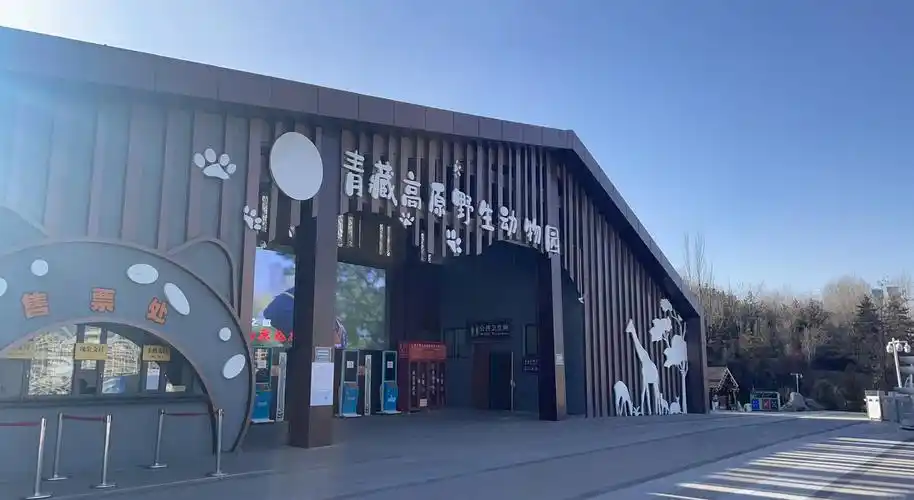 Founded in the early 2000s and steadily expanded over two decades, Xining Wildlife Park represents a relatively young but ambitious chapter in China's modern conservation story. Much like the San Diego Zoo pioneered open-range exhibits in the 20th century, this park has carved out a distinctive niche by focusing on species that exist nowhere else in captive programs worldwide. Today it houses between 180 and 200 species—several thousand animals in total—and serves as the official rescue, rehabilitation, and breeding hub for injured wildlife across the Qinghai-Tibet Plateau, a role comparable to a state-run version of South Africa's Moholoholo Rehab Centre.
The park's signature feature is its rescued animal population: many residents are injured wild creatures deemed unfit for release, including China's largest captive snow leopard breeding group and the world's only managed herd of Przewalski's gazelle, one of Asia's most endangered antelope. Crowd favorites include the "Ling Family" of snow leopards that have become online sensations, along with the famously grumpy-looking Pallas's cats and elusive Chinese mountain cats. Notably, the park has banned animal performances entirely—each enclosure displays a thoughtful sign explaining the animal's rescue backstory, channeling the same ethical philosophy now reshaping European zoos from London to Berlin.
Built into the rolling hills west of central Xining, the park's layout follows the natural terrain rather than fighting it, meaning visitors should expect climbs and descents rather than the flat paths of older Chinese zoos. The main sections include the Snow Leopard Hall, the Small Cat House, a Predator Walkway elevated on wooden boardwalks reminiscent of Scandinavian forest trails, the herbivore paddocks, and a separately ticketed Giant Panda Hall. A loop shuttle bus helps conserve energy, and a complete walking circuit takes three to four hours. Facilities feel modestly dated compared to Shanghai or Singapore, but the animals themselves appear healthy and active.
Practical planning is refreshingly straightforward. The park sits at 9 Xingzhi Road in Chengxi District, west of the city center, easily reached by city buses 14, 22, 41, or 102, or by car via the "Qinghai-Tibet Plateau Wildlife Park Main Gate" navigation pin (parking costs 5 yuan per visit). Summer hours run 8:30 a.m. to 6:30 p.m. Entry is just 30 yuan; the Panda Hall adds 25 yuan or 50 yuan as a combo ticket—an exceptional value by international standards. Animal activity peaks between 9 and 11 a.m., so early arrivals are rewarded with the most energetic sightings.
A few honest warnings make the visit far more enjoyable. At 2,200 meters elevation, mild altitude effects—lightheadedness or shortness of breath—can affect visitors unused to plateau air, so move slowly and hydrate generously. The high-altitude sun is deceptively intense: sunglasses, a brimmed hat, and strong sunscreen are essential, much as they would be in the Colorado Rockies or the Swiss Alps. Summer days swing sharply into cool evenings, so a light jacket is wise. Pets are prohibited, feeding wildlife is strictly forbidden, and flash photography is banned to protect the animals' welfare—rules worth respecting for a park whose entire philosophy is built on care rather than spectacle.
Founded in the early 2000s and steadily expanded over two decades, Xining Wildlife Park represents a relatively young but ambitious chapter in China's modern conservation story. Much like the San Diego Zoo pioneered open-range exhibits in the 20th century, this park has carved out a distinctive niche by focusing on species that exist nowhere else in captive programs worldwide. Today it houses between 180 and 200 species—several thousand animals in total—and serves as the official rescue, rehabilitation, and breeding hub for injured wildlife across the Qinghai-Tibet Plateau, a role comparable to a state-run version of South Africa's Moholoholo Rehab Centre.
The park's signature feature is its rescued animal population: many residents are injured wild creatures deemed unfit for release, including China's largest captive snow leopard breeding group and the world's only managed herd of Przewalski's gazelle, one of Asia's most endangered antelope. Crowd favorites include the "Ling Family" of snow leopards that have become online sensations, along with the famously grumpy-looking Pallas's cats and elusive Chinese mountain cats. Notably, the park has banned animal performances entirely—each enclosure displays a thoughtful sign explaining the animal's rescue backstory, channeling the same ethical philosophy now reshaping European zoos from London to Berlin.
Built into the rolling hills west of central Xining, the park's layout follows the natural terrain rather than fighting it, meaning visitors should expect climbs and descents rather than the flat paths of older Chinese zoos. The main sections include the Snow Leopard Hall, the Small Cat House, a Predator Walkway elevated on wooden boardwalks reminiscent of Scandinavian forest trails, the herbivore paddocks, and a separately ticketed Giant Panda Hall. A loop shuttle bus helps conserve energy, and a complete walking circuit takes three to four hours. Facilities feel modestly dated compared to Shanghai or Singapore, but the animals themselves appear healthy and active.
Practical planning is refreshingly straightforward. The park sits at 9 Xingzhi Road in Chengxi District, west of the city center, easily reached by city buses 14, 22, 41, or 102, or by car via the "Qinghai-Tibet Plateau Wildlife Park Main Gate" navigation pin (parking costs 5 yuan per visit). Summer hours run 8:30 a.m. to 6:30 p.m. Entry is just 30 yuan; the Panda Hall adds 25 yuan or 50 yuan as a combo ticket—an exceptional value by international standards. Animal activity peaks between 9 and 11 a.m., so early arrivals are rewarded with the most energetic sightings.
A few honest warnings make the visit far more enjoyable. At 2,200 meters elevation, mild altitude effects—lightheadedness or shortness of breath—can affect visitors unused to plateau air, so move slowly and hydrate generously. The high-altitude sun is deceptively intense: sunglasses, a brimmed hat, and strong sunscreen are essential, much as they would be in the Colorado Rockies or the Swiss Alps. Summer days swing sharply into cool evenings, so a light jacket is wise. Pets are prohibited, feeding wildlife is strictly forbidden, and flash photography is banned to protect the animals' welfare—rules worth respecting for a park whose entire philosophy is built on care rather than spectacle.