Nanshan Park
⭐ 4.00
Nanshan Park Scenic Area, Luanping County, Chengde City, Hebei Province, China
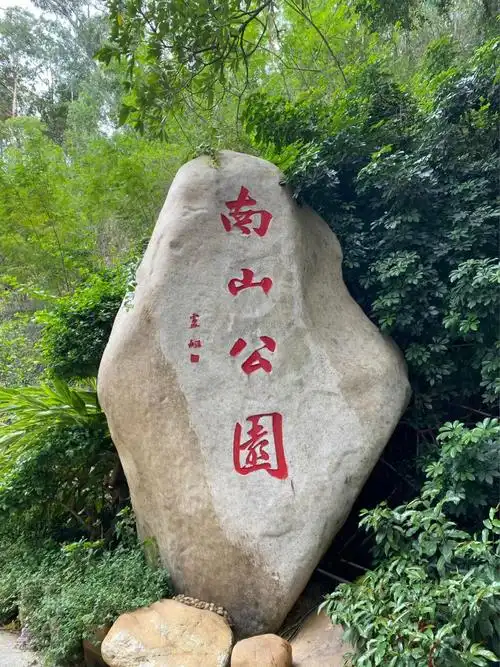 Nanshan Park's roots in 1997—a modest hillside green space—belie its current status as one of Hebei Province's flagship urban sports parks. The 2012 redevelopment reflects a broader national push in China during the early 2010s to integrate traditional cultural values with public wellness initiatives, a movement parallel to Western urban "healthy city" planning popularized in Europe after the 2000s. This positioning earned it designation as a Hebei Provincial Sports Park demonstration project, making it a useful case study for travelers interested in how modern China blends heritage philosophy with contemporary leisure demands.
The park's defining feature is its conceptual framework rooted in "he," the Chinese character signifying harmony—a concept articulated in Confucian texts over 2,500 years ago and echoed in Western philosophical traditions from Aristotle's "eudaimonia" to the cooperative ethos of European village commons. Designers translated this abstract principle into five themed zones—Zhenghe (governance harmony), Renhe (human harmony), Jiahe (family harmony), Yehe (career harmony), and Xianghe (social harmony)—each anchored by a square featuring traditional motifs reinterpreted through contemporary landscape design. This deliberate cultural layering invites visitors to encounter centuries-old values while enjoying thoroughly modern amenities.
Architecturally, the park balances rugged mountain terrain with structured recreational spaces. Eleven themed plazas dot the slopes, connected by a network of rubberized fitness trails, caged football pitches, gymnastics areas, and children's playgrounds catering to all generations. The vegetation scheme—"three seasons of flowers, four seasons of green"—features spring blooms of mountain peach and forsythia, summer shade canopies, and autumn displays of colorful foliage reminiscent of the New England fall trails familiar to American hikers, though here on a smaller, more intimate scale befitting northern Hebei's foothills.
Practical access is straightforward: the park sits in southern Luanping County, approximately 50 kilometers from central Chengde—a drive of around one hour by car or via long-distance buses connecting to local transport. Both the south and north gates offer parking, and admission is completely free with no advance booking required. The park never closes, though early mornings (8–10 a.m.) and early evenings (5–7 p.m.) offer the most pleasant temperatures and golden-hour light for photography, particularly from the summit viewing platform that overlooks the entire county town below.
Visitors should bring their own water, as on-site vendors are sparse, pack insect repellent for warmer months, and wear non-slip athletic footwear suitable for sloped paths. A recommended circuit begins at the north gate, ascends via the fitness trail to the summit panorama, then loops clockwise through the themed plazas—a journey of roughly two to three hours. For Western travelers exploring the Chengde region—better known for the Qing imperial Summer Resort and the Great Wall's Jinshanling section—Nanshan Park offers an authentic slice of contemporary small-town Chinese life far from the standard tourist trail.
Nanshan Park ultimately rewards those seeking to understand modern China beyond its headline monuments. While Chengde's 18th-century imperial sites recall the Manchu Qing dynasty's grandeur, this humble mountain park reveals how today's Hebei communities weave Confucian philosophical heritage into everyday civic life through accessible public spaces. It stands as both a functional fitness venue and a living meditation on communal harmony—values that, despite their distinctly Chinese origins, resonate with universal human aspirations for balanced, healthy living in scenic surroundings.
Nanshan Park's roots in 1997—a modest hillside green space—belie its current status as one of Hebei Province's flagship urban sports parks. The 2012 redevelopment reflects a broader national push in China during the early 2010s to integrate traditional cultural values with public wellness initiatives, a movement parallel to Western urban "healthy city" planning popularized in Europe after the 2000s. This positioning earned it designation as a Hebei Provincial Sports Park demonstration project, making it a useful case study for travelers interested in how modern China blends heritage philosophy with contemporary leisure demands.
The park's defining feature is its conceptual framework rooted in "he," the Chinese character signifying harmony—a concept articulated in Confucian texts over 2,500 years ago and echoed in Western philosophical traditions from Aristotle's "eudaimonia" to the cooperative ethos of European village commons. Designers translated this abstract principle into five themed zones—Zhenghe (governance harmony), Renhe (human harmony), Jiahe (family harmony), Yehe (career harmony), and Xianghe (social harmony)—each anchored by a square featuring traditional motifs reinterpreted through contemporary landscape design. This deliberate cultural layering invites visitors to encounter centuries-old values while enjoying thoroughly modern amenities.
Architecturally, the park balances rugged mountain terrain with structured recreational spaces. Eleven themed plazas dot the slopes, connected by a network of rubberized fitness trails, caged football pitches, gymnastics areas, and children's playgrounds catering to all generations. The vegetation scheme—"three seasons of flowers, four seasons of green"—features spring blooms of mountain peach and forsythia, summer shade canopies, and autumn displays of colorful foliage reminiscent of the New England fall trails familiar to American hikers, though here on a smaller, more intimate scale befitting northern Hebei's foothills.
Practical access is straightforward: the park sits in southern Luanping County, approximately 50 kilometers from central Chengde—a drive of around one hour by car or via long-distance buses connecting to local transport. Both the south and north gates offer parking, and admission is completely free with no advance booking required. The park never closes, though early mornings (8–10 a.m.) and early evenings (5–7 p.m.) offer the most pleasant temperatures and golden-hour light for photography, particularly from the summit viewing platform that overlooks the entire county town below.
Visitors should bring their own water, as on-site vendors are sparse, pack insect repellent for warmer months, and wear non-slip athletic footwear suitable for sloped paths. A recommended circuit begins at the north gate, ascends via the fitness trail to the summit panorama, then loops clockwise through the themed plazas—a journey of roughly two to three hours. For Western travelers exploring the Chengde region—better known for the Qing imperial Summer Resort and the Great Wall's Jinshanling section—Nanshan Park offers an authentic slice of contemporary small-town Chinese life far from the standard tourist trail.
Nanshan Park ultimately rewards those seeking to understand modern China beyond its headline monuments. While Chengde's 18th-century imperial sites recall the Manchu Qing dynasty's grandeur, this humble mountain park reveals how today's Hebei communities weave Confucian philosophical heritage into everyday civic life through accessible public spaces. It stands as both a functional fitness venue and a living meditation on communal harmony—values that, despite their distinctly Chinese origins, resonate with universal human aspirations for balanced, healthy living in scenic surroundings.