Kunlun Pass
⭐ 3.20
Kunlun Pass, Huangyuan County, Xining City, Qinghai Province, China
 For millennia, Kunlun has occupied a singular place in the Chinese imagination — the source of the Yellow River, the birthplace of the Yellow Emperor, and the dwelling of the immortals. Western travelers encountering Chinese mythology for the first time may find a kinship with Mount Olympus or Mount Sinai, for Kunlun is no mere peak but the cosmological axis around which Chinese creation lore revolves. Sages from Laozi to the mythical Mother Goddess Nüwa are said to have roamed its slopes. Since 1954, when engineers carved the Qinghai-Tibet Highway through the range, this ancient sacred geography has been opened to ordinary travelers — the modern equivalent of a pilgrimage route that once took caravans months to traverse.
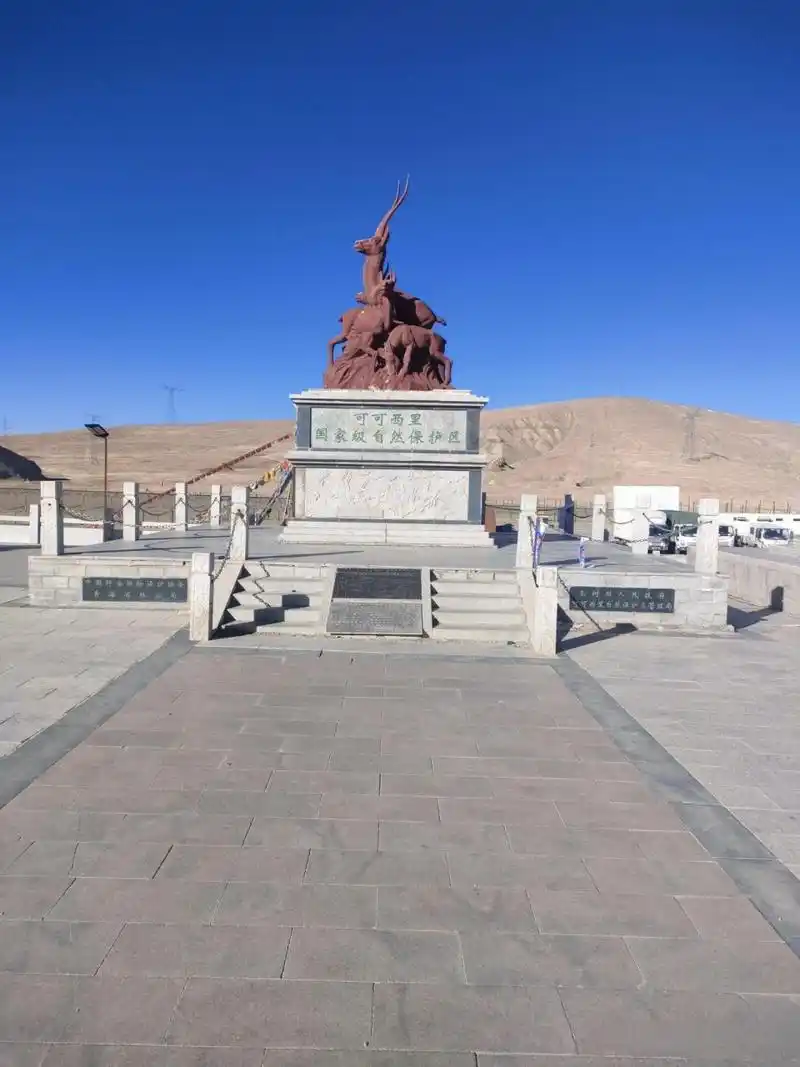
The pass itself is marked by a minimalist granite monument standing exactly 4.767 meters tall, a clever design choice in which the monument's height echoes the elevation in numerals. Surrounded by vast expanses of frozen tundra and rolling ridgelines that seem to go on forever, the structure possesses a stark, almost lunar beauty. There is no elaborate architecture here — the power lies in the setting: an endless horizon, the piercing silence of high plateau, and the dramatic sweep of the Kunlun range extending west toward Tibet. Underfoot lies permafrost that took thousands of years to form and now bears the weight of one of the world's great engineering feats.
Beyond the main monument, a constellation of nearby sites rewards the curious traveler. The Sonam Dargye Memorial pays tribute to the anti-poaching hero who gave his life protecting Tibetan antelope, lending poignant modern resonance to the wild landscape. Nearby, the Kunlun Spring at Nachitai — reputed for its sweet glacial waters — and the Longfeng Palace Taoist temple add spiritual and sensory variety, while the Xidatan viewpoint provides sweeping panoramas of the snow-clad southern range. Together these points transform a brief roadside stop into a rich half-day circuit through mythology, conservation history, and high-altitude ecology.
Reaching the pass demands serious preparation. Travelers should not ascend directly from Xining (2,295 m) — the sudden gain of nearly 2,500 meters invites acute mountain sickness. Instead, acclimatize in Golmud (around 2,780 m) for one to two nights, ideally booking a private car or shared ride for the day trip. Altitude medication, portable oxygen, and a slow pace are essential; any headache or chest tightness demands immediate descent. The pass is a border-administration zone — foreign visitors should confirm in advance whether a Border Permit is required, and drones are strictly prohibited. Best months run June through September, when daytime temperatures may climb above 20°C but nights plunge below freezing, and high winds lash the plateau year-round.
Pack as if for a polar expedition: a windproof shell, a lightweight down jacket, a warm hat, UV-blocking sunglasses, and SPF 50+ sunscreen are non-negotiable. There are no food vendors or toilets on site, so carry ample water and high-calorie snacks. Limit your stay to 30–60 minutes — the body's response to altitude, not curiosity, should determine your schedule. In return for this disciplined effort, Kunlun Pass delivers one of the most visceral travel experiences on the planet: a place where you stand at the literal and symbolic crossroads of China, suspended between heaven and earth, where ancient myths breathe through the wind and the highways of the modern world vanish into an immensity older than civilization itself.
For millennia, Kunlun has occupied a singular place in the Chinese imagination — the source of the Yellow River, the birthplace of the Yellow Emperor, and the dwelling of the immortals. Western travelers encountering Chinese mythology for the first time may find a kinship with Mount Olympus or Mount Sinai, for Kunlun is no mere peak but the cosmological axis around which Chinese creation lore revolves. Sages from Laozi to the mythical Mother Goddess Nüwa are said to have roamed its slopes. Since 1954, when engineers carved the Qinghai-Tibet Highway through the range, this ancient sacred geography has been opened to ordinary travelers — the modern equivalent of a pilgrimage route that once took caravans months to traverse.
The pass itself is marked by a minimalist granite monument standing exactly 4.767 meters tall, a clever design choice in which the monument's height echoes the elevation in numerals. Surrounded by vast expanses of frozen tundra and rolling ridgelines that seem to go on forever, the structure possesses a stark, almost lunar beauty. There is no elaborate architecture here — the power lies in the setting: an endless horizon, the piercing silence of high plateau, and the dramatic sweep of the Kunlun range extending west toward Tibet. Underfoot lies permafrost that took thousands of years to form and now bears the weight of one of the world's great engineering feats.
Beyond the main monument, a constellation of nearby sites rewards the curious traveler. The Sonam Dargye Memorial pays tribute to the anti-poaching hero who gave his life protecting Tibetan antelope, lending poignant modern resonance to the wild landscape. Nearby, the Kunlun Spring at Nachitai — reputed for its sweet glacial waters — and the Longfeng Palace Taoist temple add spiritual and sensory variety, while the Xidatan viewpoint provides sweeping panoramas of the snow-clad southern range. Together these points transform a brief roadside stop into a rich half-day circuit through mythology, conservation history, and high-altitude ecology.
Reaching the pass demands serious preparation. Travelers should not ascend directly from Xining (2,295 m) — the sudden gain of nearly 2,500 meters invites acute mountain sickness. Instead, acclimatize in Golmud (around 2,780 m) for one to two nights, ideally booking a private car or shared ride for the day trip. Altitude medication, portable oxygen, and a slow pace are essential; any headache or chest tightness demands immediate descent. The pass is a border-administration zone — foreign visitors should confirm in advance whether a Border Permit is required, and drones are strictly prohibited. Best months run June through September, when daytime temperatures may climb above 20°C but nights plunge below freezing, and high winds lash the plateau year-round.
Pack as if for a polar expedition: a windproof shell, a lightweight down jacket, a warm hat, UV-blocking sunglasses, and SPF 50+ sunscreen are non-negotiable. There are no food vendors or toilets on site, so carry ample water and high-calorie snacks. Limit your stay to 30–60 minutes — the body's response to altitude, not curiosity, should determine your schedule. In return for this disciplined effort, Kunlun Pass delivers one of the most visceral travel experiences on the planet: a place where you stand at the literal and symbolic crossroads of China, suspended between heaven and earth, where ancient myths breathe through the wind and the highways of the modern world vanish into an immensity older than civilization itself.