Hebei University Campus
⭐ 3.20
Hebei University Campus, Dongxianpo Town, Zhuozhou City, Baoding City, Hebei Province, China
 Founded in 1921 as Tianjin Gongshang University, Hebei University relocated to Baoding in 1960, making it roughly contemporaneous with many celebrated Western institutions such as Oxford's interwar expansion or the founding of the University of British Columbia. As a Ministry of Education and provincial co-built key university, it has produced numerous distinguished graduates and preserves its legacy through a dedicated history hall and inscribed motto monument. Visitors today encounter a living dialogue between past and present, much like wandering the historic quads of a European redbrick university.
The architecture spans an unusually wide spectrum. The Wusi Road campus features dignified, weathered structures that evoke the gravitas of early twentieth-century European academic buildings, while the Qiyi Road campus showcases airy modern complexes. The most photographed landmark is the Ninth Teaching Building—dubbed the "Bagua Building"—a circular structure with an open central courtyard that, when viewed from above, echoes the geometric puzzles of M.C. Escher. The main administrative building, the U-shaped Eighth Teaching Building, and the glass-curtain library create a layered architectural narrative spanning several eras.
Beyond the classrooms, Hebei University Museum stands out among North China university collections, offering free admission by reservation. Its holdings of regional historical artifacts and natural specimens provide context for understanding Hebei's cultural and ecological heritage. A bronze Confucius statue presides over the library forecourt, while the tranquil Yuxiu Garden, with its bamboo groves and twin pavilions, offers a contemplative counterpart to grander landmarks such as Beijing's Temple of Confucius.
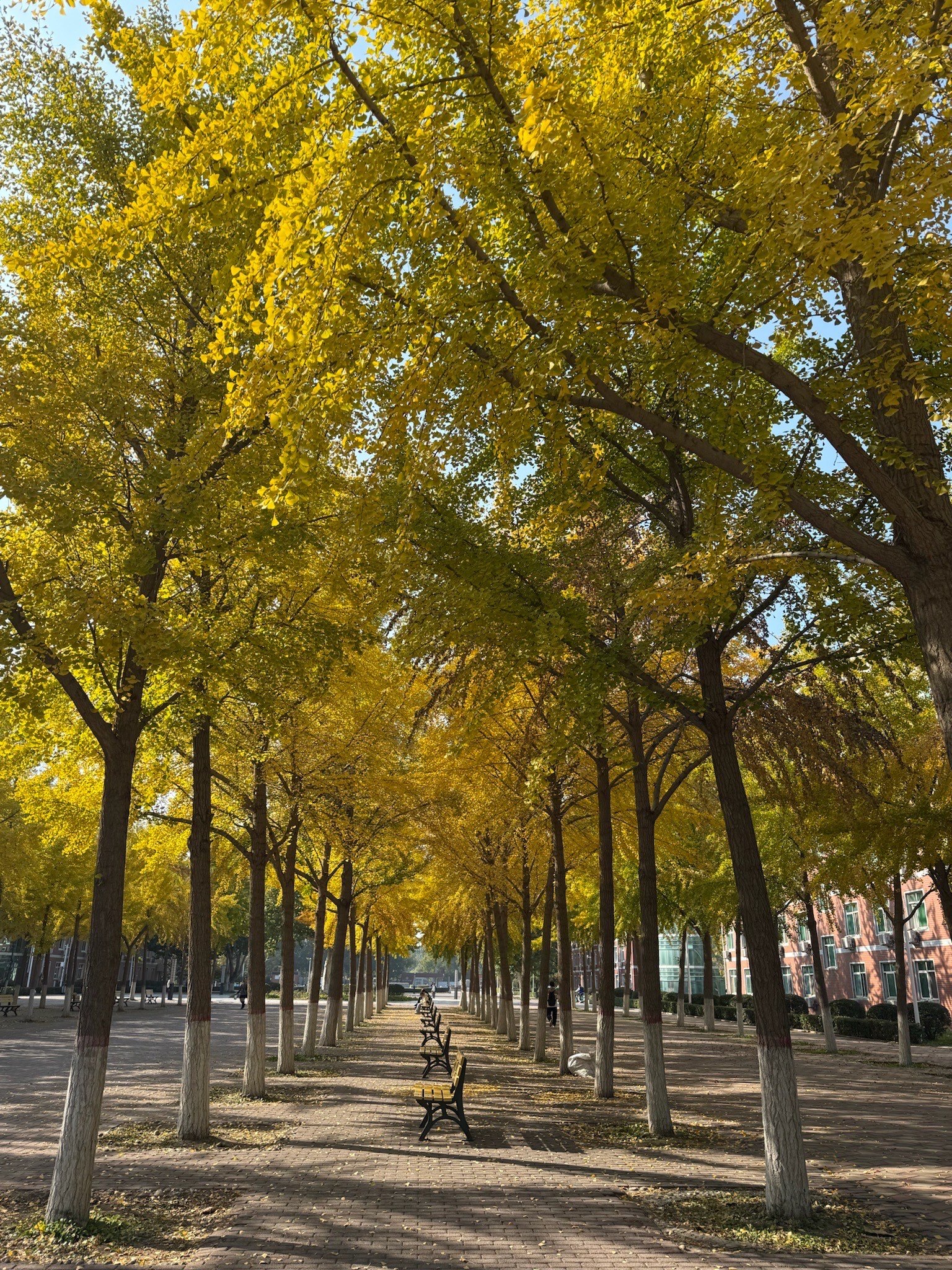
Nature plays a starring role on the Qiyi Road campus. Kunyu Lake, ringed by weeping willows and winding footpaths, is the campus's most enchanting feature—a perfect analogue to the punt-filled rivers of Cambridge or the wooded ponds of a German university town. Autumn transforms the ginkgo-lined avenue into a tunnel of gold, often cited as the university's most photogenic scene; spring and summer bring cascades of roses and monthly-blooming hedges.
Hebei University is not an open tourist attraction. Visitors must reserve entry via the official mini-program and present valid identification; access is limited on weekends and holidays. The museum is open to the public only on Saturdays from 9:00–11:30 and 15:00–17:00, with slots filling quickly. Plan at least two to three hours for a leisurely wander—recommended route: Museum → History Hall → Main Building Plaza → Yuxiu Garden → Kunyu Lake → Ginkgo Avenue. Afterward, walk to nearby Lianchi Academy or the Zhili Governor's Office to craft a half-day "university culture plus historical monument" itinerary, ideally rounded off with Baoding's famous donkey-burger snack.
Founded in 1921 as Tianjin Gongshang University, Hebei University relocated to Baoding in 1960, making it roughly contemporaneous with many celebrated Western institutions such as Oxford's interwar expansion or the founding of the University of British Columbia. As a Ministry of Education and provincial co-built key university, it has produced numerous distinguished graduates and preserves its legacy through a dedicated history hall and inscribed motto monument. Visitors today encounter a living dialogue between past and present, much like wandering the historic quads of a European redbrick university.
The architecture spans an unusually wide spectrum. The Wusi Road campus features dignified, weathered structures that evoke the gravitas of early twentieth-century European academic buildings, while the Qiyi Road campus showcases airy modern complexes. The most photographed landmark is the Ninth Teaching Building—dubbed the "Bagua Building"—a circular structure with an open central courtyard that, when viewed from above, echoes the geometric puzzles of M.C. Escher. The main administrative building, the U-shaped Eighth Teaching Building, and the glass-curtain library create a layered architectural narrative spanning several eras.
Beyond the classrooms, Hebei University Museum stands out among North China university collections, offering free admission by reservation. Its holdings of regional historical artifacts and natural specimens provide context for understanding Hebei's cultural and ecological heritage. A bronze Confucius statue presides over the library forecourt, while the tranquil Yuxiu Garden, with its bamboo groves and twin pavilions, offers a contemplative counterpart to grander landmarks such as Beijing's Temple of Confucius.
Nature plays a starring role on the Qiyi Road campus. Kunyu Lake, ringed by weeping willows and winding footpaths, is the campus's most enchanting feature—a perfect analogue to the punt-filled rivers of Cambridge or the wooded ponds of a German university town. Autumn transforms the ginkgo-lined avenue into a tunnel of gold, often cited as the university's most photogenic scene; spring and summer bring cascades of roses and monthly-blooming hedges.
Hebei University is not an open tourist attraction. Visitors must reserve entry via the official mini-program and present valid identification; access is limited on weekends and holidays. The museum is open to the public only on Saturdays from 9:00–11:30 and 15:00–17:00, with slots filling quickly. Plan at least two to three hours for a leisurely wander—recommended route: Museum → History Hall → Main Building Plaza → Yuxiu Garden → Kunyu Lake → Ginkgo Avenue. Afterward, walk to nearby Lianchi Academy or the Zhili Governor's Office to craft a half-day "university culture plus historical monument" itinerary, ideally rounded off with Baoding's famous donkey-burger snack.