Longzhong Academy
⭐ 3.80
Longzhong Scenic Area, Xiangcheng District, Xiangyang City, Hubei Province, China
 **Historical Context**
The academy stands on sacred ground in Chinese cultural memory: the very hillside where, around 207 AD, the warlord Liu Bei made his famous pilgrimage to recruit the reclusive Zhuge Liang. To compare with European history, this moment echoes Thomas More's circle of humanist scholars at the court of Henry VIII or Machiavelli's retirement to his Tuscan villa—both sites where philosophy met power. After centuries of imperial patronage, including a Yuan-dynasty redesign that gave the academy its present name, the institution now serves as both a museum to Zhuge Liang and an official Hubei Provincial education center for ethical governance.
**Architecture and Exhibits**
Designed in traditional courtyard style, the academy cascades along the mountainside with quiet, tree-shaded courtyards that visually converse with the neighboring Wuhou Shrine, much like a monastic chapter house complementing a cathedral close. Inside, approximately 1,500 square meters of exhibition space unfold across six halls—Introductory, Aspiration, Diligent Governance, Integrity, Admonition to the Son, and Outlook. Visitors encounter an intricately detailed sand-table recreating Zhuge Liang's famous "Longzhong Plan" military strategy, bronze-toned sculptures charting his life arc, and a five-to-six-minute high-definition animation interpreting his classic essay "Admonition to the Son"—a Confucian meditation on scholarship and self-cultivation akin to Seneca's letters to Lucilius.
**Cultural Significance**
Zhuge Liang has long occupied the role of China's archetypal scholar-statesman, celebrated in literature, opera, and countless adaptations of the 14th-century epic *Romance of the Three Kingdoms*. The academy offers rare insight into his political ideals of "loyalty unto death" and "fame through detachment"—virtues that parallel the Roman concept of *virtus* or the Confucian-influenced civil service ideals familiar to students of East Asian history. For international travelers, the site provides an accessible window into a narrative that has shaped Chinese political thought for over a millennium, though guided interpretation dramatically enriches the experience.
**Practical Visit Information**
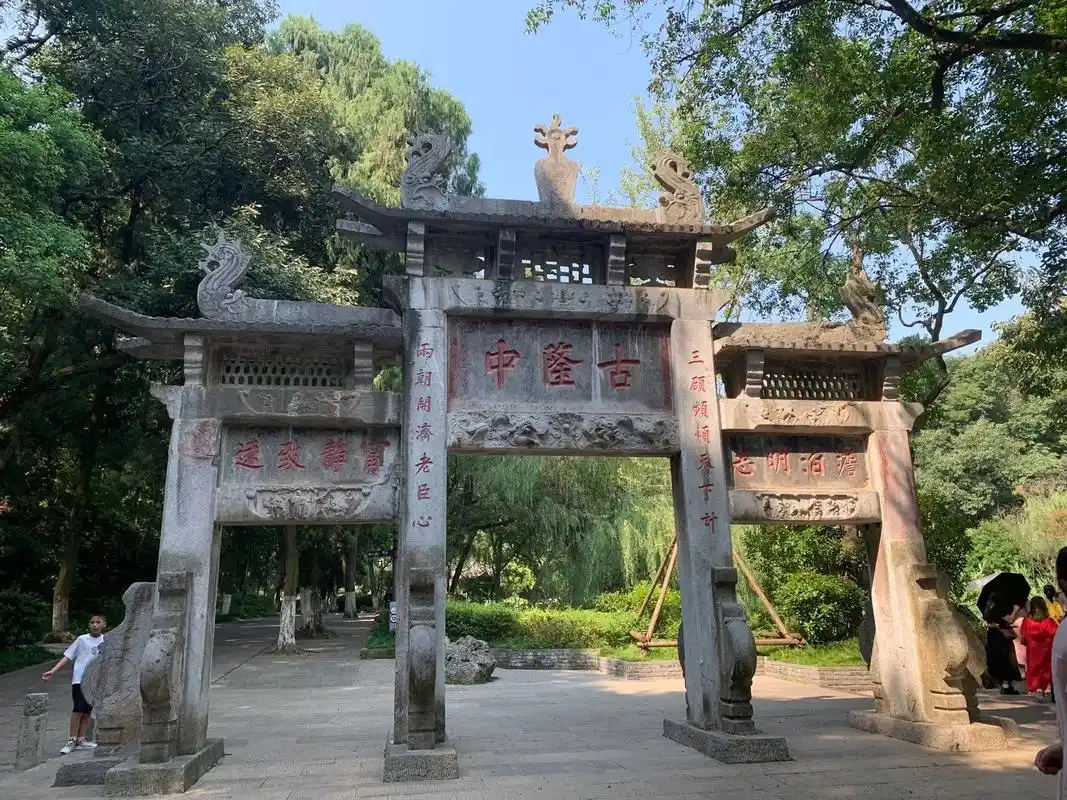
The academy cannot be visited independently; admission is bundled with the Longzhong Scenic Area entrance ticket (approximately 87 RMB per person, including shuttle bus). The recommended route begins at the visitor center and proceeds Stone Archway → Wuhou Shrine → Three Visits Hall → Zhuge's Thatched Cottage → Longzhong Academy → Tenglong Pavilion, requiring roughly three hours total. English-speaking guides are limited; booking through the official "Longzhong Smart Tour" mini-program or arranging a local guided tour with translation in advance is strongly advised. The academy itself is fully indoors and air-conditioned, making it ideal for midday breaks.
**Best Times and Visitor Tips**
Optimal visiting windows are before 10 AM or after 4 PM to escape peak heat and crowds. The site enforces quiet museum etiquette: refrain from touching exhibits and keep voices low. Summer visitors should wear long trousers and bring insect repellent, as mountain mosquitoes can be persistent. Refreshment options within the scenic area are limited, so carry water and snacks. Those wishing to deepen their understanding before arrival may benefit from watching a documentary on the Three Kingdoms period, available on most streaming platforms.
**Who Will Enjoy It**
The academy appeals most strongly to history enthusiasts, scholarly study groups, hanfu photography hobbyists, and visitors interested in ethics and governance. Families with young children should plan to accompany and narrate the experience, as the dense historical content may otherwise feel abstract. With limited interactive entertainment, the venue rewards patience and prior curiosity—those who arrive prepared will find it one of the most intellectually rewarding stops within the broader Longzhong heritage landscape.
**Historical Context**
The academy stands on sacred ground in Chinese cultural memory: the very hillside where, around 207 AD, the warlord Liu Bei made his famous pilgrimage to recruit the reclusive Zhuge Liang. To compare with European history, this moment echoes Thomas More's circle of humanist scholars at the court of Henry VIII or Machiavelli's retirement to his Tuscan villa—both sites where philosophy met power. After centuries of imperial patronage, including a Yuan-dynasty redesign that gave the academy its present name, the institution now serves as both a museum to Zhuge Liang and an official Hubei Provincial education center for ethical governance.
**Architecture and Exhibits**
Designed in traditional courtyard style, the academy cascades along the mountainside with quiet, tree-shaded courtyards that visually converse with the neighboring Wuhou Shrine, much like a monastic chapter house complementing a cathedral close. Inside, approximately 1,500 square meters of exhibition space unfold across six halls—Introductory, Aspiration, Diligent Governance, Integrity, Admonition to the Son, and Outlook. Visitors encounter an intricately detailed sand-table recreating Zhuge Liang's famous "Longzhong Plan" military strategy, bronze-toned sculptures charting his life arc, and a five-to-six-minute high-definition animation interpreting his classic essay "Admonition to the Son"—a Confucian meditation on scholarship and self-cultivation akin to Seneca's letters to Lucilius.
**Cultural Significance**
Zhuge Liang has long occupied the role of China's archetypal scholar-statesman, celebrated in literature, opera, and countless adaptations of the 14th-century epic *Romance of the Three Kingdoms*. The academy offers rare insight into his political ideals of "loyalty unto death" and "fame through detachment"—virtues that parallel the Roman concept of *virtus* or the Confucian-influenced civil service ideals familiar to students of East Asian history. For international travelers, the site provides an accessible window into a narrative that has shaped Chinese political thought for over a millennium, though guided interpretation dramatically enriches the experience.
**Practical Visit Information**
The academy cannot be visited independently; admission is bundled with the Longzhong Scenic Area entrance ticket (approximately 87 RMB per person, including shuttle bus). The recommended route begins at the visitor center and proceeds Stone Archway → Wuhou Shrine → Three Visits Hall → Zhuge's Thatched Cottage → Longzhong Academy → Tenglong Pavilion, requiring roughly three hours total. English-speaking guides are limited; booking through the official "Longzhong Smart Tour" mini-program or arranging a local guided tour with translation in advance is strongly advised. The academy itself is fully indoors and air-conditioned, making it ideal for midday breaks.
**Best Times and Visitor Tips**
Optimal visiting windows are before 10 AM or after 4 PM to escape peak heat and crowds. The site enforces quiet museum etiquette: refrain from touching exhibits and keep voices low. Summer visitors should wear long trousers and bring insect repellent, as mountain mosquitoes can be persistent. Refreshment options within the scenic area are limited, so carry water and snacks. Those wishing to deepen their understanding before arrival may benefit from watching a documentary on the Three Kingdoms period, available on most streaming platforms.
**Who Will Enjoy It**
The academy appeals most strongly to history enthusiasts, scholarly study groups, hanfu photography hobbyists, and visitors interested in ethics and governance. Families with young children should plan to accompany and narrate the experience, as the dense historical content may otherwise feel abstract. With limited interactive entertainment, the venue rewards patience and prior curiosity—those who arrive prepared will find it one of the most intellectually rewarding stops within the broader Longzhong heritage landscape.