Lumen Temple
⭐ 3.20
Lumen Temple, Xiangcheng District, Xiangyang City, Hubei Province, China
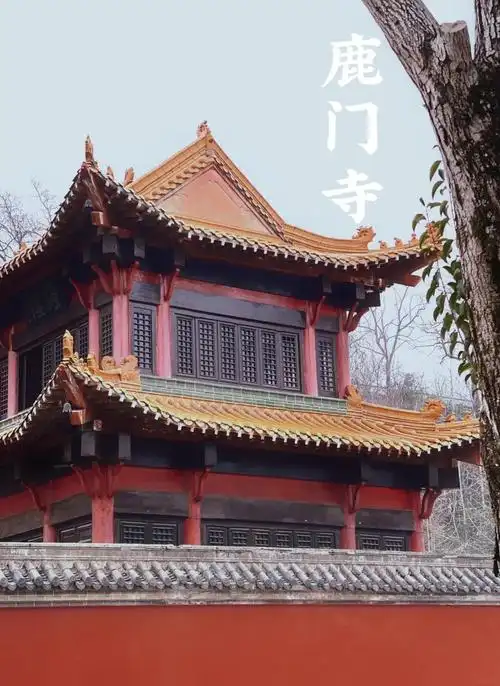 Dating to 28 AD, during the reign of Emperor Guangwu of the Eastern Han, Lumen Temple predates the fall of the Western Roman Empire by over four centuries and rivals Europe's oldest monasteries in antiquity. Legend holds that Emperor Liu Xiu dreamed of a divine deer, prompting his minister Xi Yu to build a shrine at this very spot—hence the name "Deer Gate." At its peak during the Tang and Song dynasties, the temple complex housed over 500 monks and stood as one of the Han River basin's most influential Buddhist centers, considered the cultural twin of nearby Longzhong, the fabled retreat of strategist Zhuge Liang.
The surviving temple grounds are modest in scale but steeped in timeless atmosphere. Visitors pass through an elegant stone archway before reaching restored Buddhist halls, an octagonal well dating back centuries, and a courtyard pond once used to collect rainwater during violent storms. Walking these flagstone paths feels like stepping into an ancient monastic world, with weathered stone tablets and incense-stained altars bearing silent witness to nearly two millennia of devotion. The intimate scale encourages quiet contemplation, much like the cloistered courtyards of a Carthusian charterhouse or a small Italian hilltop sanctuary.
What truly distinguishes Lumen is its "hermit culture" legacy, celebrating three reclusive scholars across different eras. During the chaotic Three Kingdoms period, the sage Pang Degong lived here and mentored the young Zhuge Liang—the legendary "Crouching Dragon" whose strategic genius later shaped Chinese history. In the 8th century, Tang dynasty poet Meng Haoran, a contemporary of Europe's early medieval scholars, retreated to these slopes to compose his celebrated nature poems. The late Tang poet Pi Rixiu later followed in their footsteps, cementing Lumen's reputation as a haven for literary souls. The Three Sages Shrine honors these figures with statues and over a hundred inscribed stone tablets.
Beyond its cultural treasures, the surrounding Lumen National Forest Park enchants with over 84% forest coverage and dramatic seasonal changes. Spring brings wildflowers, summer offers cool shade under dense canopies, autumn yields ripening fruits, and winter showcases resilient pines dusted with frost. The park's roughly 30-hectare bamboo grove—Xiangyang's largest—evokes the serene atmosphere of Japanese Zen gardens familiar to many Western travelers, with whispering leaves and cool mountain breezes. Hidden within the bamboo, the Pang Gong Medicine Cave requires a climb up stone steps, rewarding visitors with a refreshingly cool interior where the hermit allegedly gathered herbs centuries ago.
A national AAA-rated attraction, Lumen Temple welcomes visitors from 8:30 AM to 5:00 PM with an entry fee of roughly $3.50 USD. From central Xiangyang, Bus 52 provides direct access, while drivers can reach the park in about 25 minutes by navigating to "Lumen Temple National Forest Park." Allow three to four hours for the full experience, including the uphill walk to the summit. Wear sturdy non-slip shoes for the steeper sections, carry water, and bring mosquito repellent in summer. The temple pairs well with nearby attractions: just 12 kilometers away sits the Tang Dynasty Film Studio and the historic Longzhong, both excellent complements for a full-day cultural itinerary.
Lumen Temple offers something rare in modern China: a chance to walk where poets and philosophers once wandered, with far fewer crowds than headline sites like Beijing's Lama Temple or Xi'an's bustling mosques. For Western travelers seeking an authentic encounter with classical Chinese culture, it provides an accessible window into Buddhist spirituality, Tang dynasty literary tradition, and the Chinese reverence for mountain hermitage—a tradition as compelling as the monastic seclusion of Mount Athos or the poetic retreats of England's Lake District. The combination of cultural depth, contemplative atmosphere, and natural beauty makes it an unmissable stop on any Hubei itinerary.
Dating to 28 AD, during the reign of Emperor Guangwu of the Eastern Han, Lumen Temple predates the fall of the Western Roman Empire by over four centuries and rivals Europe's oldest monasteries in antiquity. Legend holds that Emperor Liu Xiu dreamed of a divine deer, prompting his minister Xi Yu to build a shrine at this very spot—hence the name "Deer Gate." At its peak during the Tang and Song dynasties, the temple complex housed over 500 monks and stood as one of the Han River basin's most influential Buddhist centers, considered the cultural twin of nearby Longzhong, the fabled retreat of strategist Zhuge Liang.
The surviving temple grounds are modest in scale but steeped in timeless atmosphere. Visitors pass through an elegant stone archway before reaching restored Buddhist halls, an octagonal well dating back centuries, and a courtyard pond once used to collect rainwater during violent storms. Walking these flagstone paths feels like stepping into an ancient monastic world, with weathered stone tablets and incense-stained altars bearing silent witness to nearly two millennia of devotion. The intimate scale encourages quiet contemplation, much like the cloistered courtyards of a Carthusian charterhouse or a small Italian hilltop sanctuary.
What truly distinguishes Lumen is its "hermit culture" legacy, celebrating three reclusive scholars across different eras. During the chaotic Three Kingdoms period, the sage Pang Degong lived here and mentored the young Zhuge Liang—the legendary "Crouching Dragon" whose strategic genius later shaped Chinese history. In the 8th century, Tang dynasty poet Meng Haoran, a contemporary of Europe's early medieval scholars, retreated to these slopes to compose his celebrated nature poems. The late Tang poet Pi Rixiu later followed in their footsteps, cementing Lumen's reputation as a haven for literary souls. The Three Sages Shrine honors these figures with statues and over a hundred inscribed stone tablets.
Beyond its cultural treasures, the surrounding Lumen National Forest Park enchants with over 84% forest coverage and dramatic seasonal changes. Spring brings wildflowers, summer offers cool shade under dense canopies, autumn yields ripening fruits, and winter showcases resilient pines dusted with frost. The park's roughly 30-hectare bamboo grove—Xiangyang's largest—evokes the serene atmosphere of Japanese Zen gardens familiar to many Western travelers, with whispering leaves and cool mountain breezes. Hidden within the bamboo, the Pang Gong Medicine Cave requires a climb up stone steps, rewarding visitors with a refreshingly cool interior where the hermit allegedly gathered herbs centuries ago.
A national AAA-rated attraction, Lumen Temple welcomes visitors from 8:30 AM to 5:00 PM with an entry fee of roughly $3.50 USD. From central Xiangyang, Bus 52 provides direct access, while drivers can reach the park in about 25 minutes by navigating to "Lumen Temple National Forest Park." Allow three to four hours for the full experience, including the uphill walk to the summit. Wear sturdy non-slip shoes for the steeper sections, carry water, and bring mosquito repellent in summer. The temple pairs well with nearby attractions: just 12 kilometers away sits the Tang Dynasty Film Studio and the historic Longzhong, both excellent complements for a full-day cultural itinerary.
Lumen Temple offers something rare in modern China: a chance to walk where poets and philosophers once wandered, with far fewer crowds than headline sites like Beijing's Lama Temple or Xi'an's bustling mosques. For Western travelers seeking an authentic encounter with classical Chinese culture, it provides an accessible window into Buddhist spirituality, Tang dynasty literary tradition, and the Chinese reverence for mountain hermitage—a tradition as compelling as the monastic seclusion of Mount Athos or the poetic retreats of England's Lake District. The combination of cultural depth, contemplative atmosphere, and natural beauty makes it an unmissable stop on any Hubei itinerary.