Xiangyang Park
⭐ 4.50
Xiangyang Park, Xiangcheng District, Xiangyang City, Hubei Province, China
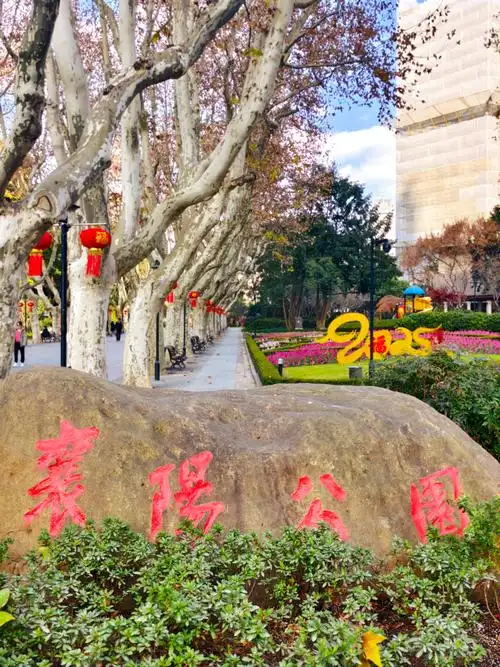 Xiangyang Park sits at the heart of one of China's most storied fortifications, a city wall first raised during the Han Dynasty and rebuilt in sturdy brick during the Ming era. The famous battlements here withstood the Mongol siege of 1267–1273, a conflict that rivaled the sieges of Constantinople or Antioch in its medieval drama. Today, the park forms a green buffer between the moat and the ancient citadel, letting visitors stroll where imperial soldiers once marched. Its position, embraced by the ramparts, mirrors the relationship between city walls and gardens seen in places like Ávila in Spain or Carcassonne in France.
The park's design blends classical Chinese landscape principles with distinctly Han Dynasty architectural flourishes. Sweeping rooflines, vermilion columns, and elegant pavilions punctuate the tree-lined paths, while wooden boardwalks curve gently around the central lake. These buildings echo the imperial aesthetics of the Han capital at Luoyang, offering a digestible taste of dynastic architecture for visitors who may not venture further inland. The result is a harmonious dialogue between the man-made beauty of the park and the rugged authenticity of the centuries-old battle wall beside it.
Beyond its scenery, the park pulses as a living stage of Xiangyang's contemporary culture. Mornings belong to anglers and tai chi practitioners, while evenings transform the lakeside plazas into open-air ballrooms where retirees gather to waltz and line dance. The Han-flavored architecture has also made the park a favorite backdrop for young Chinese dressed in traditional Hanfu garments, lending the grounds a cinematic, time-travel quality. Few urban parks in inland China offer such an unfiltered glimpse into local life.
Visitors should plan a slow half-day here, ideally entering through the East Gate to first explore the pavilion district before looping the lake on foot. Mornings offer quiet poetry and misty water reflections, while late afternoon, after 4:30 p.m., delivers the park's golden hour, ideal for photography. The park is open and free around the clock, but if you are visiting with children, the modest zoo operates from 8 a.m. to 5 p.m., with tickets sold until 4:30 p.m.
Reaching the park is straightforward. Take bus 3 or 6 to "Park Station," or simply set your GPS to East Gate or South Gate if driving, as both offer convenient parking. Located at 1 Binjiang Avenue in Xiangcheng District, the park lies within easy walking distance of the old town's main attractions, including the northern wall's iconic gates. Summer afternoons can be hot and humid, so bring sunscreen, water, and insect repellent, and consider a light scarf for the occasional breeze off the moat.
In short, Xiangyang Park is the soul of the old city, a place where Han Dynasty heritage, everyday Chinese life, and lakeside leisure converge in a setting that feels both authentic and intimate. For travelers seeking the human side of ancient China beyond the headline fortresses, this humble green square delivers more charm per acre than many grander sites.
Xiangyang Park sits at the heart of one of China's most storied fortifications, a city wall first raised during the Han Dynasty and rebuilt in sturdy brick during the Ming era. The famous battlements here withstood the Mongol siege of 1267–1273, a conflict that rivaled the sieges of Constantinople or Antioch in its medieval drama. Today, the park forms a green buffer between the moat and the ancient citadel, letting visitors stroll where imperial soldiers once marched. Its position, embraced by the ramparts, mirrors the relationship between city walls and gardens seen in places like Ávila in Spain or Carcassonne in France.
The park's design blends classical Chinese landscape principles with distinctly Han Dynasty architectural flourishes. Sweeping rooflines, vermilion columns, and elegant pavilions punctuate the tree-lined paths, while wooden boardwalks curve gently around the central lake. These buildings echo the imperial aesthetics of the Han capital at Luoyang, offering a digestible taste of dynastic architecture for visitors who may not venture further inland. The result is a harmonious dialogue between the man-made beauty of the park and the rugged authenticity of the centuries-old battle wall beside it.
Beyond its scenery, the park pulses as a living stage of Xiangyang's contemporary culture. Mornings belong to anglers and tai chi practitioners, while evenings transform the lakeside plazas into open-air ballrooms where retirees gather to waltz and line dance. The Han-flavored architecture has also made the park a favorite backdrop for young Chinese dressed in traditional Hanfu garments, lending the grounds a cinematic, time-travel quality. Few urban parks in inland China offer such an unfiltered glimpse into local life.
Visitors should plan a slow half-day here, ideally entering through the East Gate to first explore the pavilion district before looping the lake on foot. Mornings offer quiet poetry and misty water reflections, while late afternoon, after 4:30 p.m., delivers the park's golden hour, ideal for photography. The park is open and free around the clock, but if you are visiting with children, the modest zoo operates from 8 a.m. to 5 p.m., with tickets sold until 4:30 p.m.
Reaching the park is straightforward. Take bus 3 or 6 to "Park Station," or simply set your GPS to East Gate or South Gate if driving, as both offer convenient parking. Located at 1 Binjiang Avenue in Xiangcheng District, the park lies within easy walking distance of the old town's main attractions, including the northern wall's iconic gates. Summer afternoons can be hot and humid, so bring sunscreen, water, and insect repellent, and consider a light scarf for the occasional breeze off the moat.
In short, Xiangyang Park is the soul of the old city, a place where Han Dynasty heritage, everyday Chinese life, and lakeside leisure converge in a setting that feels both authentic and intimate. For travelers seeking the human side of ancient China beyond the headline fortresses, this humble green square delivers more charm per acre than many grander sites.