Hanjiang Park
⭐ 3.80
Hanjiang Park, Xiangcheng District, Xiangyang City, Hubei Province, China
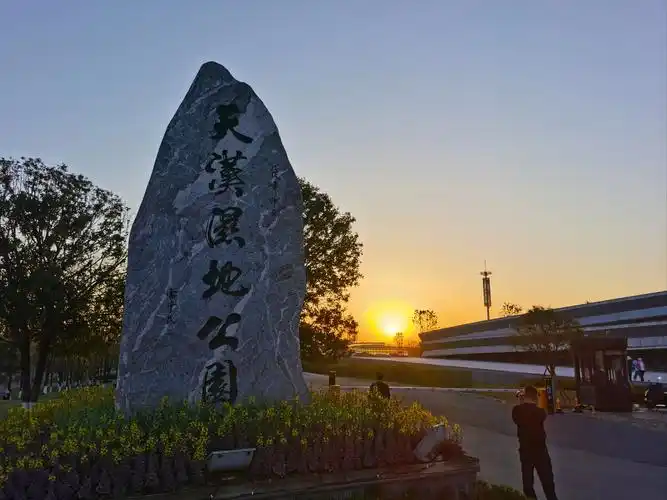 To appreciate the Han River as it courses through Xiangyang, imagine a scene that might have greeted Venetian merchants along the Grand Canal or Dutch traders surveying the Rhine—only here, the waterway is the upper stretch of one of China's greatest rivers, the Han, flowing southwestward before joining the Yangtze. The park's core, the Han River National Wetland Park, sweeps from the Fourth Bridge downstream to the Cuijiaying Dam, where broad, slow-moving waters mirror pale skies and distant bridge spans. In winter and spring, the reed beds and mudflats attract black storks, Chinese mergansers, and a host of other waterfowl, drawing birders who compare the experience favorably to Europe's Camargue or the Danube delta.
The riverside promenade is far more than a green space; it is a living timeline of Chinese mercantile history. Walking north from the wetlands, visitors reach Mi Gong Shrine, dedicated to the Northern Song dynasty's revered calligrapher Mi Fu—often compared to a virtuoso of the brush as Cellini was of metal. A short stroll further brings you to Qianfu Wharf, a weathered remnant of Xiangyang's golden age as a hub on the legendary Tea Road, the caravan route that carried Hubei teas from Laohekou port all the way to Russia. Standing here, one can almost hear the creak of laden mules and the multilingual bustle of 18th- and 19th-century traders—a scene echoing Bruges or Hamburg in their trading heyday.
Practical comforts along the park lean toward relaxed recreation rather than commercial tourism. Smooth, step-free boardwalks hug the riverbank, ideal for strollers and wheelchairs, while fitness trails, basketball courts, and football pitches keep active visitors engaged. Small pavilions and a science-education center punctuate the route, though some facilities require advance booking. The Moon Bay area serves as the social heart of the park, where families picnic on the lawns, children chase pigeons, and joggers loop along the water's edge. A handful of waterfront cafés offer welcome rest stops, though dining options remain sparse—bring your own water and snacks.
Timing matters greatly when visiting Xiangyang. The golden hours between 5:00 and 7:30 PM are magical: light softens over the river, the Changhong and Fengchu bridges glow against the dusk sky, and the city skyline flickers to life. Summers here are fiercely hot, so pack sunhats, sunscreen, and insect repellent; winters are crisp and surprisingly cold for central China. Wear sturdy, non-slip walking shoes, and avoid solo nighttime strolls—lighting along some stretches is minimal.
A few important details: entry to the park is completely free. Drivers should navigate to "Han River National Wetland Park Management Office" or "Moon Bay" for parking; bus routes exist but require advance checking. Foreign visitors should set up international card functions on Alipay or WeChat Pay before arrival, while keeping some cash as backup. Strictly respect the signed conservation zones—feeding wildlife, releasing non-native species, fishing without permission, or entering ecological restoration areas is prohibited under China's Wetland Protection Law. Finally, do not confuse this urban park with the separate Gucheng Han River National Wetland Park, which lies roughly an hour's drive away in Gucheng County.
To appreciate the Han River as it courses through Xiangyang, imagine a scene that might have greeted Venetian merchants along the Grand Canal or Dutch traders surveying the Rhine—only here, the waterway is the upper stretch of one of China's greatest rivers, the Han, flowing southwestward before joining the Yangtze. The park's core, the Han River National Wetland Park, sweeps from the Fourth Bridge downstream to the Cuijiaying Dam, where broad, slow-moving waters mirror pale skies and distant bridge spans. In winter and spring, the reed beds and mudflats attract black storks, Chinese mergansers, and a host of other waterfowl, drawing birders who compare the experience favorably to Europe's Camargue or the Danube delta.
The riverside promenade is far more than a green space; it is a living timeline of Chinese mercantile history. Walking north from the wetlands, visitors reach Mi Gong Shrine, dedicated to the Northern Song dynasty's revered calligrapher Mi Fu—often compared to a virtuoso of the brush as Cellini was of metal. A short stroll further brings you to Qianfu Wharf, a weathered remnant of Xiangyang's golden age as a hub on the legendary Tea Road, the caravan route that carried Hubei teas from Laohekou port all the way to Russia. Standing here, one can almost hear the creak of laden mules and the multilingual bustle of 18th- and 19th-century traders—a scene echoing Bruges or Hamburg in their trading heyday.
Practical comforts along the park lean toward relaxed recreation rather than commercial tourism. Smooth, step-free boardwalks hug the riverbank, ideal for strollers and wheelchairs, while fitness trails, basketball courts, and football pitches keep active visitors engaged. Small pavilions and a science-education center punctuate the route, though some facilities require advance booking. The Moon Bay area serves as the social heart of the park, where families picnic on the lawns, children chase pigeons, and joggers loop along the water's edge. A handful of waterfront cafés offer welcome rest stops, though dining options remain sparse—bring your own water and snacks.
Timing matters greatly when visiting Xiangyang. The golden hours between 5:00 and 7:30 PM are magical: light softens over the river, the Changhong and Fengchu bridges glow against the dusk sky, and the city skyline flickers to life. Summers here are fiercely hot, so pack sunhats, sunscreen, and insect repellent; winters are crisp and surprisingly cold for central China. Wear sturdy, non-slip walking shoes, and avoid solo nighttime strolls—lighting along some stretches is minimal.
A few important details: entry to the park is completely free. Drivers should navigate to "Han River National Wetland Park Management Office" or "Moon Bay" for parking; bus routes exist but require advance checking. Foreign visitors should set up international card functions on Alipay or WeChat Pay before arrival, while keeping some cash as backup. Strictly respect the signed conservation zones—feeding wildlife, releasing non-native species, fishing without permission, or entering ecological restoration areas is prohibited under China's Wetland Protection Law. Finally, do not confuse this urban park with the separate Gucheng Han River National Wetland Park, which lies roughly an hour's drive away in Gucheng County.