Mount Xian
⭐ 4.00
Xian Mountain Scenic Area, Xiangcheng District, Xiangyang City, Hubei Province, China
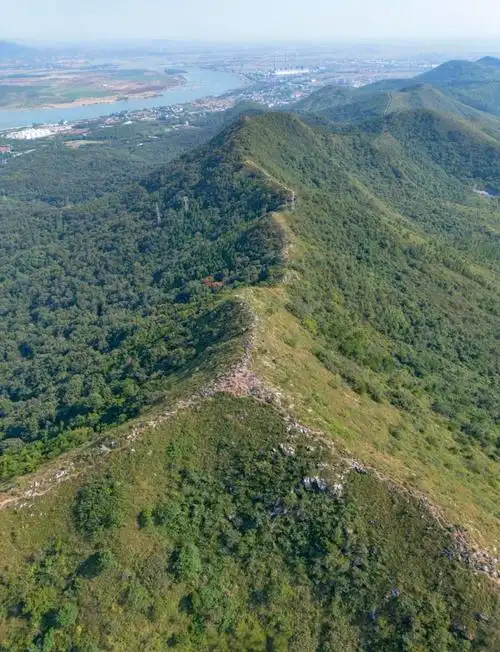 Rising along the southern edge of Xiangyang, Xian Shan carries echoes of the late third century AD—a turbulent age that parallels the collapse of Rome's Western Empire. During the Jin Dynasty, the general Yang Hu governed Xiangyang with such devotion that locals erected the "Tomb of Falling Tears" (堕泪碑) on the mountainside after his death, weeping as they passed. Like Roman funerary stelae commemorating beloved governors, this monument transformed grief into legend. Below the ridge, the legendary spot where Liu Bei's horse leapt across Tan Xi Brook to escape assassins has fixed Xian Shan permanently into the mythology of China's Three Kingdoms, an era Western visitors may recognize from retellings that echo Europe's Arthurian tales of heroism and betrayal.
The mountain's cultural fabric deepened during the Tang Dynasty (618–907 AD), often likened to Europe's Renaissance for its flourishing of poetry and art. Li Bai, China's most celebrated bard—revered much as Shakespeare or Dante—climbed these slopes, as did Meng Haoran and other masters whose verses still ring through the cliffs. Their calligraphy survives in the Chu Yan cliff inscription group, where chiseled characters of ministers and scholars from later dynasties cascade across the rock face. At the mountain's foot lies the Xijia Pool, one of China's earliest private gardens, predating many of Europe's Renaissance villas and embodying the same Wei-Jin aesthetic of cultivated wilderness that inspired Italian landscape design centuries later.
Beyond its storied monuments, Xian Shan is a true ecological refuge. With elevations ranging from 160 to 459 meters and forest coverage above 91%, the air is noticeably crisp—an effect locals poetically call the "natural oxygen bar." Six signature viewpoints reward hikers: the summit platform delivers a 360-degree panorama of Xiangyang's walled old town and the dramatic horseshoe curve of the Han River, while "Autumn Forest Howling Moon" offers quieter woodland enchantment. The 63-kilometer greenway, organized around a central axis and ten connecting corridors, weaves these lookouts together with seven rest stations, allowing visitors to set their own pace through a landscape that merges mountain, water, city, and forest into a single tapestry.
Xian Shan is refreshingly accessible, open around the clock with no entrance fee and no walls or gates restricting movement. Drivers can park at the South Gate or at the Xijia Pool trailhead, from where walking or cycling up is straightforward. Public buses serve the southern edge of the city, though mobile signal can weaken on higher paths, so pairing up with a companion and downloading offline maps is wise. The mountain has no large restaurants, so visitors should bring water and snacks—or descend to the South Gate old street for Xiangyang beef noodles and the region's mellow yellow wine, a brew as distinctive as any rustic French or Italian vintage.
Spring and autumn are the most rewarding seasons, when mild weather and shifting foliage complement the historic atmosphere. Summer visitors should plan early morning or post-4 p.m. outings to escape the heat, while rainy days transform the ridges into a misty realm reminiscent of Chinese ink paintings—equally magical after dark when Xiangyang's lights sparkle below. The full ridge walk takes roughly three to four hours; starting at Xijia Pool and following the central axis northward offers the most coherent route, threading past the Tomb of Falling Tears, the cliff carvings, and several thematic trails before culminating at the summit. Sturdy hiking shoes, sun protection, and insect repellent are essential companions for this journey through two millennia of Chinese memory.
Rising along the southern edge of Xiangyang, Xian Shan carries echoes of the late third century AD—a turbulent age that parallels the collapse of Rome's Western Empire. During the Jin Dynasty, the general Yang Hu governed Xiangyang with such devotion that locals erected the "Tomb of Falling Tears" (堕泪碑) on the mountainside after his death, weeping as they passed. Like Roman funerary stelae commemorating beloved governors, this monument transformed grief into legend. Below the ridge, the legendary spot where Liu Bei's horse leapt across Tan Xi Brook to escape assassins has fixed Xian Shan permanently into the mythology of China's Three Kingdoms, an era Western visitors may recognize from retellings that echo Europe's Arthurian tales of heroism and betrayal.
The mountain's cultural fabric deepened during the Tang Dynasty (618–907 AD), often likened to Europe's Renaissance for its flourishing of poetry and art. Li Bai, China's most celebrated bard—revered much as Shakespeare or Dante—climbed these slopes, as did Meng Haoran and other masters whose verses still ring through the cliffs. Their calligraphy survives in the Chu Yan cliff inscription group, where chiseled characters of ministers and scholars from later dynasties cascade across the rock face. At the mountain's foot lies the Xijia Pool, one of China's earliest private gardens, predating many of Europe's Renaissance villas and embodying the same Wei-Jin aesthetic of cultivated wilderness that inspired Italian landscape design centuries later.
Beyond its storied monuments, Xian Shan is a true ecological refuge. With elevations ranging from 160 to 459 meters and forest coverage above 91%, the air is noticeably crisp—an effect locals poetically call the "natural oxygen bar." Six signature viewpoints reward hikers: the summit platform delivers a 360-degree panorama of Xiangyang's walled old town and the dramatic horseshoe curve of the Han River, while "Autumn Forest Howling Moon" offers quieter woodland enchantment. The 63-kilometer greenway, organized around a central axis and ten connecting corridors, weaves these lookouts together with seven rest stations, allowing visitors to set their own pace through a landscape that merges mountain, water, city, and forest into a single tapestry.
Xian Shan is refreshingly accessible, open around the clock with no entrance fee and no walls or gates restricting movement. Drivers can park at the South Gate or at the Xijia Pool trailhead, from where walking or cycling up is straightforward. Public buses serve the southern edge of the city, though mobile signal can weaken on higher paths, so pairing up with a companion and downloading offline maps is wise. The mountain has no large restaurants, so visitors should bring water and snacks—or descend to the South Gate old street for Xiangyang beef noodles and the region's mellow yellow wine, a brew as distinctive as any rustic French or Italian vintage.
Spring and autumn are the most rewarding seasons, when mild weather and shifting foliage complement the historic atmosphere. Summer visitors should plan early morning or post-4 p.m. outings to escape the heat, while rainy days transform the ridges into a misty realm reminiscent of Chinese ink paintings—equally magical after dark when Xiangyang's lights sparkle below. The full ridge walk takes roughly three to four hours; starting at Xijia Pool and following the central axis northward offers the most coherent route, threading past the Tomb of Falling Tears, the cliff carvings, and several thematic trails before culminating at the summit. Sturdy hiking shoes, sun protection, and insect repellent are essential companions for this journey through two millennia of Chinese memory.