City Moat
⭐ 4.30
Moat, Xiangcheng District, Xiangyang City, Hubei Province, China
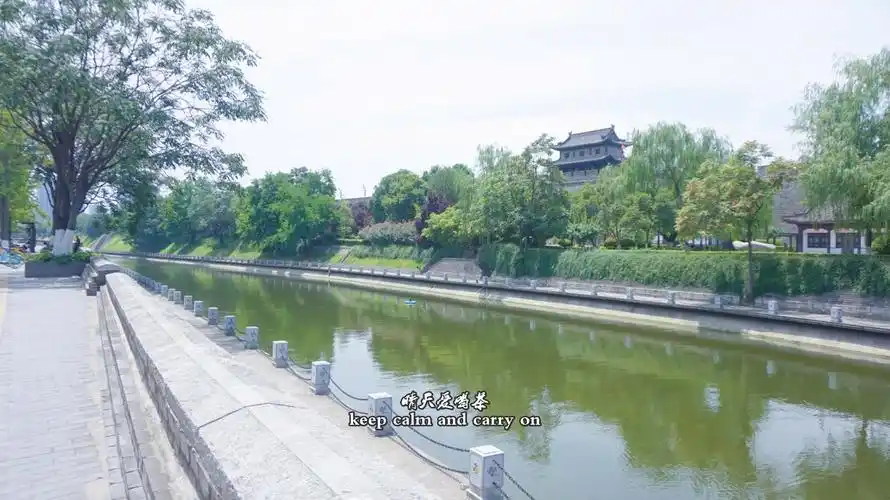 Begun during the Western Han dynasty and finalized in the Song, the moat was expanded through the Ming and Qing eras to create the formidable "Iron Xiangyang" defense system. While European moats such as those at Carcassonne typically measure 20 to 30 meters across, this Chinese counterpart utterly eclipses them. The walls famously withstood Mongol sieges in the 13th century, events contemporary with the Crusades and the sealing of Magna Carta. Two millennia of military and civic memory are inscribed into these waters.
Beyond its military role, the moat stands as a masterpiece of ancient hydraulic engineering. Fed by the Han River to the north and supplemented by three artificially excavated channels on the east, west, and south, the 910,000-square-meter water body still performs modern duties—flood regulation, ecological habitat, and scenic amenity. This dual purpose parallels how Venice's canals evolved from defensive necessity into civic treasure, though unlike London's famous moat, which was drained in the 19th century, Xiangyang's remains gloriously full.
The moat forms a liquid ring around key cultural landmarks: the ancient city walls, Zhongxuan Tower, Furen City—commemorating Han heroine Lady Fan—and Zhuge Liang Cultural Square honor the legendary strategist of Three Kingdoms fame. Locals practice tai chi at dawn and gather for evening song-and-dance along willow-lined banks. Summer lotus beds and a poetic crescent walkway called "Half-Moon Bend" offer romantic settings that photographers and hanfu enthusiasts find irresistible.
Entry is free. Visitors may climb the city walls for panoramic views, stroll or cycle the six-kilometer waterside path, or take an evening boat cruise to admire the light reflections. Dragon boat races animate the waters during the Duanwu Festival in early summer, and stand-up paddleboarding has recently been added. For the finest experience, enter via the West Gate or Linhan Gate around 5:30 PM—catch the sunset from the ramparts, then wander the illuminated riverbanks after dark.
Parking is limited; take bus 11, 21, or 31 to "Huchenghe Station" or arrive by taxi. Fishing and swimming are prohibited in these protected waters. For travelers seeking genuine Chinese history without the crowds of the Great Wall or Forbidden City, Xiangyang's moat offers a tranquil encounter where 2,000-year-old fortifications meet the gentle pulse of contemporary riverside life.
Begun during the Western Han dynasty and finalized in the Song, the moat was expanded through the Ming and Qing eras to create the formidable "Iron Xiangyang" defense system. While European moats such as those at Carcassonne typically measure 20 to 30 meters across, this Chinese counterpart utterly eclipses them. The walls famously withstood Mongol sieges in the 13th century, events contemporary with the Crusades and the sealing of Magna Carta. Two millennia of military and civic memory are inscribed into these waters.
Beyond its military role, the moat stands as a masterpiece of ancient hydraulic engineering. Fed by the Han River to the north and supplemented by three artificially excavated channels on the east, west, and south, the 910,000-square-meter water body still performs modern duties—flood regulation, ecological habitat, and scenic amenity. This dual purpose parallels how Venice's canals evolved from defensive necessity into civic treasure, though unlike London's famous moat, which was drained in the 19th century, Xiangyang's remains gloriously full.
The moat forms a liquid ring around key cultural landmarks: the ancient city walls, Zhongxuan Tower, Furen City—commemorating Han heroine Lady Fan—and Zhuge Liang Cultural Square honor the legendary strategist of Three Kingdoms fame. Locals practice tai chi at dawn and gather for evening song-and-dance along willow-lined banks. Summer lotus beds and a poetic crescent walkway called "Half-Moon Bend" offer romantic settings that photographers and hanfu enthusiasts find irresistible.
Entry is free. Visitors may climb the city walls for panoramic views, stroll or cycle the six-kilometer waterside path, or take an evening boat cruise to admire the light reflections. Dragon boat races animate the waters during the Duanwu Festival in early summer, and stand-up paddleboarding has recently been added. For the finest experience, enter via the West Gate or Linhan Gate around 5:30 PM—catch the sunset from the ramparts, then wander the illuminated riverbanks after dark.
Parking is limited; take bus 11, 21, or 31 to "Huchenghe Station" or arrive by taxi. Fishing and swimming are prohibited in these protected waters. For travelers seeking genuine Chinese history without the crowds of the Great Wall or Forbidden City, Xiangyang's moat offers a tranquil encounter where 2,000-year-old fortifications meet the gentle pulse of contemporary riverside life.