Ancient Longzhong
⭐ 4.60
No. 6, Longzhong Road, Xiangcheng District, Xiangyang City, Hubei Province, China
 Longzhong's fame rests on a single transformative moment: the winter of 207 AD, when the struggling warlord Liu Bei made three increasingly humble pilgrimages to a modest thatched cottage to persuade the reclusive scholar-officicial Zhuge Liang to join his cause. Their resulting strategic conversation, the "Longzhong Plan," laid out a vision that would partition China into the Three Kingdoms for nearly a century. Western visitors familiar with Machiavelli penning "The Prince" in Florentine exile, or Thomas More conceiving "Utopia" in quiet contemplation, will recognize the archetype: a remote retreat where political genius crystallizes away from court. Zhuge Liang, then aged 26, became China's icon of loyalty, foresight, and incorruptible wisdom—often compared to a blend of Cicero and Sun Tzu.
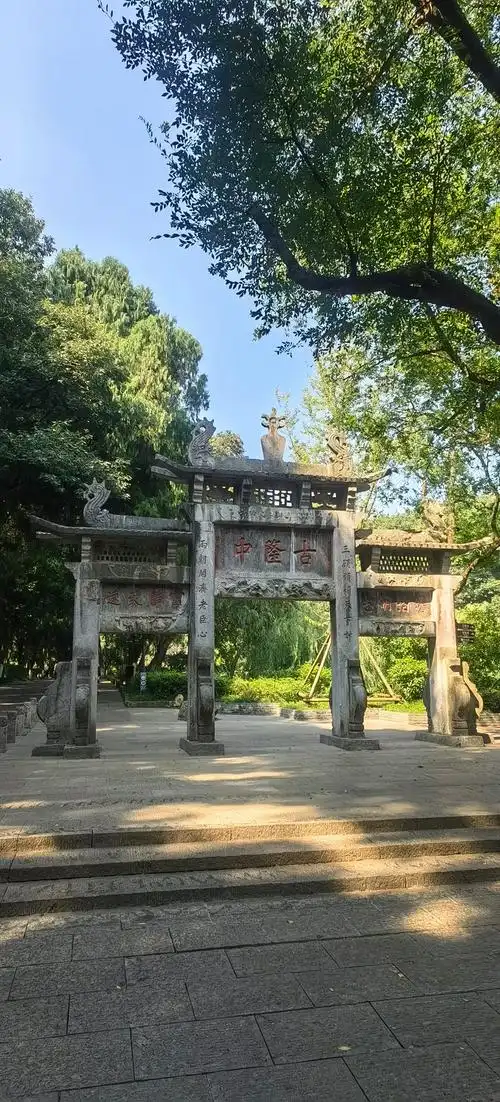
The architecture rewards visitors with a journey through Chinese imperial aesthetics. A stately Qing dynasty stone memorial archway, carved with Zhuge Liang's immortal maxim "Tranquility yields far-reaching purpose," opens the site in a manner reminiscent of entering a Tuscan monastery complex. Beyond it stands the Wuhou Shrine, originally built during the Jin dynasty and rebuilt across centuries, housing a treasured stele engraved by the Southern Song general Yue Fei with the famous "Memorial on Sending Out the Troops." Nearby, the San Gu Tang (Hall of Three Visits) and reconstructed Zhuge Cottage recreate the thatched hermitage in Han dynasty style, while a hexagonal well—still producing clear water—is said to have quenched the strategist's thirst seventeen centuries ago.
Culturally, Longzhong functions as a living classroom where the Three Kingdoms narrative remains vibrantly accessible. Live theatrical performances dramatize the famous recruitment scenes and strategic debates multiple times daily, transforming a static heritage site into an immersive experience akin to witnessing history performed at Warwick Castle or Stratford-upon-Avon. Designated a national key cultural relic protection unit and a premier destination for school study tours, the site embodies values of scholarly humility, agricultural diligence, and principled governance—qualities that have shaped Chinese civil service ideals for nearly two millennia and continue to draw both domestic pilgrims and curious international travelers.
Practical planning is straightforward. The scenic area sits at 461-1 Longzhong Road, Xiangcheng District, roughly 30 minutes by taxi from Xiangyang's city center. Buses 6 and 512 serve the route, while drivers will find ample parking at the visitor center, from which shuttle buses whisk you into the main site. Admission costs 87 yuan (about 12 USD) including the shuttle, with a discounted 53-yuan ticket for students and seniors; opening hours run 08:10 to 17:20. Allow three to four hours for a thorough visit, and strongly consider hiring a guide or renting an audio device—English options are limited but growing, and the layered historical allusions lose much without context.
For the optimal experience, plan a spring visit between March and May to witness the celebrated rapeseed flower fields, or return in autumn from September through November when the maple forests ignite in scarlet and gold. Active travelers should climb the Tenglong Pavilion for sweeping panoramas across the entire site and onward to the Xiangyang city skyline beyond. If time allows, combine your Longzhong excursion with an evening stroll along Xiangyang's ancient city walls—remarkably intact counterparts to China's medieval fortifications—and a cruise on the Han River, weaving together Three Kingdoms drama, riverside romance, and the enduring spirit of central China in one unforgettable itinerary.
Longzhong's fame rests on a single transformative moment: the winter of 207 AD, when the struggling warlord Liu Bei made three increasingly humble pilgrimages to a modest thatched cottage to persuade the reclusive scholar-officicial Zhuge Liang to join his cause. Their resulting strategic conversation, the "Longzhong Plan," laid out a vision that would partition China into the Three Kingdoms for nearly a century. Western visitors familiar with Machiavelli penning "The Prince" in Florentine exile, or Thomas More conceiving "Utopia" in quiet contemplation, will recognize the archetype: a remote retreat where political genius crystallizes away from court. Zhuge Liang, then aged 26, became China's icon of loyalty, foresight, and incorruptible wisdom—often compared to a blend of Cicero and Sun Tzu.
The architecture rewards visitors with a journey through Chinese imperial aesthetics. A stately Qing dynasty stone memorial archway, carved with Zhuge Liang's immortal maxim "Tranquility yields far-reaching purpose," opens the site in a manner reminiscent of entering a Tuscan monastery complex. Beyond it stands the Wuhou Shrine, originally built during the Jin dynasty and rebuilt across centuries, housing a treasured stele engraved by the Southern Song general Yue Fei with the famous "Memorial on Sending Out the Troops." Nearby, the San Gu Tang (Hall of Three Visits) and reconstructed Zhuge Cottage recreate the thatched hermitage in Han dynasty style, while a hexagonal well—still producing clear water—is said to have quenched the strategist's thirst seventeen centuries ago.
Culturally, Longzhong functions as a living classroom where the Three Kingdoms narrative remains vibrantly accessible. Live theatrical performances dramatize the famous recruitment scenes and strategic debates multiple times daily, transforming a static heritage site into an immersive experience akin to witnessing history performed at Warwick Castle or Stratford-upon-Avon. Designated a national key cultural relic protection unit and a premier destination for school study tours, the site embodies values of scholarly humility, agricultural diligence, and principled governance—qualities that have shaped Chinese civil service ideals for nearly two millennia and continue to draw both domestic pilgrims and curious international travelers.
Practical planning is straightforward. The scenic area sits at 461-1 Longzhong Road, Xiangcheng District, roughly 30 minutes by taxi from Xiangyang's city center. Buses 6 and 512 serve the route, while drivers will find ample parking at the visitor center, from which shuttle buses whisk you into the main site. Admission costs 87 yuan (about 12 USD) including the shuttle, with a discounted 53-yuan ticket for students and seniors; opening hours run 08:10 to 17:20. Allow three to four hours for a thorough visit, and strongly consider hiring a guide or renting an audio device—English options are limited but growing, and the layered historical allusions lose much without context.
For the optimal experience, plan a spring visit between March and May to witness the celebrated rapeseed flower fields, or return in autumn from September through November when the maple forests ignite in scarlet and gold. Active travelers should climb the Tenglong Pavilion for sweeping panoramas across the entire site and onward to the Xiangyang city skyline beyond. If time allows, combine your Longzhong excursion with an evening stroll along Xiangyang's ancient city walls—remarkably intact counterparts to China's medieval fortifications—and a cruise on the Han River, weaving together Three Kingdoms drama, riverside romance, and the enduring spirit of central China in one unforgettable itinerary.