Lianhua Peak, Mount Heng
⭐ 3.80
Lianhua Peak, Mount Heng, Hengshan County, Hengyang City, Hunan Province, China
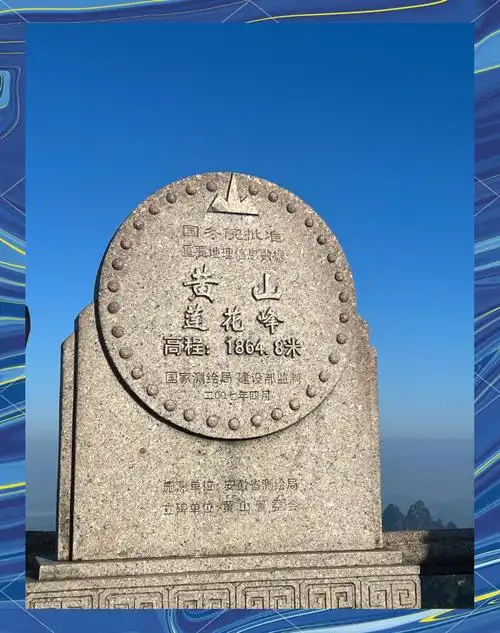 Mount Heng (Hengshan) is the southernmost of China's Five Great Mountains, a sacred peak revered since at least the Han dynasty (206 BCE–220 CE), roughly contemporary with the fall of the Roman Republic. Among its 72 subsidiary peaks, Lotus Peak stands apart as the only one deemed worthy of its own historical gazetteer—composed in the 17th century by the great philosopher Wang Fuzhi after he retreated here to escape the turmoil of the Ming-Qing transition. His writings, much like Galileo's scientific treatises in their break with tradition, established him as one of China's most influential thinkers, all nurtured in this remote valley.
At its center sits Fangguang Temple, founded in 503 CE during the Southern Liang dynasty—a period when Pope Gregory the Great was reorganizing the Italian Church across the Eurasian continent. The temple complex includes the Erxian Shrine, honoring the Southern Song dynasty (1127–1279 CE) Neo-Confucian masters Zhu Xi and Zhang Shi, whose famous "Snow Watching at Lotus Peak" gathering became a touchstone of Chinese intellectual life, comparable to the philosophical salons of medieval Paris. The surrounding architecture blends seamlessly with towering ancient trees, much like the way Carthusian monasteries melt into Alpine forests.
The cultural resonance runs even deeper. Wang Fuzhi spent his later years writing in a thatched hut nearby, producing the dense philosophical corpus known as "Chuanshan Learning"—works so politically charged they were suppressed for two centuries. Nearby, the Black Sand Pool waterfall tumbles eight to ten meters, watched over by an inscription from Emperor Huizong himself, the Song-dynasty aesthete-monarch whose artistic legacy rivals that of any European Renaissance patron.
The natural setting is remarkably pristine. Vast tracts of secondary-growth forest shelter rare species including Chinese yew and the endangered Bretschneidera sinensis. Autumn transforms the slopes into a riot of red maple—visually reminiscent of New England's fall foliage, though punctuated by mist-shrouded pinnacles that recall Chinese landscape paintings. After rain, the valley fills with drifting clouds that amplify the mountain's signature quality: profound "depth," both physical and spiritual.
Practicalities are straightforward but require planning. The peak is included in the general Mount Heng scenic pass; no separate ticket is needed. Peak season (April–October) hours run 08:00–18:00, off-season 08:30–17:30. Reaching the temple is the chief challenge: drive or hire a car to Fangjia Da'ao, then continue ten kilometers along a country road, or take a shuttle to Nantianmen and hike five kilometers uphill. Allow 1.5 to 2 hours for a leisurely circuit covering the temple gate, Fangguang Temple, Erxian Shrine, and Black Sand Pool.
This is not a summit-climbing destination. Lotus Peak rewards those who prefer quiet monasteries, forested footpaths, and the echo of great minds. Wear sturdy hiking shoes, bring rain gear and mosquito repellent, and descend before dusk. The optimal seasons are autumn and the days immediately following summer rain, when the maples glow crimson and clouds dance between the eight encircling peaks—capturing the very essence of what the ancients meant by "depth."
Mount Heng (Hengshan) is the southernmost of China's Five Great Mountains, a sacred peak revered since at least the Han dynasty (206 BCE–220 CE), roughly contemporary with the fall of the Roman Republic. Among its 72 subsidiary peaks, Lotus Peak stands apart as the only one deemed worthy of its own historical gazetteer—composed in the 17th century by the great philosopher Wang Fuzhi after he retreated here to escape the turmoil of the Ming-Qing transition. His writings, much like Galileo's scientific treatises in their break with tradition, established him as one of China's most influential thinkers, all nurtured in this remote valley.
At its center sits Fangguang Temple, founded in 503 CE during the Southern Liang dynasty—a period when Pope Gregory the Great was reorganizing the Italian Church across the Eurasian continent. The temple complex includes the Erxian Shrine, honoring the Southern Song dynasty (1127–1279 CE) Neo-Confucian masters Zhu Xi and Zhang Shi, whose famous "Snow Watching at Lotus Peak" gathering became a touchstone of Chinese intellectual life, comparable to the philosophical salons of medieval Paris. The surrounding architecture blends seamlessly with towering ancient trees, much like the way Carthusian monasteries melt into Alpine forests.
The cultural resonance runs even deeper. Wang Fuzhi spent his later years writing in a thatched hut nearby, producing the dense philosophical corpus known as "Chuanshan Learning"—works so politically charged they were suppressed for two centuries. Nearby, the Black Sand Pool waterfall tumbles eight to ten meters, watched over by an inscription from Emperor Huizong himself, the Song-dynasty aesthete-monarch whose artistic legacy rivals that of any European Renaissance patron.
The natural setting is remarkably pristine. Vast tracts of secondary-growth forest shelter rare species including Chinese yew and the endangered Bretschneidera sinensis. Autumn transforms the slopes into a riot of red maple—visually reminiscent of New England's fall foliage, though punctuated by mist-shrouded pinnacles that recall Chinese landscape paintings. After rain, the valley fills with drifting clouds that amplify the mountain's signature quality: profound "depth," both physical and spiritual.
Practicalities are straightforward but require planning. The peak is included in the general Mount Heng scenic pass; no separate ticket is needed. Peak season (April–October) hours run 08:00–18:00, off-season 08:30–17:30. Reaching the temple is the chief challenge: drive or hire a car to Fangjia Da'ao, then continue ten kilometers along a country road, or take a shuttle to Nantianmen and hike five kilometers uphill. Allow 1.5 to 2 hours for a leisurely circuit covering the temple gate, Fangguang Temple, Erxian Shrine, and Black Sand Pool.
This is not a summit-climbing destination. Lotus Peak rewards those who prefer quiet monasteries, forested footpaths, and the echo of great minds. Wear sturdy hiking shoes, bring rain gear and mosquito repellent, and descend before dusk. The optimal seasons are autumn and the days immediately following summer rain, when the maples glow crimson and clouds dance between the eight encircling peaks—capturing the very essence of what the ancients meant by "depth."