Hengyang Water Curtain Cave
⭐ 4.00
Shuilian Cave Scenic Area, Hengnan County, Hengyang City, Hunan Province, China
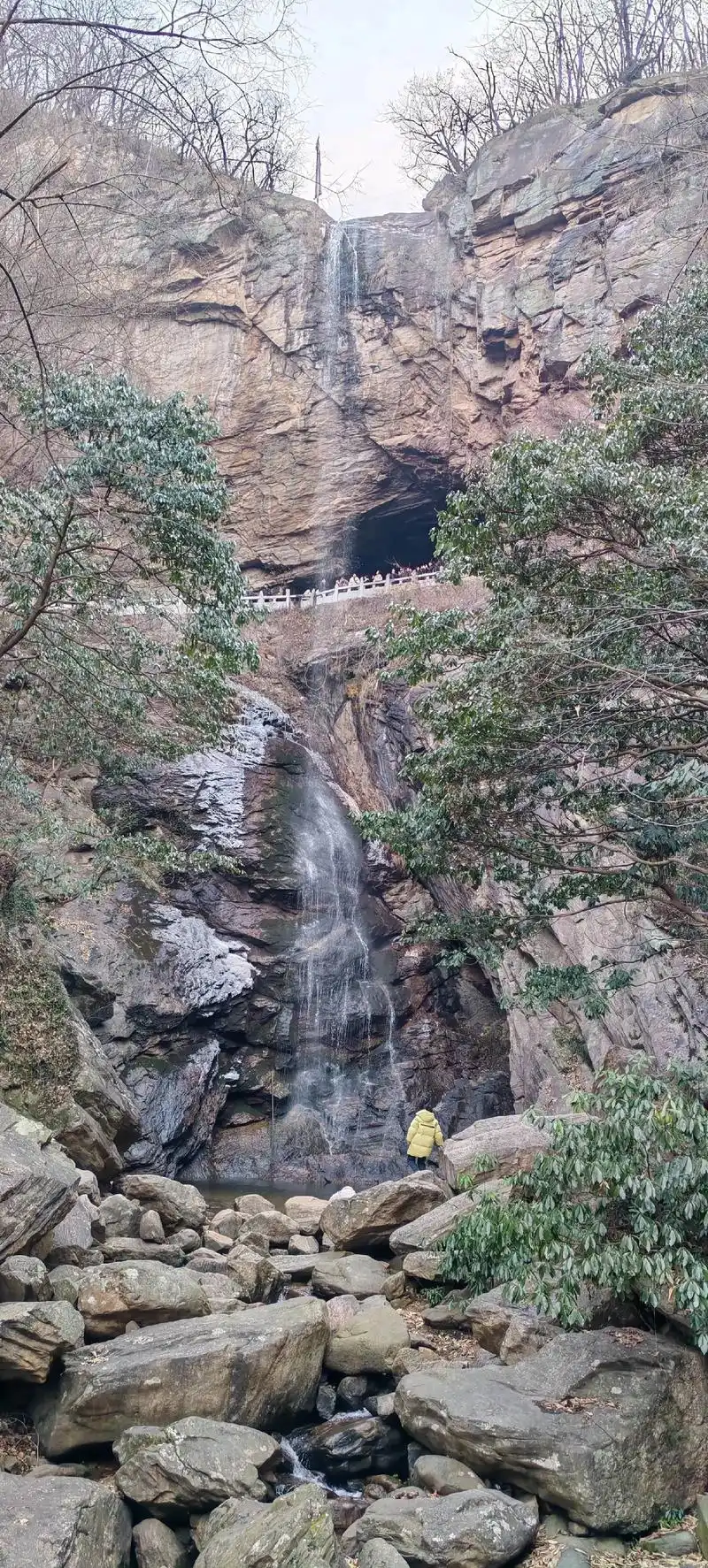 Long before the arrival of Buddhism in China, this limestone grotto beneath Mount Heng's Purple Canopy Peak was revered as the dwelling place of the Yan Emperor, the mythic ancestor of Chinese civilization. Daoist tradition later elevated it to the status of "Third Celestial Grotto of Pure Void and Blessed Land," placing it within the same sacred geography as Taoist masters such as Laozi and the legendary Zhang Daoling. Classical scholars, including the Ming statesman Zhang Juzheng and the Neo-Confucian philosopher Zhu Xi, left poetic inscriptions here, ensuring the site remained a center of intellectual pilgrimage for centuries.
The waterfall itself cascades roughly 50 to 60 meters down the cliff face, resembling a billowing silk curtain suspended against mossy stone. During the rainy season, the thundering plume generates a constant mist where sunlight refracts into fleeting rainbows. This natural spectacle, combined with the roar of falling water and the ethereal play of light, has earned the site the nickname "Trinity of Sound, Light, and Shadow." Compared to the famous cascades of the Swiss Alps or Yosemite's Bridalveil Fall, the experience is more intimate and historically layered, framed by calligraphy-covered cliffs rather than pristine granite.
Equally significant is the extraordinary collection of over a hundred cliff carvings dating from the Tang Dynasty (618-907) through the Qing era. Among the most prized are the bold "Drunk" character by the eccentric monk-calligrapher Huai Su, alongside works by the celebrated Ming scholar Dong Qichang. These inscriptions, designated a National Key Cultural Relic, transform the canyon into an open-air museum of Chinese calligraphy, somewhat akin to discovering a Rossetti poem inscribed on a Highland waterfall.
Practical information makes a visit straightforward. The cave lies roughly 3.5 to 4 kilometers from Nanyue Town, accessible by shuttle or taxi for a modest fare, with the attraction itself open daily from 7:30 a.m. to 5:30 p.m. (extended to 6 p.m. in peak season). Entry costs only around 30 yuan, separate from the main Mount Heng ticket. Travelers should allow one to two hours, wear sturdy non-slip footwear, and bring translation software, as English signage remains limited. International visitors can also rely on the "Hunan Travel" app for multilingual audio guidance.
The optimal moment to visit arrives between June and August, after rainfall, when the falls swell to full force and rainbows appear most reliably. Summer also brings cooler temperatures and high concentrations of negative ions in the canyon air, making it refreshing for families with children. Whether you arrive as a photographer chasing the perfect rainbow shot, a calligraphy enthusiast tracing brush strokes across centuries, or a curious traveler seeking an accessible window into Daoist mysticism, Water Curtain Cave delivers a uniquely Chinese encounter with landscape and legacy.
Long before the arrival of Buddhism in China, this limestone grotto beneath Mount Heng's Purple Canopy Peak was revered as the dwelling place of the Yan Emperor, the mythic ancestor of Chinese civilization. Daoist tradition later elevated it to the status of "Third Celestial Grotto of Pure Void and Blessed Land," placing it within the same sacred geography as Taoist masters such as Laozi and the legendary Zhang Daoling. Classical scholars, including the Ming statesman Zhang Juzheng and the Neo-Confucian philosopher Zhu Xi, left poetic inscriptions here, ensuring the site remained a center of intellectual pilgrimage for centuries.
The waterfall itself cascades roughly 50 to 60 meters down the cliff face, resembling a billowing silk curtain suspended against mossy stone. During the rainy season, the thundering plume generates a constant mist where sunlight refracts into fleeting rainbows. This natural spectacle, combined with the roar of falling water and the ethereal play of light, has earned the site the nickname "Trinity of Sound, Light, and Shadow." Compared to the famous cascades of the Swiss Alps or Yosemite's Bridalveil Fall, the experience is more intimate and historically layered, framed by calligraphy-covered cliffs rather than pristine granite.
Equally significant is the extraordinary collection of over a hundred cliff carvings dating from the Tang Dynasty (618-907) through the Qing era. Among the most prized are the bold "Drunk" character by the eccentric monk-calligrapher Huai Su, alongside works by the celebrated Ming scholar Dong Qichang. These inscriptions, designated a National Key Cultural Relic, transform the canyon into an open-air museum of Chinese calligraphy, somewhat akin to discovering a Rossetti poem inscribed on a Highland waterfall.
Practical information makes a visit straightforward. The cave lies roughly 3.5 to 4 kilometers from Nanyue Town, accessible by shuttle or taxi for a modest fare, with the attraction itself open daily from 7:30 a.m. to 5:30 p.m. (extended to 6 p.m. in peak season). Entry costs only around 30 yuan, separate from the main Mount Heng ticket. Travelers should allow one to two hours, wear sturdy non-slip footwear, and bring translation software, as English signage remains limited. International visitors can also rely on the "Hunan Travel" app for multilingual audio guidance.
The optimal moment to visit arrives between June and August, after rainfall, when the falls swell to full force and rainbows appear most reliably. Summer also brings cooler temperatures and high concentrations of negative ions in the canyon air, making it refreshing for families with children. Whether you arrive as a photographer chasing the perfect rainbow shot, a calligraphy enthusiast tracing brush strokes across centuries, or a curious traveler seeking an accessible window into Daoist mysticism, Water Curtain Cave delivers a uniquely Chinese encounter with landscape and legacy.