Yunwu Temple at Mount Heng
⭐ 4.20
Yunwu Temple, Hengshan County, Hengyang City, Hunan Province, China
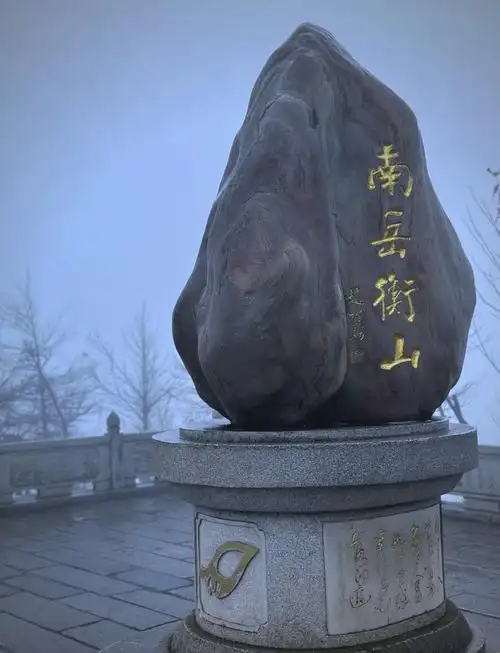 Mount Heng (Hengshan) ranks among China's "Five Sacred Mountains"—a spiritual lineage as revered in East Asia as Mount Olympus was in ancient Greece or Mount Sinai remains in the Abrahamic traditions. Straddling the boundary between Hunan's central hills and southern highlands, this range generates extraordinary cloud formations: moisture rises along the slopes and condenses into billowing "cloud seas" that swallow entire peaks, ancient pines, and temple rooftops in a shifting monochrome canvas that has inspired Chinese landscape painters for centuries. Visit after rainfall clears and you'll understand why literati called this place the "Uniquely Graceful of the Five Mountains."
Founded in 605 AD—just as the Tang dynasty was beginning its golden age—Shangfeng Temple predates most of Europe's great Gothic cathedrals by six centuries. Perched at roughly 1,100 meters near Zhurong Peak, this once-powerful Zen monastery hosted masters from the Southern, Qingyuan, and Caodong schools of Chan Buddhism, lineages that spread from here across East Asia into Japan and Korea. Its ancient ginkgo trees and protected fir groves have watched monks meditate through more than fourteen centuries. On misty mornings, the temple gate dissolves into cloud while sutra chanting mingles with the soughing of mountain pines—arguably the most quintessentially "Zen" atmosphere in all of southern China.
At the summit stands Zhurong Hall, a modest but commanding shrine at 1,300.2 meters dedicated to Zhurong, the ancient fire deity whose mythology predates Buddhism in China by millennia. Think of it as a sacred peak temple in the tradition of Greece's Mount Athos or Tibet's lofty hermitages—a place where pilgrims have climbed for spiritual reward since the dawn of Chinese civilization. On clear autumn mornings, the panoramic view stretches across the snaking Xiang River to the distant city of Hengyang. When clouds roll in, the hall's upturned eaves emerge and vanish like a celestial palace drifting between worlds.
What sets Mount Heng apart from other Chinese sacred mountains is its remarkable religious pluralism. Unlike strictly Buddhist Emei or purely Taoist Wudang, Hengshan has hosted Buddhism and Taoism side by side for over a millennium. The nearby Nantai Temple claims to be the ancestral seat of the Caodong school that eventually reached Japan as Soto Zen, while Fuyan Temple preserves six dynasties of history with rare Tang-era stone carvings. Even more striking is the Great Temple of Mount Heng (Nanyue Damiao), an extraordinary complex where Buddhist halls and Taoist shrines share the same courtyards—a coexistence that would have astonished medieval Europe, where such syncretism was unthinkable.
Reaching the cloud-wrapped sanctuaries is straightforward. From Hengshan West Station, bus or taxi takes you to the historic Nanyue Old Town in about 30 minutes. Begin at the Great Temple (entry around ¥40), then transfer to eco-friendly shuttles heading up to Banshan Pavilion or Nantianmen Gate, where cable cars or your own boots complete the climb. Most mountaintop temples charge only a modest incense fee rather than admission. Allow two full days: overnight near Banshan Pavilion, then ascend before dawn for the legendary cloud-sea sunrise. Sturdy hiking shoes, rain gear, and a warm layer are essential—summit temperatures drop sharply, and sudden fog can transform the path within minutes.
One important note for independent travelers: despite search results suggesting otherwise, no temple called "Yunwu Temple" exists on Mount Heng. The "cloud mist" refers purely to the natural phenomenon, not a named attraction, so don't waste time wandering for a building that isn't there. Check weather forecasts before committing to a sunrise climb—clear-after-rain conditions produce the most spectacular displays. Inside temples, observe basic decorum: no flash photography of Buddha statues, and politely decline unofficial "guides" or aggressive incense sellers near the summit. The genuine experience—mountain, mist, and ancient monastery—needs no embellishment.
Mount Heng (Hengshan) ranks among China's "Five Sacred Mountains"—a spiritual lineage as revered in East Asia as Mount Olympus was in ancient Greece or Mount Sinai remains in the Abrahamic traditions. Straddling the boundary between Hunan's central hills and southern highlands, this range generates extraordinary cloud formations: moisture rises along the slopes and condenses into billowing "cloud seas" that swallow entire peaks, ancient pines, and temple rooftops in a shifting monochrome canvas that has inspired Chinese landscape painters for centuries. Visit after rainfall clears and you'll understand why literati called this place the "Uniquely Graceful of the Five Mountains."
Founded in 605 AD—just as the Tang dynasty was beginning its golden age—Shangfeng Temple predates most of Europe's great Gothic cathedrals by six centuries. Perched at roughly 1,100 meters near Zhurong Peak, this once-powerful Zen monastery hosted masters from the Southern, Qingyuan, and Caodong schools of Chan Buddhism, lineages that spread from here across East Asia into Japan and Korea. Its ancient ginkgo trees and protected fir groves have watched monks meditate through more than fourteen centuries. On misty mornings, the temple gate dissolves into cloud while sutra chanting mingles with the soughing of mountain pines—arguably the most quintessentially "Zen" atmosphere in all of southern China.
At the summit stands Zhurong Hall, a modest but commanding shrine at 1,300.2 meters dedicated to Zhurong, the ancient fire deity whose mythology predates Buddhism in China by millennia. Think of it as a sacred peak temple in the tradition of Greece's Mount Athos or Tibet's lofty hermitages—a place where pilgrims have climbed for spiritual reward since the dawn of Chinese civilization. On clear autumn mornings, the panoramic view stretches across the snaking Xiang River to the distant city of Hengyang. When clouds roll in, the hall's upturned eaves emerge and vanish like a celestial palace drifting between worlds.
What sets Mount Heng apart from other Chinese sacred mountains is its remarkable religious pluralism. Unlike strictly Buddhist Emei or purely Taoist Wudang, Hengshan has hosted Buddhism and Taoism side by side for over a millennium. The nearby Nantai Temple claims to be the ancestral seat of the Caodong school that eventually reached Japan as Soto Zen, while Fuyan Temple preserves six dynasties of history with rare Tang-era stone carvings. Even more striking is the Great Temple of Mount Heng (Nanyue Damiao), an extraordinary complex where Buddhist halls and Taoist shrines share the same courtyards—a coexistence that would have astonished medieval Europe, where such syncretism was unthinkable.
Reaching the cloud-wrapped sanctuaries is straightforward. From Hengshan West Station, bus or taxi takes you to the historic Nanyue Old Town in about 30 minutes. Begin at the Great Temple (entry around ¥40), then transfer to eco-friendly shuttles heading up to Banshan Pavilion or Nantianmen Gate, where cable cars or your own boots complete the climb. Most mountaintop temples charge only a modest incense fee rather than admission. Allow two full days: overnight near Banshan Pavilion, then ascend before dawn for the legendary cloud-sea sunrise. Sturdy hiking shoes, rain gear, and a warm layer are essential—summit temperatures drop sharply, and sudden fog can transform the path within minutes.
One important note for independent travelers: despite search results suggesting otherwise, no temple called "Yunwu Temple" exists on Mount Heng. The "cloud mist" refers purely to the natural phenomenon, not a named attraction, so don't waste time wandering for a building that isn't there. Check weather forecasts before committing to a sunrise climb—clear-after-rain conditions produce the most spectacular displays. Inside temples, observe basic decorum: no flash photography of Buddha statues, and politely decline unofficial "guides" or aggressive incense sellers near the summit. The genuine experience—mountain, mist, and ancient monastery—needs no embellishment.