Hengyang Defense War Memorial Hall
⭐ 5.00
Economic Development Zone, Hengyang City, Hunan Province, China
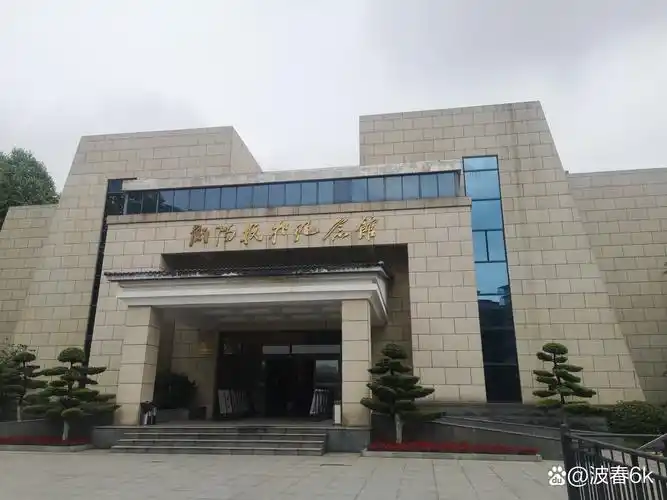 The 1944 Battle of Hengyang ranks among the longest urban sieges of the Second Sino-Japanese War, often compared to Stalingrad or the Warsaw Uprising for sheer endurance. For 48 days, roughly 17,000 Nationalist troops under General Fang Xianjue held this vital rail-and-air hub against a Japanese force several times their size. So costly was the fight that Japan's High Command publicly grieved its losses. Hengyang remains the only city ever officially designated an "Anti-Japanese War Memorial City" by the Nationalist government—a distinction akin to Leningrad's "Hero City" status. The city's fall opened central China to invasion, making its prolonged defense a pivotal moment in the Pacific theater.
The memorial occupies Lu Family New House, a 2,640-square-meter brick-and-timber courtyard compound built between 1881 and 1887 in classic southern Hunan vernacular style—stepped gables, gray-tiled roofs, and a central skywell typical of late-Qing merchant residences. Unlike comparable heritage homes across Hunan or the courtyard houses of old Beijing, this one carries visible scars: hundreds of original bullet holes and shrapnel marks from 1944 are preserved in situ. The most arresting feature is a near-meter-wide impact crater on the right fire-stopping gable, where a heavy shell punched clean through the masonry. This blend of elegant architecture and unstaged war damage creates an authenticity no reconstruction could replicate.
The permanent exhibition "Loyal Martyrs, Mighty National Soul" fills the left wing and unfolds the 48-day siege through period photographs, soldiers' letters, military maps, and diorama reconstructions of trench combat. A provincially protected relic and university patriotic-education base, the museum operates on two levels: a serious archive documenting combat tactics, troop movements, and civilian suffering, and a living memorial where schoolchildren and veterans gather each summer. The bullet-marked walls are deliberately unrestored—a curatorial choice echoing the preserved bomb damage at London's St. Paul's Cathedral or Berlin's Reichstag—forcing visitors to confront the war's physical immediacy rather than a sanitized narrative.
The memorial sits at the junction of Zhengshui South Road and Yangliu Road in the Zhengxiang High-Tech Zone, roughly four kilometers southwest of the city center—easy by ride-hailing app, less so on foot. Admission is free; hours run 09:00 to 17:00, closed Mondays except national holidays. Foreign visitors must book English-language guides at least a day ahead via 0734-2816001 and present original passports at the gate. Allow one to one-and-a-half hours, dress respectfully, and skip flash photography—the curators treat the bullet holes as artifacts, not photo props. Saturday mornings between 09:30 and 11:00 offer cool weather and thinner crowds.
Travelers interested in WWII-era memory tourism will find this a quieter, more contemplative alternative to China's better-known wartime sites like the Nanjing Massacre Memorial or the Chongqing Bombing Museum. Its particular power lies in scale: a modest domestic building where an entire neighborhood's worth of combat unfolded, preserved with minimal mediation. With extra time, combine the hall with the nearby Yueping Park Anti-Japanese War Memorial Tower, three to four kilometers away, for a complete half-day circuit of Hengyang's wartime heritage. For Western visitors tracing the long arc of twentieth-century conflict, the memorial offers an under-visited but profoundly human chapter in the global story of resistance against occupation.
The 1944 Battle of Hengyang ranks among the longest urban sieges of the Second Sino-Japanese War, often compared to Stalingrad or the Warsaw Uprising for sheer endurance. For 48 days, roughly 17,000 Nationalist troops under General Fang Xianjue held this vital rail-and-air hub against a Japanese force several times their size. So costly was the fight that Japan's High Command publicly grieved its losses. Hengyang remains the only city ever officially designated an "Anti-Japanese War Memorial City" by the Nationalist government—a distinction akin to Leningrad's "Hero City" status. The city's fall opened central China to invasion, making its prolonged defense a pivotal moment in the Pacific theater.
The memorial occupies Lu Family New House, a 2,640-square-meter brick-and-timber courtyard compound built between 1881 and 1887 in classic southern Hunan vernacular style—stepped gables, gray-tiled roofs, and a central skywell typical of late-Qing merchant residences. Unlike comparable heritage homes across Hunan or the courtyard houses of old Beijing, this one carries visible scars: hundreds of original bullet holes and shrapnel marks from 1944 are preserved in situ. The most arresting feature is a near-meter-wide impact crater on the right fire-stopping gable, where a heavy shell punched clean through the masonry. This blend of elegant architecture and unstaged war damage creates an authenticity no reconstruction could replicate.
The permanent exhibition "Loyal Martyrs, Mighty National Soul" fills the left wing and unfolds the 48-day siege through period photographs, soldiers' letters, military maps, and diorama reconstructions of trench combat. A provincially protected relic and university patriotic-education base, the museum operates on two levels: a serious archive documenting combat tactics, troop movements, and civilian suffering, and a living memorial where schoolchildren and veterans gather each summer. The bullet-marked walls are deliberately unrestored—a curatorial choice echoing the preserved bomb damage at London's St. Paul's Cathedral or Berlin's Reichstag—forcing visitors to confront the war's physical immediacy rather than a sanitized narrative.
The memorial sits at the junction of Zhengshui South Road and Yangliu Road in the Zhengxiang High-Tech Zone, roughly four kilometers southwest of the city center—easy by ride-hailing app, less so on foot. Admission is free; hours run 09:00 to 17:00, closed Mondays except national holidays. Foreign visitors must book English-language guides at least a day ahead via 0734-2816001 and present original passports at the gate. Allow one to one-and-a-half hours, dress respectfully, and skip flash photography—the curators treat the bullet holes as artifacts, not photo props. Saturday mornings between 09:30 and 11:00 offer cool weather and thinner crowds.
Travelers interested in WWII-era memory tourism will find this a quieter, more contemplative alternative to China's better-known wartime sites like the Nanjing Massacre Memorial or the Chongqing Bombing Museum. Its particular power lies in scale: a modest domestic building where an entire neighborhood's worth of combat unfolded, preserved with minimal mediation. With extra time, combine the hall with the nearby Yueping Park Anti-Japanese War Memorial Tower, three to four kilometers away, for a complete half-day circuit of Hengyang's wartime heritage. For Western visitors tracing the long arc of twentieth-century conflict, the memorial offers an under-visited but profoundly human chapter in the global story of resistance against occupation.