Shigu Park
⭐ 4.20
Shigu Park, Zhuhui District, Hengyang City, Hunan Province, China
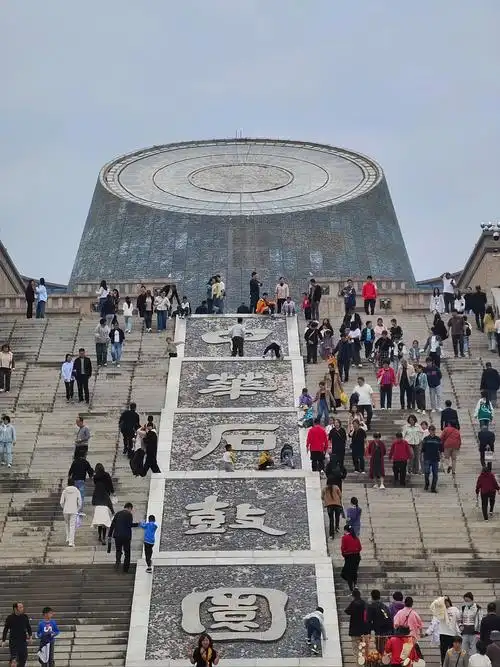 Tracing its origins to an 8th-century Tang Dynasty study hall founded by the scholar Li Kuan, Shigu Academy received its imperial name in 1035—an ancient seat of learning that predates Europe's first universities at Bologna and Oxford by half a century. Alongside Yuelu Academy in Hunan, the White Deer Grotto Academy in Jiangxi, and the Yingtian Academy in Henan, it ranked among imperial China's four most prestigious centers of learning. The academy produced towering intellectuals, including the philosopher Wang Fuzhi, before wartime bombing destroyed it in 1944. After a meticulous 2006 restoration, it reopened as a public cultural park and was further enhanced in 2024.
The rebuilt complex cascades up the hillside in classic Song Dynasty style—sweeping upturned eaves, grey-glazed tiles, and whitewashed walls reminiscent of a Chinese answer to a Tuscan hill town. Highlights include the Wuhou Shrine honoring Zhuge Liang, the brilliant 3rd-century strategist whose life inspired Romance of the Three Kingdoms; the towering Daguan Pavilion offering panoramic river views; and the ancient Yuwang Stele commemorating the legendary flood-taming hero Yu the Great. Nearby cliffs bear Tang and Song Dynasty inscriptions and a poem stele by the great Tang writer Han Yu, while a thousand-year-old ginkgo tree blazes gold each autumn.
Shigu Academy ranks among the cradles of Huxiang culture—the distinctively bold, practical-minded Hunan scholarly tradition that produced figures like artist Qi Baishi and modern China's founding marshals. The on-site museum traces a millennium of triumphs and tribulations through artifacts, calligraphy, and biographical exhibits—functioning much like a research library for Western historians of Confucian thought. Standing at the Hejiang Pavilion, visitors witness the rare geological spectacle where the clear waters of the Zheng River, the muddy Xiang, and the Lei rivers remain visibly distinct even as they merge—earning the location's ancient nickname "The Finest Spot in the Prefecture."
The park's open squares and gardens are free to enter, with hours running Tuesday through Sunday, 8:30 AM to 5:00 PM (closed Mondays for maintenance). Access to the rebuilt Shigu Academy buildings requires a modest ticket of around 20 yuan for adults, with children paying half-price. Public buses 105, 116, 143, and 162 stop nearby at either Shigu Academy Station or Shigu Square Station; taxis navigate directly to 98 Zhongshan North Road. Note that on-site amenities are limited, so bringing water and snacks is advisable.
For Western travelers seeking to understand how Chinese intellectual traditions shaped modern Hunan—a province that produced more than its share of revolutionary leaders and contemporary artists—Shigu Park offers an accessible, uncrowded window into the Confucian academy system that educated China's scholar-officials for centuries. Visit between 8:30 and 11 AM for soft lighting ideal for photography and cooler summer temperatures. Begin at the main gate to admire the new "Shigu Rivers and Mountains" memorial archway and Seven Sages sculptures, then follow the riverside corridor to the Yu Pavilion for the classic three-river view before entering the academy itself.
Tracing its origins to an 8th-century Tang Dynasty study hall founded by the scholar Li Kuan, Shigu Academy received its imperial name in 1035—an ancient seat of learning that predates Europe's first universities at Bologna and Oxford by half a century. Alongside Yuelu Academy in Hunan, the White Deer Grotto Academy in Jiangxi, and the Yingtian Academy in Henan, it ranked among imperial China's four most prestigious centers of learning. The academy produced towering intellectuals, including the philosopher Wang Fuzhi, before wartime bombing destroyed it in 1944. After a meticulous 2006 restoration, it reopened as a public cultural park and was further enhanced in 2024.
The rebuilt complex cascades up the hillside in classic Song Dynasty style—sweeping upturned eaves, grey-glazed tiles, and whitewashed walls reminiscent of a Chinese answer to a Tuscan hill town. Highlights include the Wuhou Shrine honoring Zhuge Liang, the brilliant 3rd-century strategist whose life inspired Romance of the Three Kingdoms; the towering Daguan Pavilion offering panoramic river views; and the ancient Yuwang Stele commemorating the legendary flood-taming hero Yu the Great. Nearby cliffs bear Tang and Song Dynasty inscriptions and a poem stele by the great Tang writer Han Yu, while a thousand-year-old ginkgo tree blazes gold each autumn.
Shigu Academy ranks among the cradles of Huxiang culture—the distinctively bold, practical-minded Hunan scholarly tradition that produced figures like artist Qi Baishi and modern China's founding marshals. The on-site museum traces a millennium of triumphs and tribulations through artifacts, calligraphy, and biographical exhibits—functioning much like a research library for Western historians of Confucian thought. Standing at the Hejiang Pavilion, visitors witness the rare geological spectacle where the clear waters of the Zheng River, the muddy Xiang, and the Lei rivers remain visibly distinct even as they merge—earning the location's ancient nickname "The Finest Spot in the Prefecture."
The park's open squares and gardens are free to enter, with hours running Tuesday through Sunday, 8:30 AM to 5:00 PM (closed Mondays for maintenance). Access to the rebuilt Shigu Academy buildings requires a modest ticket of around 20 yuan for adults, with children paying half-price. Public buses 105, 116, 143, and 162 stop nearby at either Shigu Academy Station or Shigu Square Station; taxis navigate directly to 98 Zhongshan North Road. Note that on-site amenities are limited, so bringing water and snacks is advisable.
For Western travelers seeking to understand how Chinese intellectual traditions shaped modern Hunan—a province that produced more than its share of revolutionary leaders and contemporary artists—Shigu Park offers an accessible, uncrowded window into the Confucian academy system that educated China's scholar-officials for centuries. Visit between 8:30 and 11 AM for soft lighting ideal for photography and cooler summer temperatures. Begin at the main gate to admire the new "Shigu Rivers and Mountains" memorial archway and Seven Sages sculptures, then follow the riverside corridor to the Yu Pavilion for the classic three-river view before entering the academy itself.