Mount Heng
⭐ 4.50
Hengshan County, Hengyang City, Hunan Province, China
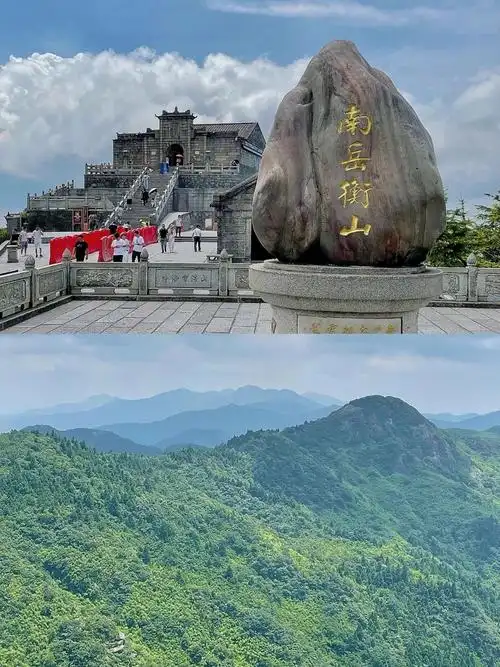 Standing as the southernmost of China's Five Sacred Mountains alongside Tai, Hua, Heng (north), and Song, Mount Heng has drawn imperial pilgrims and poets for over three millennia. Ancient emperors performed sacred fengshan rituals here from the Zhou dynasty onward, and its slopes witnessed the rise of Confucian, Buddhist, and Taoist thought mingling in harmony. Comparable in cultural weight to Olympus in Greece or sacred Mt. Koya in Japan, Mount Heng carries the layered legacy of China's religious and political history within a single forested massif.
The architectural heart of the region is the Nanyue Grand Temple, often called the "Forbidden City of the South." Spanning nine courtyards across roughly 95,000 square meters, it uniquely houses Confucian, Buddhist, and Taoist halls within one enclosure—an arrangement echoing the ecumenical spirit of Jerusalem's shared holy sites. Up the mountain, the historic Zhurong Hall, Cangjing Hall, and Fangguang Temple reveal centuries of devotion, while the imposing Zhonglie Shrine serves as one of mainland China's largest memorials to anti-Japanese war martyrs, comparable in solemnity to Menin Gate in Belgium.
What truly distinguishes Mount Heng is its rare trinitarian harmony, where Buddhist monasteries, Taoist hermitages, and Confucian academies have coexisted peacefully for centuries. The Moshan Platform preserves the founding legacy of Southern Chan Buddhism, much like how Assisi in Italy embodies multiple spiritual traditions. Combined with the Zhonglie Shrine's patriotic resonance and surviving traces of ancient academies, Mount Heng emerges as a living crossroads of religion, memory, and scholarship, offering visitors a layered cultural encounter rarely found elsewhere.
Nature here lives up to the mountain's reputation for elegance. More than 91% forest coverage shelters over 1,700 plant species, while seasonal highlights include dazzling rime ice in winter, fiery maples in autumn, and refreshing summers averaging over 10°C cooler than the valley below. The celebrated "Four Wonders"—the elegance of Cangjing Hall, the wonder of Shuilian Cave, the depth of Fangguang Temple, and the commanding summit view from Zhurong Peak—combine scenery with cultural treasures in a manner reminiscent of Montenegro's Durmitor or Scotland's Highland landscapes.
Reaching the mountain is straightforward. Fly into Changsha Huanghua International Airport or arrive via Hengshan West High-Speed Rail Station, just 30 minutes from the scenic area. Entry to the central zone costs around 110 RMB, with Nanyue Grand Temple at 58 RMB; shuttle buses and cable cars are additional. Tickets must be reserved in advance through the "Nanyue One Code Tour" mini-program, and visitors should verify opening status before travel.
A two-day, one-night itinerary is ideal. Spend the first day exploring the Grand Temple and lower cultural sites, overnighting in a foothill or mid-mountain guesthouse. Rise early the next morning for a shuttle to Nantian Gate, then walk or ride the cable car to Zhurong Peak for sunrise above the cloud sea. Hikers should consider the historic Zeng Guofan Trail for cultural depth, while energetic trekkers may attempt the Yingcui Villa-Yuwang City loop. Travel light, respect local customs when lighting incense, and visit during shoulder seasons to fully savor Mount Heng's tranquil majesty.
Standing as the southernmost of China's Five Sacred Mountains alongside Tai, Hua, Heng (north), and Song, Mount Heng has drawn imperial pilgrims and poets for over three millennia. Ancient emperors performed sacred fengshan rituals here from the Zhou dynasty onward, and its slopes witnessed the rise of Confucian, Buddhist, and Taoist thought mingling in harmony. Comparable in cultural weight to Olympus in Greece or sacred Mt. Koya in Japan, Mount Heng carries the layered legacy of China's religious and political history within a single forested massif.
The architectural heart of the region is the Nanyue Grand Temple, often called the "Forbidden City of the South." Spanning nine courtyards across roughly 95,000 square meters, it uniquely houses Confucian, Buddhist, and Taoist halls within one enclosure—an arrangement echoing the ecumenical spirit of Jerusalem's shared holy sites. Up the mountain, the historic Zhurong Hall, Cangjing Hall, and Fangguang Temple reveal centuries of devotion, while the imposing Zhonglie Shrine serves as one of mainland China's largest memorials to anti-Japanese war martyrs, comparable in solemnity to Menin Gate in Belgium.
What truly distinguishes Mount Heng is its rare trinitarian harmony, where Buddhist monasteries, Taoist hermitages, and Confucian academies have coexisted peacefully for centuries. The Moshan Platform preserves the founding legacy of Southern Chan Buddhism, much like how Assisi in Italy embodies multiple spiritual traditions. Combined with the Zhonglie Shrine's patriotic resonance and surviving traces of ancient academies, Mount Heng emerges as a living crossroads of religion, memory, and scholarship, offering visitors a layered cultural encounter rarely found elsewhere.
Nature here lives up to the mountain's reputation for elegance. More than 91% forest coverage shelters over 1,700 plant species, while seasonal highlights include dazzling rime ice in winter, fiery maples in autumn, and refreshing summers averaging over 10°C cooler than the valley below. The celebrated "Four Wonders"—the elegance of Cangjing Hall, the wonder of Shuilian Cave, the depth of Fangguang Temple, and the commanding summit view from Zhurong Peak—combine scenery with cultural treasures in a manner reminiscent of Montenegro's Durmitor or Scotland's Highland landscapes.
Reaching the mountain is straightforward. Fly into Changsha Huanghua International Airport or arrive via Hengshan West High-Speed Rail Station, just 30 minutes from the scenic area. Entry to the central zone costs around 110 RMB, with Nanyue Grand Temple at 58 RMB; shuttle buses and cable cars are additional. Tickets must be reserved in advance through the "Nanyue One Code Tour" mini-program, and visitors should verify opening status before travel.
A two-day, one-night itinerary is ideal. Spend the first day exploring the Grand Temple and lower cultural sites, overnighting in a foothill or mid-mountain guesthouse. Rise early the next morning for a shuttle to Nantian Gate, then walk or ride the cable car to Zhurong Peak for sunrise above the cloud sea. Hikers should consider the historic Zeng Guofan Trail for cultural depth, while energetic trekkers may attempt the Yingcui Villa-Yuwang City loop. Travel light, respect local customs when lighting incense, and visit during shoulder seasons to fully savor Mount Heng's tranquil majesty.