Hushan
⭐ 4.20
Barhu Mountain Scenic Area
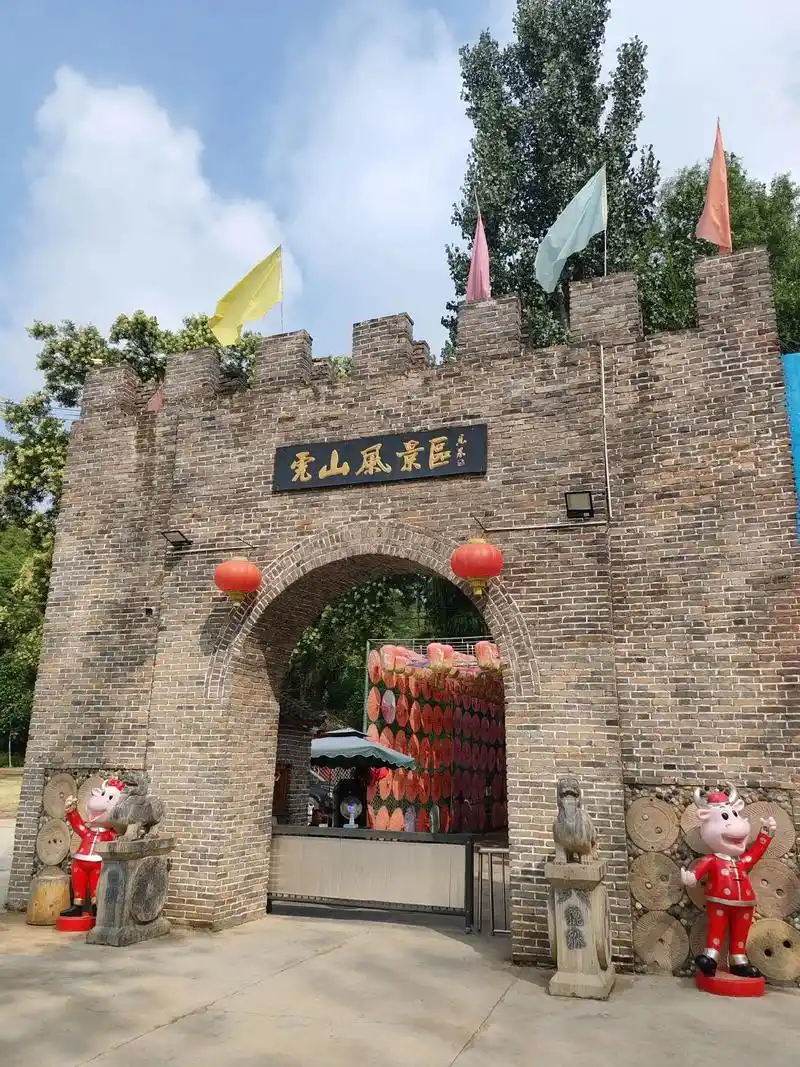 Tiger Mountain is no ordinary stretch of the Great Wall. Constructed in 1469 during the Ming Emperor Chenghua's reign, it formed part of the Liaodong border defenses protecting the empire's northeastern frontier against Manchu incursions. Archaeological evidence now suggests that Tiger Mountain, rather than Shanhaiguan, was the Ming wall's true eastern terminus—a fact that rewrites the conventional history taught to most Western visitors. Standing at 146.3 meters above the Yalu River, the fortress belongs to a network of frontier fortifications as strategically significant in its time as Hadrian's Wall was to Roman Britain, though separated by two millennia and an entirely different geopolitical landscape.
The architecture blends military function with dramatic topography. Twelve restored watchtowers and beacon platforms punctuate the ridgeline, while a soaring gate tower spans the entrance path. What truly distinguishes Tiger Mountain, however, is its kilometer-long cliffside walkway—carved into steep rock faces and featuring swaying suspension bridges, a "Water Curtain Cave" passage, and a notoriously narrow "Tiger's Mouth" squeeze. Imagine a medieval alpine path married to a Chinese fortification: the experience recalls the vertiginous feel of Italy's Via Ferrata routes, but set against an Iron Curtain backdrop.
Cultural significance here runs deeper than mere sightseeing. The on-site Great Wall History Museum contextualizes the site's role within Ming military strategy, showcasing archaeological finds that cemented its status as a nationally protected cultural relic. More powerfully, the summit viewpoint offers an unobstructed panorama of North Korean farmland, the "Unification Pavilion," and border outposts—a "one glance, two countries" experience that has made Tiger Mountain a staple of patriotic education tours and a magnet for visitors drawn to the unique tensions of the Sino-Korean frontier.
Practical planning is straightforward. The site sits roughly 12 kilometers east of Dandong city in Kuandian Manchu Autonomous County. Tickets cost 60 yuan in peak season (April through October) and 55 yuan off-season, with half-price discounts for students and seniors aged 60–69. The park operates daily from 8:00 a.m. to 5:00 p.m., with last entry at 4:30. From central Dandong, a dedicated shuttle bus runs directly to the entrance for about 5 yuan, while self-drivers will find parking available for around 10 yuan. Allow 2.5 to 3.5 hours to do the site justice.
Visitors should note that Tiger Mountain is an active border management zone. All guests must carry valid identification—foreign travelers need passports plus valid Chinese visas or residence permits. Drones are prohibited, telephoto lenses must not be aimed at military installations across the river, and crossing into North Korean waters or territory is strictly forbidden. The cliffside walkway descends steeply and can be slippery, so sturdy non-slip footwear and plenty of water are essential; August visitors should also pack rain gear for the humid summer climate.
Why visit Tiger Mountain? Because few places on Earth allow you to walk a Ming-era fortress while contemplating one of the world's most enigmatic borders. Where Shanhaiguan offers classic Great Wall grandeur, Tiger Mountain layers that history with Cold War geography, sweeping river vistas, and a palpable sense of frontier isolation. For travelers who have already ticked off Beijing's restored ramparts and crave something rawer, quieter, and geopolitically charged, this easternmost watchtower delivers an experience no other section of the Wall can match.
Tiger Mountain is no ordinary stretch of the Great Wall. Constructed in 1469 during the Ming Emperor Chenghua's reign, it formed part of the Liaodong border defenses protecting the empire's northeastern frontier against Manchu incursions. Archaeological evidence now suggests that Tiger Mountain, rather than Shanhaiguan, was the Ming wall's true eastern terminus—a fact that rewrites the conventional history taught to most Western visitors. Standing at 146.3 meters above the Yalu River, the fortress belongs to a network of frontier fortifications as strategically significant in its time as Hadrian's Wall was to Roman Britain, though separated by two millennia and an entirely different geopolitical landscape.
The architecture blends military function with dramatic topography. Twelve restored watchtowers and beacon platforms punctuate the ridgeline, while a soaring gate tower spans the entrance path. What truly distinguishes Tiger Mountain, however, is its kilometer-long cliffside walkway—carved into steep rock faces and featuring swaying suspension bridges, a "Water Curtain Cave" passage, and a notoriously narrow "Tiger's Mouth" squeeze. Imagine a medieval alpine path married to a Chinese fortification: the experience recalls the vertiginous feel of Italy's Via Ferrata routes, but set against an Iron Curtain backdrop.
Cultural significance here runs deeper than mere sightseeing. The on-site Great Wall History Museum contextualizes the site's role within Ming military strategy, showcasing archaeological finds that cemented its status as a nationally protected cultural relic. More powerfully, the summit viewpoint offers an unobstructed panorama of North Korean farmland, the "Unification Pavilion," and border outposts—a "one glance, two countries" experience that has made Tiger Mountain a staple of patriotic education tours and a magnet for visitors drawn to the unique tensions of the Sino-Korean frontier.
Practical planning is straightforward. The site sits roughly 12 kilometers east of Dandong city in Kuandian Manchu Autonomous County. Tickets cost 60 yuan in peak season (April through October) and 55 yuan off-season, with half-price discounts for students and seniors aged 60–69. The park operates daily from 8:00 a.m. to 5:00 p.m., with last entry at 4:30. From central Dandong, a dedicated shuttle bus runs directly to the entrance for about 5 yuan, while self-drivers will find parking available for around 10 yuan. Allow 2.5 to 3.5 hours to do the site justice.
Visitors should note that Tiger Mountain is an active border management zone. All guests must carry valid identification—foreign travelers need passports plus valid Chinese visas or residence permits. Drones are prohibited, telephoto lenses must not be aimed at military installations across the river, and crossing into North Korean waters or territory is strictly forbidden. The cliffside walkway descends steeply and can be slippery, so sturdy non-slip footwear and plenty of water are essential; August visitors should also pack rain gear for the humid summer climate.
Why visit Tiger Mountain? Because few places on Earth allow you to walk a Ming-era fortress while contemplating one of the world's most enigmatic borders. Where Shanhaiguan offers classic Great Wall grandeur, Tiger Mountain layers that history with Cold War geography, sweeping river vistas, and a palpable sense of frontier isolation. For travelers who have already ticked off Beijing's restored ramparts and crave something rawer, quieter, and geopolitically charged, this easternmost watchtower delivers an experience no other section of the Wall can match.