Bengbu Museum
⭐ 4.20
Bengshan District, Bengbu City, Anhui Province, China
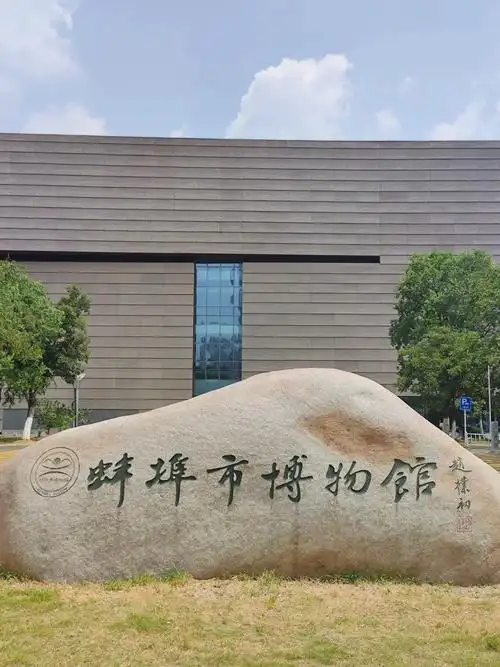 Straddling the middle reaches of the Huai River, Bengbu sits at the heart of the Shuangdun cultural sphere, whose 7,300-year-old incised symbols are regarded by scholars as among the earliest stirrings of Chinese writing—predating the Shang oracle bones at Anyang by centuries. The museum traces this legacy alongside that of the Bronze Age Zhongli Kingdom, whose ritual bronzes echo the artistry of contemporary Shang vessels yet speak with a distinct regional accent. In scope it rivals European regional institutions like Vienna's Naturhistorisches Museum, repositioning the Huai basin as a cradle of East Asian civilization on par with the Nile or Euphrates valleys.
The 34,000-square-meter complex rises as a modern, airy landmark in central Bengbu, its expansive glass-and-concrete volumes evoking the rational clarity of the British Museum's Great Court while remaining distinctly Chinese in proportion. Interior galleries are deliberately dimmed—much like the Louvre's antiquities halls—to let artifacts glow against dark walls. Multimedia projections, immersive soundscapes, and a digital "magic wall" recreatively restore prehistoric riverbanks and Bronze Age ceremonies, blending cutting-edge museology with traditional storytelling in confident, contemporary style.
The undisputed showpiece is an eight-meter-long, four-meter-tall Palaeoloxodon elephant fossil, a rare specimen that anchors the museum's narrative on Pleistocene climate shifts across the Huai floodplain—comparable to the mammoth displays at London's Natural History Museum. Equally compelling is the enigmatic "carved-face" pottery head from Shuangdun, whose faint smile invites comparison with Cycladic figurines or the Venus of Willendorf, embodying humanity's timeless urge to give form to identity. Zhongli bronze wine vessels further illuminate a sophisticated regional culture long overshadowed by the Central Plains.
Located west of the Civic Square on Donghai Avenue in Bengshan District, the museum opens Tuesday through Sunday from 9 a.m. to 5 p.m. (last entry 4 p.m.), closed Mondays. Admission is free; foreign visitors may scan their passports at the east-gate turnstiles. Free guided tours depart at 10 a.m., 2:30 p.m., and 3:30 p.m., and audio guides are available for rent, with partial English support—confirm at the information desk. Flash photography and selfie sticks are prohibited, and the air-conditioning runs cool, so bring a light layer.
The museum functions as both a city symbol and the principal research hub for Huai River civilization, offering a depth of context rarely matched by Chinese regional museums of comparable size. Families will enjoy the simulated archaeological dig pit and interactive zones, while history enthusiasts can linger over the Palaeoloxodon and the Zhongli noble's tomb bronzes. Allow two to three hours, then pair your visit with a stroll around the adjacent Civic Square and a boat ride on nearby Longzi Lake for a full day exploring Bengbu's surprisingly rich cultural landscape.
Straddling the middle reaches of the Huai River, Bengbu sits at the heart of the Shuangdun cultural sphere, whose 7,300-year-old incised symbols are regarded by scholars as among the earliest stirrings of Chinese writing—predating the Shang oracle bones at Anyang by centuries. The museum traces this legacy alongside that of the Bronze Age Zhongli Kingdom, whose ritual bronzes echo the artistry of contemporary Shang vessels yet speak with a distinct regional accent. In scope it rivals European regional institutions like Vienna's Naturhistorisches Museum, repositioning the Huai basin as a cradle of East Asian civilization on par with the Nile or Euphrates valleys.
The 34,000-square-meter complex rises as a modern, airy landmark in central Bengbu, its expansive glass-and-concrete volumes evoking the rational clarity of the British Museum's Great Court while remaining distinctly Chinese in proportion. Interior galleries are deliberately dimmed—much like the Louvre's antiquities halls—to let artifacts glow against dark walls. Multimedia projections, immersive soundscapes, and a digital "magic wall" recreatively restore prehistoric riverbanks and Bronze Age ceremonies, blending cutting-edge museology with traditional storytelling in confident, contemporary style.
The undisputed showpiece is an eight-meter-long, four-meter-tall Palaeoloxodon elephant fossil, a rare specimen that anchors the museum's narrative on Pleistocene climate shifts across the Huai floodplain—comparable to the mammoth displays at London's Natural History Museum. Equally compelling is the enigmatic "carved-face" pottery head from Shuangdun, whose faint smile invites comparison with Cycladic figurines or the Venus of Willendorf, embodying humanity's timeless urge to give form to identity. Zhongli bronze wine vessels further illuminate a sophisticated regional culture long overshadowed by the Central Plains.
Located west of the Civic Square on Donghai Avenue in Bengshan District, the museum opens Tuesday through Sunday from 9 a.m. to 5 p.m. (last entry 4 p.m.), closed Mondays. Admission is free; foreign visitors may scan their passports at the east-gate turnstiles. Free guided tours depart at 10 a.m., 2:30 p.m., and 3:30 p.m., and audio guides are available for rent, with partial English support—confirm at the information desk. Flash photography and selfie sticks are prohibited, and the air-conditioning runs cool, so bring a light layer.
The museum functions as both a city symbol and the principal research hub for Huai River civilization, offering a depth of context rarely matched by Chinese regional museums of comparable size. Families will enjoy the simulated archaeological dig pit and interactive zones, while history enthusiasts can linger over the Palaeoloxodon and the Zhongli noble's tomb bronzes. Allow two to three hours, then pair your visit with a stroll around the adjacent Civic Square and a boat ride on nearby Longzi Lake for a full day exploring Bengbu's surprisingly rich cultural landscape.