Yesanpo Scenic Area
⭐ 4.60
Yesanpo Scenic Area, Laishui County, Baoding City, Hebei Province, China
 Yesanpo straddles the collision point of the Taihang and Yan mountain ranges, where over a billion years of geological upheaval have sculpted one of North China's most extraordinary landscapes—comparable to Spain's Sierra de Gredos or Slovenia's Triglav gorges. The Juma River valley long served as a vital artery connecting imperial Beijing to the western province of Shanxi, much like Alpine passes linking Rome to its northern frontier. At Longmen Tianguan, a Ming Dynasty fortress dating to the late 1300s, visitors can trace the defensive ambitions of emperors who guarded this critical mountain gateway. The area preserves the largest surviving collection of Ming-era cliff inscriptions in northern China—a heritage worthy of standing beside the better-known Roman carvings of Hadrian's Wall.
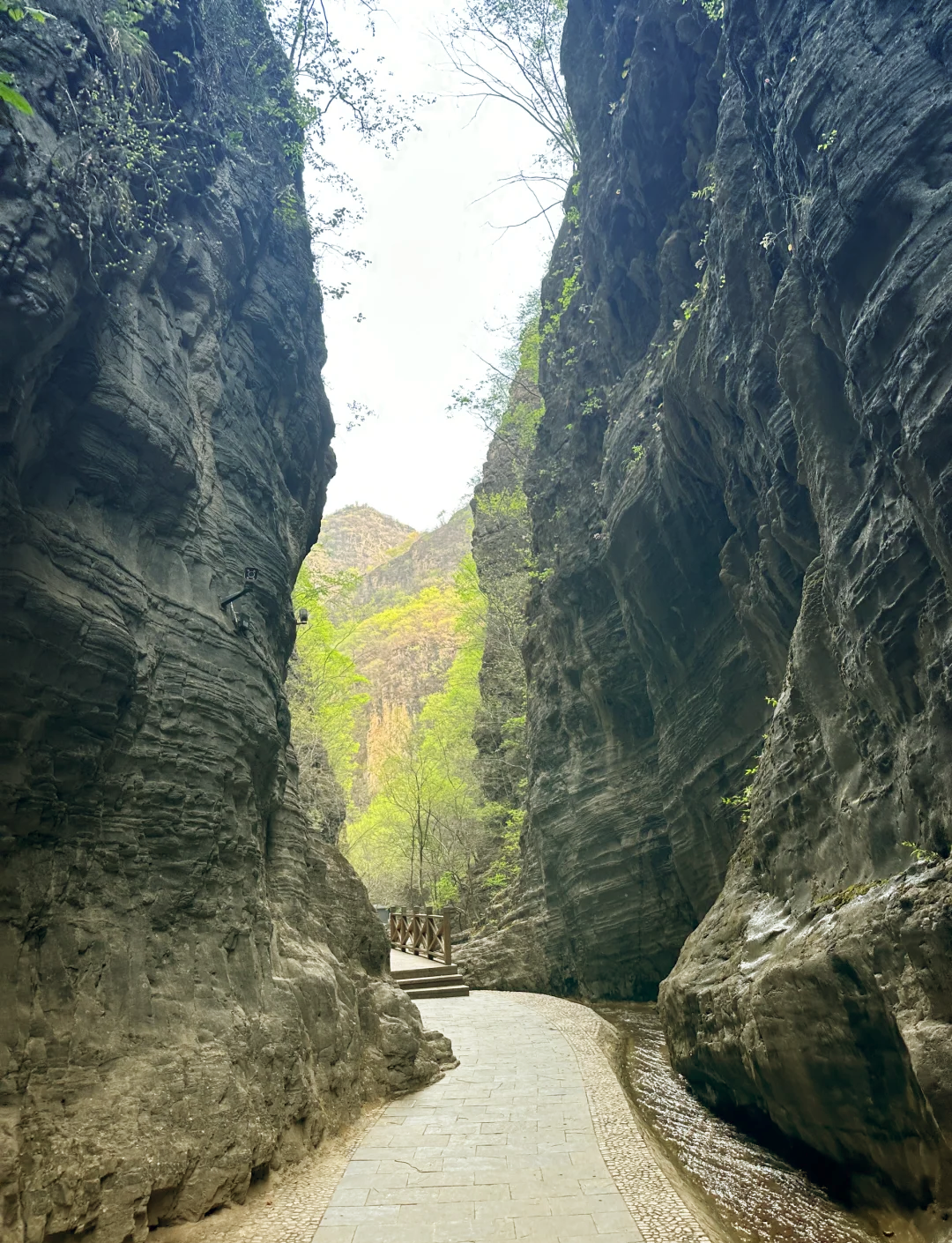
The park's signature is Baili Gorge, a 52-kilometer chasm of sheer cliffs that ranks among the largest water-carved gorges in northern China. Narrow slot passages like "One-Sky Line" and "Tiger Mouth" squeeze visitors between walls that rise nearly vertically, recalling the dramatic fissures of Norway's Trolltunga or Arizona's Antelope Canyon—though formed entirely by water rather than wind. Nearby, Yugu Cave Spring reveals a rare northern karst system where stalactites drip into mirror-still pools, an underground gallery enhanced by subtle lighting that has earned it the nickname "Underground Art Palace." Together, these formations make Yesanpo a living textbook of geological processes spanning billions of years, from Precambrian bedrock to Pleistocene cave deposits.
At 1,983 meters, Baicaopan peak presides over a complete alpine forest-meadow ecosystem, the kind of high-country terrain more familiar to hikers in the Swiss Alps or Scotland's Cairngorms. Each season offers a distinct personality: wildflower-carpeted meadows in spring, sunrise cloud seas in summer, blazing maple and birch in autumn, and silver snowfields in winter. The Juma River threads these landscapes together, its crystalline waters flanked by lush vegetation in the classic Chinese tradition of mountain-and-water scenery celebrated for centuries in scroll paintings. In summer, the river becomes the park's playground, with both adrenaline-pumping rapids and gentle bamboo-raft floats available for visitors of all ages.
Yesanpo lies roughly 110 kilometers southwest of Beijing, accessible in about two hours by car via the expressway—comparable to the drive from Vienna to the Austrian Alps or from Munich to the Dolomites. The optimal visiting window runs from May through October, with two days and one night being the recommended itinerary: Day one for Baili Gorge and Juma River rafting, Day two for either Longmen Tianguan or Yugu Cave. Accommodations range from simple village homestays near the gorge entrance to comfortable guesthouses in town, where farm-to-table meals feature roast whole lamb and locally farmed rainbow trout. Tickets should be booked ahead during peak weekends, especially July and August when domestic tourism peaks.
A few practical notes worth mentioning: Baili Gorge involves steep staircases in places, so elderly visitors and young children may prefer the shuttle bus or cable car to conserve energy. Summer rafters should bring strong sunscreen and always wear the provided life jackets—river safety is strictly enforced. August brings the heaviest rains, so checking weather forecasts is essential. Despite its proximity to Beijing, Yesanpo remains remarkably uncrowded outside weekends, offering Western travelers a chance to experience unspoiled mountain China that feels far removed from the capital's bustle. Few destinations combine such dramatic geology, frontier history, and accessible outdoor adventure within a single weekend's journey from a major Asian metropolis.
Yesanpo straddles the collision point of the Taihang and Yan mountain ranges, where over a billion years of geological upheaval have sculpted one of North China's most extraordinary landscapes—comparable to Spain's Sierra de Gredos or Slovenia's Triglav gorges. The Juma River valley long served as a vital artery connecting imperial Beijing to the western province of Shanxi, much like Alpine passes linking Rome to its northern frontier. At Longmen Tianguan, a Ming Dynasty fortress dating to the late 1300s, visitors can trace the defensive ambitions of emperors who guarded this critical mountain gateway. The area preserves the largest surviving collection of Ming-era cliff inscriptions in northern China—a heritage worthy of standing beside the better-known Roman carvings of Hadrian's Wall.
The park's signature is Baili Gorge, a 52-kilometer chasm of sheer cliffs that ranks among the largest water-carved gorges in northern China. Narrow slot passages like "One-Sky Line" and "Tiger Mouth" squeeze visitors between walls that rise nearly vertically, recalling the dramatic fissures of Norway's Trolltunga or Arizona's Antelope Canyon—though formed entirely by water rather than wind. Nearby, Yugu Cave Spring reveals a rare northern karst system where stalactites drip into mirror-still pools, an underground gallery enhanced by subtle lighting that has earned it the nickname "Underground Art Palace." Together, these formations make Yesanpo a living textbook of geological processes spanning billions of years, from Precambrian bedrock to Pleistocene cave deposits.
At 1,983 meters, Baicaopan peak presides over a complete alpine forest-meadow ecosystem, the kind of high-country terrain more familiar to hikers in the Swiss Alps or Scotland's Cairngorms. Each season offers a distinct personality: wildflower-carpeted meadows in spring, sunrise cloud seas in summer, blazing maple and birch in autumn, and silver snowfields in winter. The Juma River threads these landscapes together, its crystalline waters flanked by lush vegetation in the classic Chinese tradition of mountain-and-water scenery celebrated for centuries in scroll paintings. In summer, the river becomes the park's playground, with both adrenaline-pumping rapids and gentle bamboo-raft floats available for visitors of all ages.
Yesanpo lies roughly 110 kilometers southwest of Beijing, accessible in about two hours by car via the expressway—comparable to the drive from Vienna to the Austrian Alps or from Munich to the Dolomites. The optimal visiting window runs from May through October, with two days and one night being the recommended itinerary: Day one for Baili Gorge and Juma River rafting, Day two for either Longmen Tianguan or Yugu Cave. Accommodations range from simple village homestays near the gorge entrance to comfortable guesthouses in town, where farm-to-table meals feature roast whole lamb and locally farmed rainbow trout. Tickets should be booked ahead during peak weekends, especially July and August when domestic tourism peaks.
A few practical notes worth mentioning: Baili Gorge involves steep staircases in places, so elderly visitors and young children may prefer the shuttle bus or cable car to conserve energy. Summer rafters should bring strong sunscreen and always wear the provided life jackets—river safety is strictly enforced. August brings the heaviest rains, so checking weather forecasts is essential. Despite its proximity to Beijing, Yesanpo remains remarkably uncrowded outside weekends, offering Western travelers a chance to experience unspoiled mountain China that feels far removed from the capital's bustle. Few destinations combine such dramatic geology, frontier history, and accessible outdoor adventure within a single weekend's journey from a major Asian metropolis.