Heze Forest Park
⭐ 3.20
Heze Forest Park, Peony District, Heze City, Shandong Province, China
 The park traces its origins to the Sanchunji Tree Farm, a state-run forestry station that was gradually transformed through decades of ecological restoration into the multifaceted reserve visitors encounter today. Sitting on the Yellow River's middle-lower alluvial plain, the site echoes the conservation philosophy of Europe's national parks like the Camargue in France, where river delta wetlands are similarly prized for their biodiversity. As a flagship project embodying China's "lucid waters and lush mountains are invaluable assets" doctrine, the park represents the country's modern commitment to balancing agricultural heritage with environmental stewardship along the Yellow River—the cradle of Chinese civilization that nurtured dynasties from the Shang to the Song.
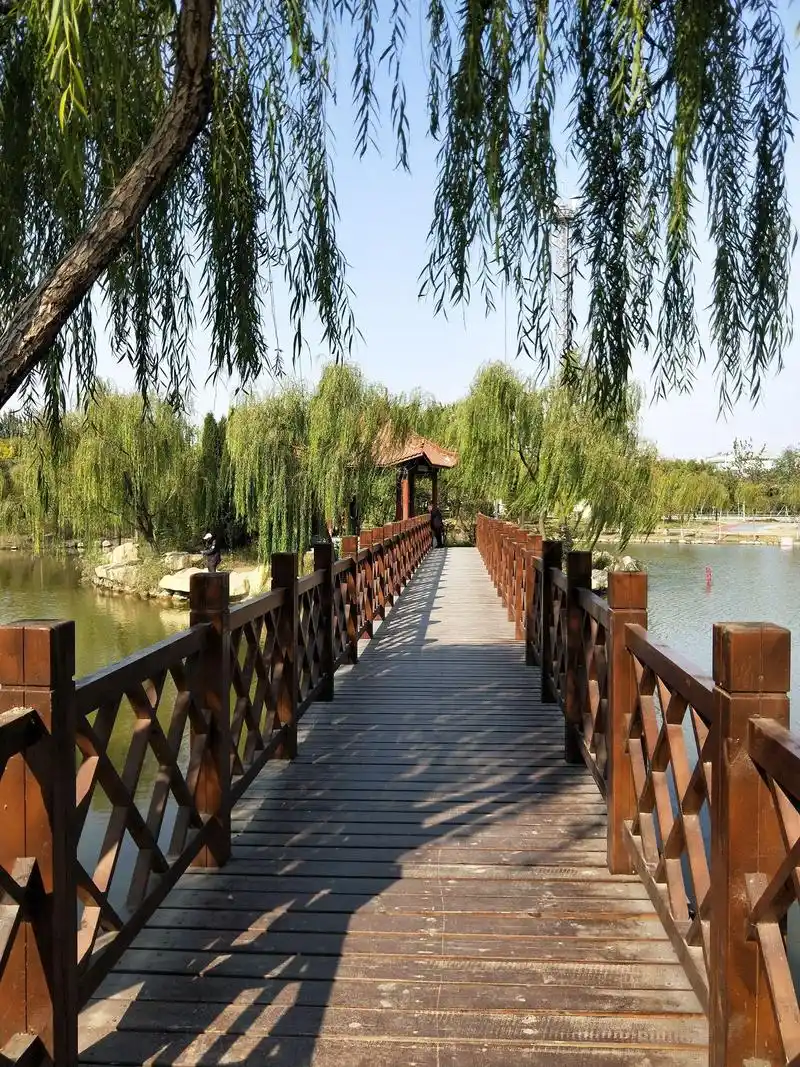
Nature takes center stage across the 775-hectare landscape, where stands of poplar and willow shelter roughly 200 recorded migratory species, with peak autumn and spring gatherings reaching an astonishing 150,000 birds. The forest's high negative-ion concentration creates a noticeably fresher microclimate than nearby Heze city, making it a welcome refuge during humid Shandong summers. Visitors wander along gently graded boardwalks that, like those of Germany's Bavarian Forest National Park, allow immersive exploration without disturbing the fragile wetland ecosystem.
Family-friendly attractions cluster around the park's core, including the sandy Bihai Jintan beach area, the elevated Wanghe Pavilion, a small zoo, a children's playground, a horse-riding track, and a water recreation zone. Photography enthusiasts gravitate toward the dedicated birdwatching hides, where spotting scopes and interpretive signage make the wetland accessible to beginners. From the towering Yellow River embankment, the same sweeping river views that once inspired Tang Dynasty poets still unfold in dramatic fashion—a scene comparable in scale to watching the Danube meander from the Citadella in Budapest.
Practical planning is straightforward: the park typically operates from 8:30 a.m. to 5:30 p.m., with slight reductions during winter. General admission is free, though water activities and fruit-picking experiences charge separately. Located about 30 kilometers southwest of Heze's urban center, the park sits roughly an hour's drive from the city; public transit is limited, so self-driving or hiring a private car is strongly recommended. On-site commercial facilities are sparse, so visitors should pack water, snacks, and download offline maps before arrival.
Spring and autumn are unquestionably the prime seasons, offering mild weather and peak bird migration spectacle. Summer visits between July and August require caution, as flood season may temporarily close certain zones and mosquitoes thrive near the wetlands—long-sleeved breathable clothing, sturdy non-slip shoes, and repellent are essential. Allow at least half a day, ideally a full day, to savor the park's three signature experiences: tranquil forest walks, intimate birdwatching, and the grand Yellow River panorama.
The park traces its origins to the Sanchunji Tree Farm, a state-run forestry station that was gradually transformed through decades of ecological restoration into the multifaceted reserve visitors encounter today. Sitting on the Yellow River's middle-lower alluvial plain, the site echoes the conservation philosophy of Europe's national parks like the Camargue in France, where river delta wetlands are similarly prized for their biodiversity. As a flagship project embodying China's "lucid waters and lush mountains are invaluable assets" doctrine, the park represents the country's modern commitment to balancing agricultural heritage with environmental stewardship along the Yellow River—the cradle of Chinese civilization that nurtured dynasties from the Shang to the Song.
Nature takes center stage across the 775-hectare landscape, where stands of poplar and willow shelter roughly 200 recorded migratory species, with peak autumn and spring gatherings reaching an astonishing 150,000 birds. The forest's high negative-ion concentration creates a noticeably fresher microclimate than nearby Heze city, making it a welcome refuge during humid Shandong summers. Visitors wander along gently graded boardwalks that, like those of Germany's Bavarian Forest National Park, allow immersive exploration without disturbing the fragile wetland ecosystem.
Family-friendly attractions cluster around the park's core, including the sandy Bihai Jintan beach area, the elevated Wanghe Pavilion, a small zoo, a children's playground, a horse-riding track, and a water recreation zone. Photography enthusiasts gravitate toward the dedicated birdwatching hides, where spotting scopes and interpretive signage make the wetland accessible to beginners. From the towering Yellow River embankment, the same sweeping river views that once inspired Tang Dynasty poets still unfold in dramatic fashion—a scene comparable in scale to watching the Danube meander from the Citadella in Budapest.
Practical planning is straightforward: the park typically operates from 8:30 a.m. to 5:30 p.m., with slight reductions during winter. General admission is free, though water activities and fruit-picking experiences charge separately. Located about 30 kilometers southwest of Heze's urban center, the park sits roughly an hour's drive from the city; public transit is limited, so self-driving or hiring a private car is strongly recommended. On-site commercial facilities are sparse, so visitors should pack water, snacks, and download offline maps before arrival.
Spring and autumn are unquestionably the prime seasons, offering mild weather and peak bird migration spectacle. Summer visits between July and August require caution, as flood season may temporarily close certain zones and mosquitoes thrive near the wetlands—long-sleeved breathable clothing, sturdy non-slip shoes, and repellent are essential. Allow at least half a day, ideally a full day, to savor the park's three signature experiences: tranquil forest walks, intimate birdwatching, and the grand Yellow River panorama.