Cao County Ancient City Wall
⭐ 2.80
Cao County, Heze, Shandong, China
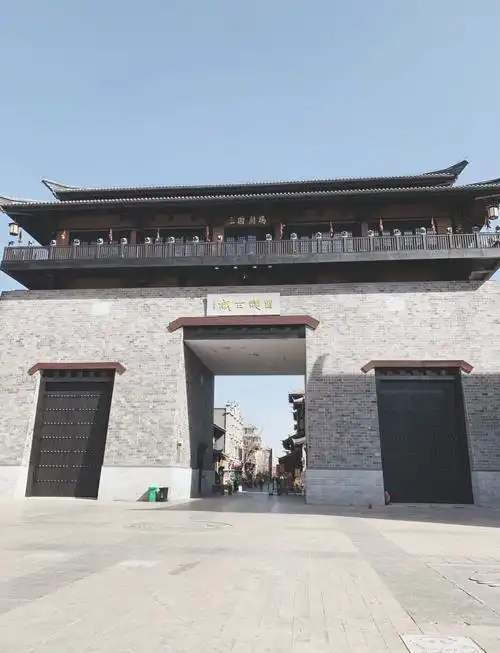 Caozhou's defensive perimeter first took shape during the Yuan Dynasty (13th–14th century), with substantial rebuilding under the Ming in 1446, when rammed-earth walls were raised alongside gates, barbicans, and a ceremonial tower honoring the god of literature. This was the same era when European engineers were completing their own stone fortifications – think of the bastioned walls of Italian Renaissance towns like Palmanova – as gunpowder warfare reshaped military architecture worldwide. After Qing-era renovations in the 18th century, the walls were unfortunately swept away during the rapid urbanisation of the 1970s, a fate shared by countless medieval European town walls torn down in the 19th and 20th centuries for the same pragmatic reasons of traffic and housing.
What survives today is best understood as an archaeological imprint rather than a monument. From 2004, the city transformed the wall's footprint into a green ring park shaped like the Chinese character for "return," wrapping the old town in a continuous ribbon of paths, water, and grass. Walking the 6-kilometre loop, visitors can still trace the Ming-era "square within, circle without" city plan – a layout reflecting Confucian cosmological geometry that has few direct European parallels, though the radial idea anticipates later Enlightenment-era cities such as Karlsruhe in Germany, designed nearly three centuries later.
The park's quiet charms are its true draw: remnant earthwork platforms reveal the original four gate alignments (East Zhixu, West Xicheng, Fumin, and Gongchen), while the moat, restored and lit at dusk, becomes a stage for reflections and local life. Evening brings costumed hanfu photographers, lantern-lit bridges, and a small Tang-style heritage quarter added by recent cultural-revival initiatives. It is a place to feel a vanished city rather than to climb one.
Practicalities are straightforward. Entry is free at any hour, and a counter-clockwise loop starting at the Nanhua site marker, passing the Caozhou Calligraphy Academy on the former south wall, and ending near the Xiguan Mosque covers roughly 6 km in two to three hours. Signage is in Chinese, so an offline translation app is essential. Heze has no airport; fly into Jinan, Zhengzhou, or Beijing and connect by rail or coach, then use local taxis to reach the park.
A final note for planners: if you expect to ascend ramparts and walk atop stone battlements as you can at Xi'an's magnificent walls or Qufu's Ming-era old town, you will be disappointed. The Caozhou ring park is a landscape of memory – ruins softened by water and trees – best suited to history-minded wanderers and urban strollers rather than lovers of intact fortifications. Pair it with a more complete walled city if monumental drama is what you seek.
Caozhou's defensive perimeter first took shape during the Yuan Dynasty (13th–14th century), with substantial rebuilding under the Ming in 1446, when rammed-earth walls were raised alongside gates, barbicans, and a ceremonial tower honoring the god of literature. This was the same era when European engineers were completing their own stone fortifications – think of the bastioned walls of Italian Renaissance towns like Palmanova – as gunpowder warfare reshaped military architecture worldwide. After Qing-era renovations in the 18th century, the walls were unfortunately swept away during the rapid urbanisation of the 1970s, a fate shared by countless medieval European town walls torn down in the 19th and 20th centuries for the same pragmatic reasons of traffic and housing.
What survives today is best understood as an archaeological imprint rather than a monument. From 2004, the city transformed the wall's footprint into a green ring park shaped like the Chinese character for "return," wrapping the old town in a continuous ribbon of paths, water, and grass. Walking the 6-kilometre loop, visitors can still trace the Ming-era "square within, circle without" city plan – a layout reflecting Confucian cosmological geometry that has few direct European parallels, though the radial idea anticipates later Enlightenment-era cities such as Karlsruhe in Germany, designed nearly three centuries later.
The park's quiet charms are its true draw: remnant earthwork platforms reveal the original four gate alignments (East Zhixu, West Xicheng, Fumin, and Gongchen), while the moat, restored and lit at dusk, becomes a stage for reflections and local life. Evening brings costumed hanfu photographers, lantern-lit bridges, and a small Tang-style heritage quarter added by recent cultural-revival initiatives. It is a place to feel a vanished city rather than to climb one.
Practicalities are straightforward. Entry is free at any hour, and a counter-clockwise loop starting at the Nanhua site marker, passing the Caozhou Calligraphy Academy on the former south wall, and ending near the Xiguan Mosque covers roughly 6 km in two to three hours. Signage is in Chinese, so an offline translation app is essential. Heze has no airport; fly into Jinan, Zhengzhou, or Beijing and connect by rail or coach, then use local taxis to reach the park.
A final note for planners: if you expect to ascend ramparts and walk atop stone battlements as you can at Xi'an's magnificent walls or Qufu's Ming-era old town, you will be disappointed. The Caozhou ring park is a landscape of memory – ruins softened by water and trees – best suited to history-minded wanderers and urban strollers rather than lovers of intact fortifications. Pair it with a more complete walled city if monumental drama is what you seek.