Peony Expo Garden
⭐ 4.80
Peony Expo Garden, Mudan District, Heze, Shandong Province, China
 Peony cultivation in Heze traces back to the Sui and Tang dynasties (581–907 CE), flourishing through the Ming and Qing eras when the city of Caozhou earned its enduring nickname, "Peony Homeland." To place this in perspective, the tradition predates Europe's oldest botanical gardens—Padua's venerable Orto Botanico dates only to 1545. The 1992 launch of the International Peony Festival transformed Heze into a global crossroads for floral diplomacy, drawing visitors, traders, and researchers from across Asia, Europe, and beyond. Today, with more than 1,300 documented varieties, Heze functions much as London's Kew Gardens does for orchids: a living gene bank, scientific powerhouse, and cultural ambassador rolled into one.
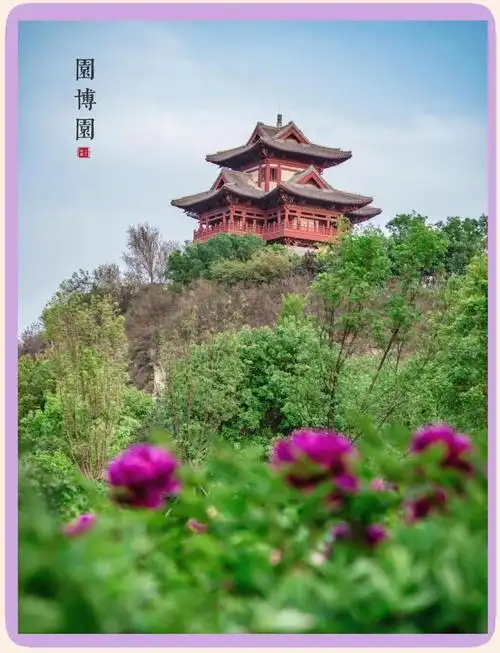
Caozhou Peony Garden forms the heart of the complex, its terraced viewing tower offering sweeping vistas across the floral sea—a vantage point reminiscent of climbing Sacré-Cœur for a Parisian panorama, but painted in petals rather than rooftops. The layout weaves a classical historical grove, lake-and-mountain landscaped zones echoing Suzhou's UNESCO-listed scholars' gardens, and the modern Guohua (National Flower) Museum. By night, immersive light installations and theatrical performances bring the blooms to life after dark, a contemporary twist on China's ancient appreciation of peonies as emblems of imperial grace. Don't miss the ancient peony grove, where some specimens trace their lineage back centuries.
The peony—mǔdān—has stood as China's unofficial national flower for over a millennium, symbolizing prosperity, honor, and renewal. Its image adorns Tang dynasty porcelain, Ming court paintings, and modern banknotes, much as the rose decorates English heraldry or the fleur-de-lis marks French royalty. Local Heze growers safeguard traditional breeding and grafting techniques officially listed as intangible cultural heritage, passed down through generations of master horticulturists. The annual expo doubles as a trade fair and cultural exchange, positioning peonies alongside tea and silk as ambassadors of Chinese refinement on the world stage.
Peak bloom runs from early April through early May, with April 10–25 offering the most spectacular displays. The "Peony Travel" WeChat mini-program allows advance ticket booking, while a dedicated "Peony Express" train and free shuttle buses connect Heze East Station to the gardens during festival weeks. Caozhou Peony Garden sits centrally on Renmin Road with easy public transit access; the China Peony Garden in Huanggang Township is best reached by car or connecting bus. Plan at least a full day to absorb the scale, and combine visits with the Water Margin Heroes City and Yellow River wetlands for a richer regional itinerary.
Visiting outside bloom season—say, August—means only the year-round heated greenhouses will reward you; the outdoor spectacle is gone. Arrive between 9 and 11 a.m. for soft, flattering light and thinner crowds ideal for photography, and stay into dusk to catch the illuminated evening show. Respect the "no picking" rule—these blooms represent centuries of cultivation. For Western travelers accustomed to the manicured parterres of Versailles or Keukenhof's tulip fields, Heze offers something rarer: an authentic, working landscape where China's national flower still dominates rural life as it has for fifteen centuries.
Peony cultivation in Heze traces back to the Sui and Tang dynasties (581–907 CE), flourishing through the Ming and Qing eras when the city of Caozhou earned its enduring nickname, "Peony Homeland." To place this in perspective, the tradition predates Europe's oldest botanical gardens—Padua's venerable Orto Botanico dates only to 1545. The 1992 launch of the International Peony Festival transformed Heze into a global crossroads for floral diplomacy, drawing visitors, traders, and researchers from across Asia, Europe, and beyond. Today, with more than 1,300 documented varieties, Heze functions much as London's Kew Gardens does for orchids: a living gene bank, scientific powerhouse, and cultural ambassador rolled into one.
Caozhou Peony Garden forms the heart of the complex, its terraced viewing tower offering sweeping vistas across the floral sea—a vantage point reminiscent of climbing Sacré-Cœur for a Parisian panorama, but painted in petals rather than rooftops. The layout weaves a classical historical grove, lake-and-mountain landscaped zones echoing Suzhou's UNESCO-listed scholars' gardens, and the modern Guohua (National Flower) Museum. By night, immersive light installations and theatrical performances bring the blooms to life after dark, a contemporary twist on China's ancient appreciation of peonies as emblems of imperial grace. Don't miss the ancient peony grove, where some specimens trace their lineage back centuries.
The peony—mǔdān—has stood as China's unofficial national flower for over a millennium, symbolizing prosperity, honor, and renewal. Its image adorns Tang dynasty porcelain, Ming court paintings, and modern banknotes, much as the rose decorates English heraldry or the fleur-de-lis marks French royalty. Local Heze growers safeguard traditional breeding and grafting techniques officially listed as intangible cultural heritage, passed down through generations of master horticulturists. The annual expo doubles as a trade fair and cultural exchange, positioning peonies alongside tea and silk as ambassadors of Chinese refinement on the world stage.
Peak bloom runs from early April through early May, with April 10–25 offering the most spectacular displays. The "Peony Travel" WeChat mini-program allows advance ticket booking, while a dedicated "Peony Express" train and free shuttle buses connect Heze East Station to the gardens during festival weeks. Caozhou Peony Garden sits centrally on Renmin Road with easy public transit access; the China Peony Garden in Huanggang Township is best reached by car or connecting bus. Plan at least a full day to absorb the scale, and combine visits with the Water Margin Heroes City and Yellow River wetlands for a richer regional itinerary.
Visiting outside bloom season—say, August—means only the year-round heated greenhouses will reward you; the outdoor spectacle is gone. Arrive between 9 and 11 a.m. for soft, flattering light and thinner crowds ideal for photography, and stay into dusk to catch the illuminated evening show. Respect the "no picking" rule—these blooms represent centuries of cultivation. For Western travelers accustomed to the manicured parterres of Versailles or Keukenhof's tulip fields, Heze offers something rarer: an authentic, working landscape where China's national flower still dominates rural life as it has for fifteen centuries.