Heze Peony Culture Museum
⭐ 3.00
No. 199, South Section of Zhonghua Road, Mudan District, Heze City, Shandong Province, China
 **Historical Context**
Long before the peony was crowned China's national flower, it had spent a millennium migrating from wild mountain slopes to imperial pleasure gardens. The museum traces this journey through rare Song and Ming dynasty botanical treatises—manuscripts that predate the arrival of the tulip in European gardens by several centuries. Just as the rose became entangled with English and French dynastic struggles (from the Wars of the Roses to Napoleon's emblem), the peony wove itself into Tang court poetry, Qing imperial portraiture, and folk ritual, evolving from a regional bloom into a symbol of prosperity and feminine grace across East Asia.
**Architecture**
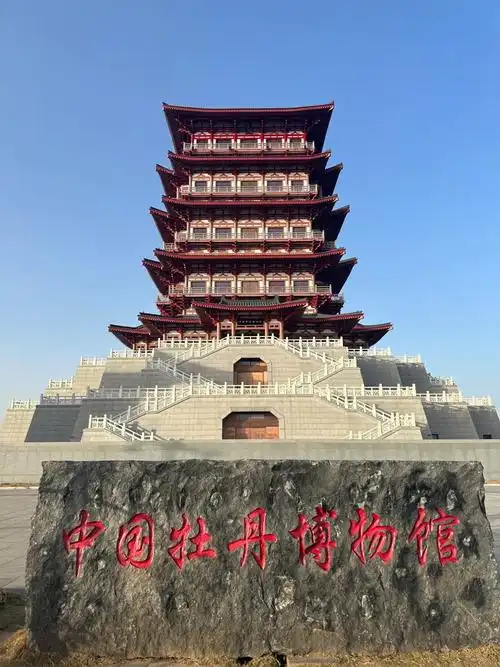
Spanning roughly 4,500 square meters, the museum was co-designed by Tsinghua University and the Central Academy of Fine Arts in a striking hybrid idiom: umbrella-shaped pavilions and sweeping tiled roofs recall Suzhou garden architecture, while generous glass facades and crisp geometry gesture toward contemporary European museum design. Think of it as a quieter cousin to Bilbao's Guggenheim—where regional identity meets modernist ambition. The three-floor, six-hall layout unfolds with a sense of theatrical pacing rare in Chinese provincial museums.
**Cultural and Industrial Significance**
The galleries are organized into three sweeping zones: historical evolution, literary and artistic expression, and modern industry. Visitors can admire peony-themed scroll paintings alongside contemporary video installations, then wander past displays of seed oils, pastries, and cosmetics—evidence of how Heze has transformed a single flower into a multi-million-yuan industrial chain. Intangible heritage pieces, including paper cuttings and lacquerware, underscore that peony culture remains a living tradition rather than a museum curiosity.
**Practical Visit Information**
The museum sits in the southwestern corner of Caozhou Peony Garden. Entry requires either a garden ticket or a separate museum pass; confirm opening hours by phone or via the "Heze Culture and Tourism" WeChat account, as closures during off-season renovations are common. Signage is almost entirely in Chinese, so foreign visitors are strongly advised to book an English-speaking guide in advance or use a translation app. The interior is air-conditioned with interactive multimedia stations, but flash photography and tripods are prohibited.
**Why Visit**
Even outside the brief April–May bloom window, the museum offers a deeply satisfying cultural immersion—what locals call a "cultural quick charge" rather than a flower tour. Pair it with a half-day in the adjacent peony gardens during peak season for a complete experience, or visit in winter for unobstructed contemplation of the collections. For travelers tracing the Silk Road's botanical legacy or simply seeking something beyond China's imperial-city circuit, this is one of the country's most original and least crowded cultural stops.
**Historical Context**
Long before the peony was crowned China's national flower, it had spent a millennium migrating from wild mountain slopes to imperial pleasure gardens. The museum traces this journey through rare Song and Ming dynasty botanical treatises—manuscripts that predate the arrival of the tulip in European gardens by several centuries. Just as the rose became entangled with English and French dynastic struggles (from the Wars of the Roses to Napoleon's emblem), the peony wove itself into Tang court poetry, Qing imperial portraiture, and folk ritual, evolving from a regional bloom into a symbol of prosperity and feminine grace across East Asia.
**Architecture**
Spanning roughly 4,500 square meters, the museum was co-designed by Tsinghua University and the Central Academy of Fine Arts in a striking hybrid idiom: umbrella-shaped pavilions and sweeping tiled roofs recall Suzhou garden architecture, while generous glass facades and crisp geometry gesture toward contemporary European museum design. Think of it as a quieter cousin to Bilbao's Guggenheim—where regional identity meets modernist ambition. The three-floor, six-hall layout unfolds with a sense of theatrical pacing rare in Chinese provincial museums.
**Cultural and Industrial Significance**
The galleries are organized into three sweeping zones: historical evolution, literary and artistic expression, and modern industry. Visitors can admire peony-themed scroll paintings alongside contemporary video installations, then wander past displays of seed oils, pastries, and cosmetics—evidence of how Heze has transformed a single flower into a multi-million-yuan industrial chain. Intangible heritage pieces, including paper cuttings and lacquerware, underscore that peony culture remains a living tradition rather than a museum curiosity.
**Practical Visit Information**
The museum sits in the southwestern corner of Caozhou Peony Garden. Entry requires either a garden ticket or a separate museum pass; confirm opening hours by phone or via the "Heze Culture and Tourism" WeChat account, as closures during off-season renovations are common. Signage is almost entirely in Chinese, so foreign visitors are strongly advised to book an English-speaking guide in advance or use a translation app. The interior is air-conditioned with interactive multimedia stations, but flash photography and tripods are prohibited.
**Why Visit**
Even outside the brief April–May bloom window, the museum offers a deeply satisfying cultural immersion—what locals call a "cultural quick charge" rather than a flower tour. Pair it with a half-day in the adjacent peony gardens during peak season for a complete experience, or visit in winter for unobstructed contemplation of the collections. For travelers tracing the Silk Road's botanical legacy or simply seeking something beyond China's imperial-city circuit, this is one of the country's most original and least crowded cultural stops.