Jingzhou Ancient City Wall Museum
⭐ 4.50
Jingzhou Ancient City Wall Museum, Jingzhou District, Jingzhou City, Hubei Province, China
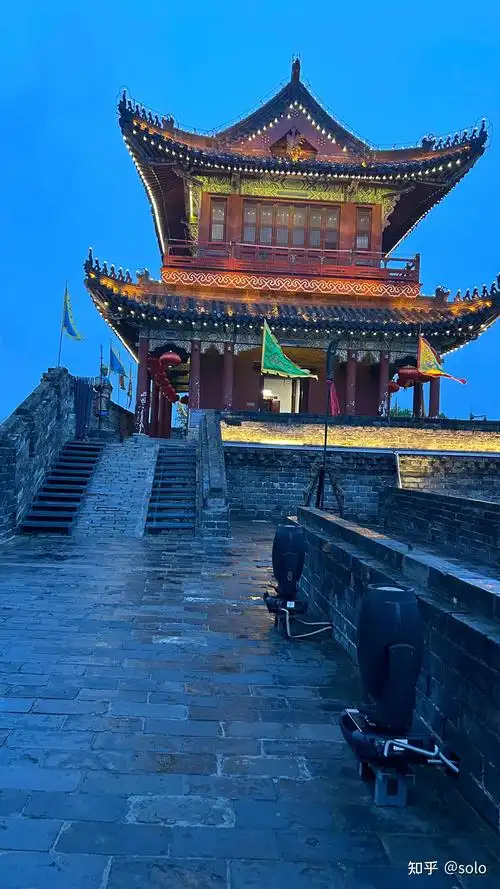 Jingzhou's ancient walls date to the Three Kingdoms period (220–280 AD), the same era that produced the famous Romance of the Three Kingdoms, when warlord Guan Yu famously defended this very city. Successive Tang, Song, Ming, and Qing dynasties reinforced and expanded the fortifications, evolving them from compacted earth to sophisticated brick construction. At roughly 11 kilometers in circumference, the wall ranks among China's most substantial surviving ramparts—comparable in scale to the medieval walls of Carcassonne in France, though reflecting distinctly Chinese military engineering principles shaped by 2,000 years of borderland conflict.
The museum's centerpiece is an extraordinary archaeological cross-section on the north-eastern section, where visitors can read history in the masonry itself: Tang-era rammed earth forms the base, transitioning through Song-period mixed materials to the crisply cut bricks of Ming and Qing builders. This vertical timeline of construction techniques—rarely visible anywhere in the world—makes the site a living textbook for understanding how Chinese cities defended themselves through the centuries.
Just east, the Hidden Soldier Caves reveal the wall's brilliant defensive engineering. These vaulted chambers and connecting tunnels functioned as barracks, ammunition stores, and ambush points—a concept parallel to the casemates of European Vauban forts. Few walls worldwide allow visitors to crawl through genuine medieval-era military passageways still intact.
Soaring above the eastern gate, Binyang Tower serves as the wall's emblem. Climbing it rewards visitors with sweeping views over the moat and old city rooftops—much like ascending the ramparts of York or Dubrovnik. The broad walkway atop the wall permits walking or cycling the full perimeter, with bastions and barbicans punctuating the route. After dark, subtle lighting traces the wall's imposing silhouette, evoking the battlements of a European fortress town.
Admission to the archaeological hall is free; Binyang Tower costs around 20 yuan (half-price for students). Avoid Mondays and midday summer heat—the golden hours are early morning (7–9 a.m.) or after 6 p.m. when cooler temperatures and illumination combine. Allow 2–3 hours for a thorough visit and wear flat shoes, as surfaces are uneven.
Pair your visit with the Jingzhou Museum, a national first-tier institution (free, reservation required), home to treasures like the Sword of Goujian, King of Yue—one of China's most celebrated bronze artifacts and an icon of Chu culture. An ideal itinerary unfolds thus: morning at the museum, afternoon ascending Binyang Tower and exploring the soldier caves, then a stroll along the wall to Zhang Juzheng Street, where traditional Chu-style snacks and handicraft markets await.
Jingzhou's ancient walls date to the Three Kingdoms period (220–280 AD), the same era that produced the famous Romance of the Three Kingdoms, when warlord Guan Yu famously defended this very city. Successive Tang, Song, Ming, and Qing dynasties reinforced and expanded the fortifications, evolving them from compacted earth to sophisticated brick construction. At roughly 11 kilometers in circumference, the wall ranks among China's most substantial surviving ramparts—comparable in scale to the medieval walls of Carcassonne in France, though reflecting distinctly Chinese military engineering principles shaped by 2,000 years of borderland conflict.
The museum's centerpiece is an extraordinary archaeological cross-section on the north-eastern section, where visitors can read history in the masonry itself: Tang-era rammed earth forms the base, transitioning through Song-period mixed materials to the crisply cut bricks of Ming and Qing builders. This vertical timeline of construction techniques—rarely visible anywhere in the world—makes the site a living textbook for understanding how Chinese cities defended themselves through the centuries.
Just east, the Hidden Soldier Caves reveal the wall's brilliant defensive engineering. These vaulted chambers and connecting tunnels functioned as barracks, ammunition stores, and ambush points—a concept parallel to the casemates of European Vauban forts. Few walls worldwide allow visitors to crawl through genuine medieval-era military passageways still intact.
Soaring above the eastern gate, Binyang Tower serves as the wall's emblem. Climbing it rewards visitors with sweeping views over the moat and old city rooftops—much like ascending the ramparts of York or Dubrovnik. The broad walkway atop the wall permits walking or cycling the full perimeter, with bastions and barbicans punctuating the route. After dark, subtle lighting traces the wall's imposing silhouette, evoking the battlements of a European fortress town.
Admission to the archaeological hall is free; Binyang Tower costs around 20 yuan (half-price for students). Avoid Mondays and midday summer heat—the golden hours are early morning (7–9 a.m.) or after 6 p.m. when cooler temperatures and illumination combine. Allow 2–3 hours for a thorough visit and wear flat shoes, as surfaces are uneven.
Pair your visit with the Jingzhou Museum, a national first-tier institution (free, reservation required), home to treasures like the Sword of Goujian, King of Yue—one of China's most celebrated bronze artifacts and an icon of Chu culture. An ideal itinerary unfolds thus: morning at the museum, afternoon ascending Binyang Tower and exploring the soldier caves, then a stroll along the wall to Zhang Juzheng Street, where traditional Chu-style snacks and handicraft markets await.