Chu Jinan City Ruins
⭐ 2.80
Chu Jinan City Ruins, Jingzhou District, Jingzhou, Hubei, China
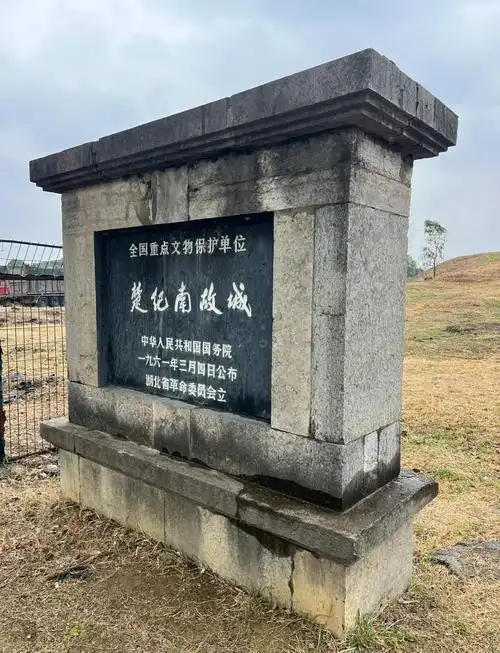 Founded in 689 BC, Ying served as the Chu capital for roughly 411 years, predating the fall of the Western Roman Empire and outlasting ancient Athens as a continuously inhabited seat of power. When the poet Qu Yuan composed his immortal verses here around 300 BC, Chu was the Mediterranean's eastern peer in scale and sophistication, controlling the Yangzi heartland while Rome was still a fledgling republic. The site's sheer longevity rivals that of Persepolis or Delphi's oracular precinct, offering visitors a tangible thread to an era when China, Greece, and Rome were shaping parallel classical worlds.
The city plan reveals sophisticated urban thinking. Its irregular rectangle measures 4.5 by 3.5 kilometres, enclosed by walls whose bases reached 30 to 40 metres across—broad enough to rival Hadrian's Wall in ambition, though built nearly a millennium earlier. Seven land gates and two water gates punctuate the perimeter, including ingenious "single-gate triple-passage" structures that prefigure medieval European barbicans in defensive logic. In the southeastern quadrant, eighty-four rammed-earth platforms mark where palaces and ceremonial halls once rose, an archaeological footprint comparable to the sacred precincts of Mycenae.
Beyond architecture, Ji'nan City carries the soul of Chu culture itself. From these streets Qu Yuan and Song Yu gave Chinese literature its lyrical voice, while ritual bronzes, lacquerware, and jades recovered here illuminate belief systems as complex as those of Etruscan Italy. Many finest artefacts now reside in the neighbouring Jingzhou Museum, including the legendary Sword of Goujian. The site's ongoing excavations made the 2025 shortlist for China's top archaeological discoveries, continually reshaping scholarly understanding of pre-imperial China.
Practical preparation is essential. The ruins lie amid farmland beyond Jinan Township, with no reconstructed buildings, shaded pavilions, or visitor amenities on site. Signage appears only in Chinese, and English interpretation is extremely limited, so contacting Jingzhou Museum (telephone 0716-8494574) ahead of arrival to confirm English-speaking guide availability is strongly advised. Sun protection, hats, and ample drinking water are non-negotiable, as the exposed terrain offers little shelter.
For maximum enrichment, follow the recommended "museum first, then site" approach. Begin at Jingzhou Museum to absorb context through national treasures such as the Sword of Goujian and the tiger-shaped zither stand, then proceed to the ruins to read the city's grand design in the landscape itself. Conclude at the nearby Xiongjiazhong chariot-and-horse pits for a glimpse of Chu military spectacle. Arriving before nine in the morning or after four in the afternoon avoids the harsh midday sun and transforms a scholarly pilgrimage into one of central China's most quietly extraordinary experiences.
Founded in 689 BC, Ying served as the Chu capital for roughly 411 years, predating the fall of the Western Roman Empire and outlasting ancient Athens as a continuously inhabited seat of power. When the poet Qu Yuan composed his immortal verses here around 300 BC, Chu was the Mediterranean's eastern peer in scale and sophistication, controlling the Yangzi heartland while Rome was still a fledgling republic. The site's sheer longevity rivals that of Persepolis or Delphi's oracular precinct, offering visitors a tangible thread to an era when China, Greece, and Rome were shaping parallel classical worlds.
The city plan reveals sophisticated urban thinking. Its irregular rectangle measures 4.5 by 3.5 kilometres, enclosed by walls whose bases reached 30 to 40 metres across—broad enough to rival Hadrian's Wall in ambition, though built nearly a millennium earlier. Seven land gates and two water gates punctuate the perimeter, including ingenious "single-gate triple-passage" structures that prefigure medieval European barbicans in defensive logic. In the southeastern quadrant, eighty-four rammed-earth platforms mark where palaces and ceremonial halls once rose, an archaeological footprint comparable to the sacred precincts of Mycenae.
Beyond architecture, Ji'nan City carries the soul of Chu culture itself. From these streets Qu Yuan and Song Yu gave Chinese literature its lyrical voice, while ritual bronzes, lacquerware, and jades recovered here illuminate belief systems as complex as those of Etruscan Italy. Many finest artefacts now reside in the neighbouring Jingzhou Museum, including the legendary Sword of Goujian. The site's ongoing excavations made the 2025 shortlist for China's top archaeological discoveries, continually reshaping scholarly understanding of pre-imperial China.
Practical preparation is essential. The ruins lie amid farmland beyond Jinan Township, with no reconstructed buildings, shaded pavilions, or visitor amenities on site. Signage appears only in Chinese, and English interpretation is extremely limited, so contacting Jingzhou Museum (telephone 0716-8494574) ahead of arrival to confirm English-speaking guide availability is strongly advised. Sun protection, hats, and ample drinking water are non-negotiable, as the exposed terrain offers little shelter.
For maximum enrichment, follow the recommended "museum first, then site" approach. Begin at Jingzhou Museum to absorb context through national treasures such as the Sword of Goujian and the tiger-shaped zither stand, then proceed to the ruins to read the city's grand design in the landscape itself. Conclude at the nearby Xiongjiazhong chariot-and-horse pits for a glimpse of Chu military spectacle. Arriving before nine in the morning or after four in the afternoon avoids the harsh midday sun and transforms a scholarly pilgrimage into one of central China's most quietly extraordinary experiences.