Honghu Wetland Park
⭐ 4.20
Honghu Wetland Park, Honghu City, Jingzhou, Hubei Province, China
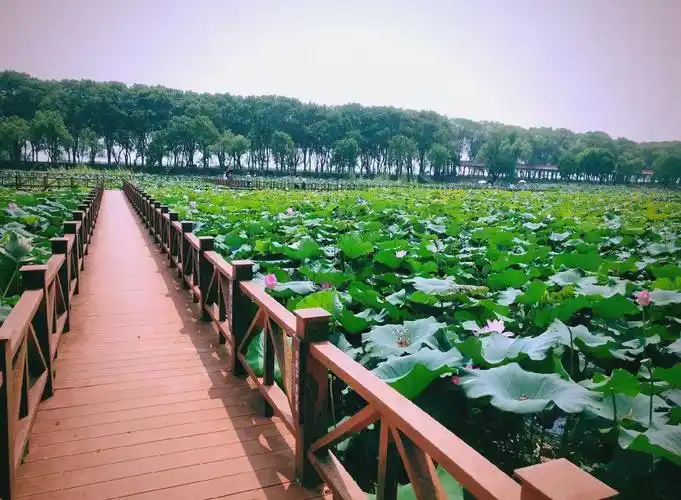 Straddling the Jianghan Plain in central Hubei, the Honghu Wetland Eco-Tourism Area sits along the eastern edge of Honghu Lake, the seventh-largest freshwater body in China. Comparable in ecological significance to the Norfolk Broads of England or the Danube Delta wetlands, this 4,400-acre mosaic of open water, reed marshes, and lotus-studded channels represents one of the most intact freshwater ecosystems in the Yangtze River basin. The site was officially recognized as a national 4A scenic area in 2025, comprising five interconnected zones: the Wetland Eco-Garden, Honghu Tourist Harbor, Jinwan Hotel, a lakeside greenway, and a Red Education Center.
Summer is the park's signature season, when August brings the legendary lotus bloom to life. Vast stretches of water disappear beneath rolling waves of emerald lily pads crowned with pink and white blossoms—a spectacle on par with Japan's ancient lotus ponds or Monet's gardens at Giverny. Beyond the famous flowers, naturalists will find exceptional birdwatching from late autumn through early spring, when more than 138 recorded species, including herons and cormorants, gather in the reed beds. Spring offers wildflower meadows, while autumn invites campers to enjoy moonlit evenings over the still water.
The park's identity is inseparable from one of the most stirring chapters of 20th-century Chinese history. Honghu served as the stronghold of the Xiang-Exi Revolutionary Base during the late 1920s, where peasant fighters known as the Honghu Red Guards waged guerrilla warfare from hidden bases within the very reed marshes that visitors now explore. The on-site Red Education Center recreates these dramatic waterborne battles through immersive performances and educational programs, lending the landscape a gravitas reminiscent of visiting historic battlefields across Europe. Just nearby, the well-preserved Ming and Qing-era streets of Qujiawan Ancient Town house the original headquarters of the revolutionary government, where weathered timber facades and stone-paved lanes invite visitors to walk through a living museum.
A full menu of activities ensures that every member of the family finds their rhythm. Tourist Harbor operates scenic boat cruises and fishing excursions that push into the open lake, where the horizon dissolves into a seamless union of sky and water—a panorama that rivals the expansiveness of Italy's Lake Garda. Back on shore, a children's playground, cycling paths, disc-golf areas, and nearly 10,000 square meters of dedicated camping space keep active travelers engaged. The wooden boardwalk circling the lake becomes magical at dusk, when sunset paints the water in shades of amber and rose.
Practical planning is straightforward. The park generally operates from 8:30 a.m. to 5:30 p.m., with extended summer hours until 10 p.m. Base admission starts around 20 yuan, while combination tickets including boat rides and experiences range from 65 to 98 yuan; seniors and children enjoy generous discounts or free entry. Public buses connect from Wuhan and Jingzhou but require transfers, so driving with navigation set to "Honghu Wetland Eco-Tourism Area" is the most convenient option. Allow three to five hours to cover the eco-garden, boat tour, and red-culture experience at a comfortable pace. August visitors should pack sun protection and insect repellent, and consider bringing snacks since on-site dining is limited and pricey—the local tavernas outside the park serve the celebrated "Three Treasures of Honghu": crisp lotus root, sweet water chestnuts, and tender freshwater fish.
Straddling the Jianghan Plain in central Hubei, the Honghu Wetland Eco-Tourism Area sits along the eastern edge of Honghu Lake, the seventh-largest freshwater body in China. Comparable in ecological significance to the Norfolk Broads of England or the Danube Delta wetlands, this 4,400-acre mosaic of open water, reed marshes, and lotus-studded channels represents one of the most intact freshwater ecosystems in the Yangtze River basin. The site was officially recognized as a national 4A scenic area in 2025, comprising five interconnected zones: the Wetland Eco-Garden, Honghu Tourist Harbor, Jinwan Hotel, a lakeside greenway, and a Red Education Center.
Summer is the park's signature season, when August brings the legendary lotus bloom to life. Vast stretches of water disappear beneath rolling waves of emerald lily pads crowned with pink and white blossoms—a spectacle on par with Japan's ancient lotus ponds or Monet's gardens at Giverny. Beyond the famous flowers, naturalists will find exceptional birdwatching from late autumn through early spring, when more than 138 recorded species, including herons and cormorants, gather in the reed beds. Spring offers wildflower meadows, while autumn invites campers to enjoy moonlit evenings over the still water.
The park's identity is inseparable from one of the most stirring chapters of 20th-century Chinese history. Honghu served as the stronghold of the Xiang-Exi Revolutionary Base during the late 1920s, where peasant fighters known as the Honghu Red Guards waged guerrilla warfare from hidden bases within the very reed marshes that visitors now explore. The on-site Red Education Center recreates these dramatic waterborne battles through immersive performances and educational programs, lending the landscape a gravitas reminiscent of visiting historic battlefields across Europe. Just nearby, the well-preserved Ming and Qing-era streets of Qujiawan Ancient Town house the original headquarters of the revolutionary government, where weathered timber facades and stone-paved lanes invite visitors to walk through a living museum.
A full menu of activities ensures that every member of the family finds their rhythm. Tourist Harbor operates scenic boat cruises and fishing excursions that push into the open lake, where the horizon dissolves into a seamless union of sky and water—a panorama that rivals the expansiveness of Italy's Lake Garda. Back on shore, a children's playground, cycling paths, disc-golf areas, and nearly 10,000 square meters of dedicated camping space keep active travelers engaged. The wooden boardwalk circling the lake becomes magical at dusk, when sunset paints the water in shades of amber and rose.
Practical planning is straightforward. The park generally operates from 8:30 a.m. to 5:30 p.m., with extended summer hours until 10 p.m. Base admission starts around 20 yuan, while combination tickets including boat rides and experiences range from 65 to 98 yuan; seniors and children enjoy generous discounts or free entry. Public buses connect from Wuhan and Jingzhou but require transfers, so driving with navigation set to "Honghu Wetland Eco-Tourism Area" is the most convenient option. Allow three to five hours to cover the eco-garden, boat tour, and red-culture experience at a comfortable pace. August visitors should pack sun protection and insect repellent, and consider bringing snacks since on-site dining is limited and pricey—the local tavernas outside the park serve the celebrated "Three Treasures of Honghu": crisp lotus root, sweet water chestnuts, and tender freshwater fish.