Jingzhou Ancient City Tourist Area
⭐ 4.50
Jingzhou Ancient City Tourist Area, Jingzhou District, Jingzhou City, Hubei Province, China
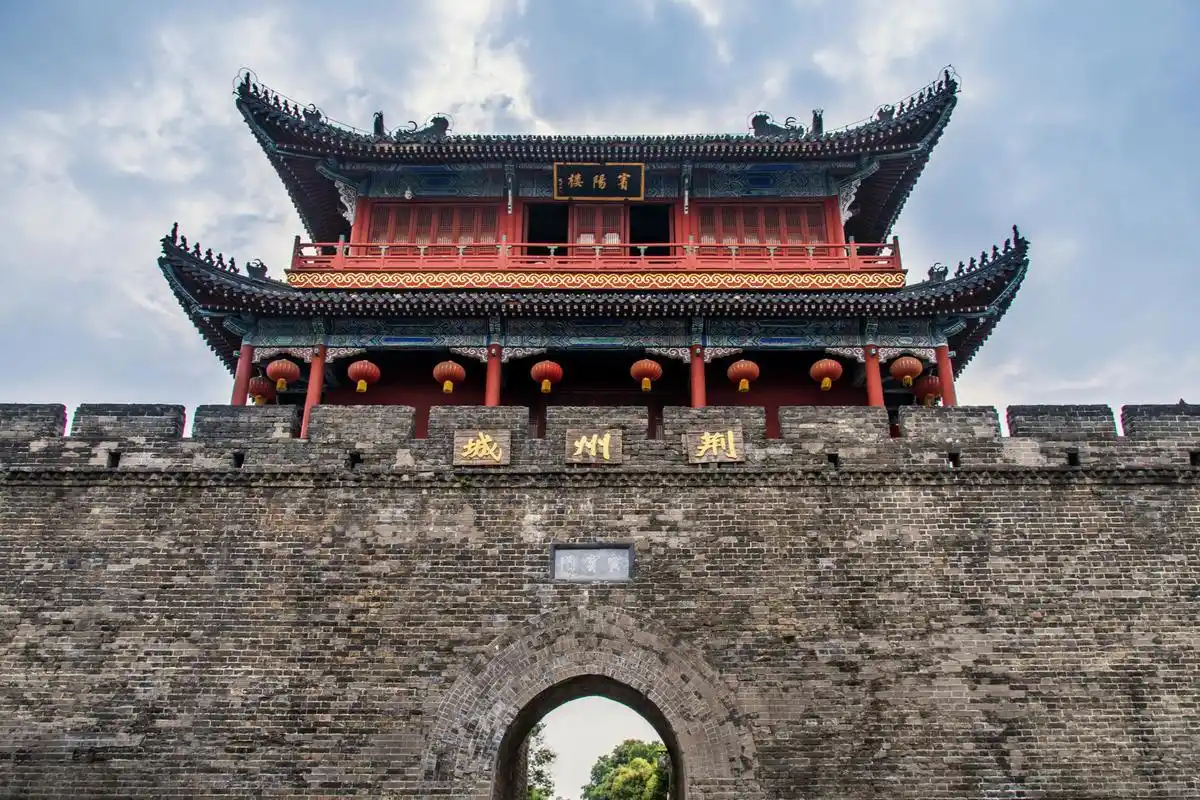 Jingzhou Ancient City traces its origins to the Spring and Autumn and Warring States periods, making it nearly three millennia old and one of China's oldest continuously inhabited urban centers. It rose to prominence as a strategic stronghold of the Chu kingdom and later became inseparable from the Three Kingdoms saga: it was here that the deified general Guan Yu held his legendary command, giving rise to the famous saying "losing Jingzhou through carelessness." Massive Ming and Qing-era reconstructions produced the remarkably intact fortress you see today, earning it designation as a national key cultural relic protection site. In global terms, its age and scale place it in league with Rome's Servian walls or the medieval citadels of Carcassonne.
The irregular elliptical wall stretches 11.28 km, averaging 8.83 m in height, and showcases an unusually sophisticated three-layered defense system of water moat, brick-faced ramparts, and earthen core—a configuration rarely seen elsewhere in China. Visitors can still spot ancient kiln inscriptions stamped into some of the bricks. The eastern Binyang Tower is the prime vantage point, offering commanding views over the moat and barbican that reveal the genius of premodern military engineering often likened to the layered defenses of the Tower of London or Valletta.
Cultural landmarks cluster within the walls. Zhang Juzheng's meticulously restored residence evokes the refined world of the Ming-dynasty Grand Secretary, its red walls and timber halls perfect for lovers of heritage architecture. The Guan Yu Temple, one of the oldest in China dedicated to the warrior-god, anchors its courtyard with an ancient Ming-era ginkgo tree and a replica of the famed Green Dragon Crescent Blade. Nearby, the Guan Gong Garden features a striking 58-meter statue of the deified general—an essential stop for any Three Kingdoms devotee.
A short walk from the old town, the Jingzhou Museum—a free, nationally ranked institution—houses extraordinary treasures including a remarkably preserved Western Han nobleman, the Sword of the King of Yue, and exquisite Warring States silks. Advance booking is recommended, and the museum pairs naturally with a walking tour of the ancient city, serving as the ideal primer on Chu culture and Three Kingdoms history.
Night brings Jingzhou's most enchanting experience: a painted pleasure-boat cruise along the moat paired with the Binyang Tower's 3D light-and-sound spectacle, including the immersive performance "The Jingzhou Moat Decree." The illuminated walls rising from the dark water create an atmosphere far more atmospheric than any daytime visit. Spring or early summer evenings are best for this luminous encounter with "living history."
Admission to the walls is free, while tower access and attractions require tickets; a 115-yuan combo pass covers Binyang Tower, Zhang Juzheng's residence, the Guan Yu Temple, a loop shuttle, and the boat cruise. Plan a half to full day, ideally combining morning wall-walking and museum visits with an evening boat ride. For authentic Chu cuisine, head to Zhang Juzheng Street or Dasai Lane, where local specialties like Jingzhou fish cake, guokui flatbread, and the morning noodle ritual known as "zaotang mian" reward curious foodies handsomely.
Jingzhou Ancient City traces its origins to the Spring and Autumn and Warring States periods, making it nearly three millennia old and one of China's oldest continuously inhabited urban centers. It rose to prominence as a strategic stronghold of the Chu kingdom and later became inseparable from the Three Kingdoms saga: it was here that the deified general Guan Yu held his legendary command, giving rise to the famous saying "losing Jingzhou through carelessness." Massive Ming and Qing-era reconstructions produced the remarkably intact fortress you see today, earning it designation as a national key cultural relic protection site. In global terms, its age and scale place it in league with Rome's Servian walls or the medieval citadels of Carcassonne.
The irregular elliptical wall stretches 11.28 km, averaging 8.83 m in height, and showcases an unusually sophisticated three-layered defense system of water moat, brick-faced ramparts, and earthen core—a configuration rarely seen elsewhere in China. Visitors can still spot ancient kiln inscriptions stamped into some of the bricks. The eastern Binyang Tower is the prime vantage point, offering commanding views over the moat and barbican that reveal the genius of premodern military engineering often likened to the layered defenses of the Tower of London or Valletta.
Cultural landmarks cluster within the walls. Zhang Juzheng's meticulously restored residence evokes the refined world of the Ming-dynasty Grand Secretary, its red walls and timber halls perfect for lovers of heritage architecture. The Guan Yu Temple, one of the oldest in China dedicated to the warrior-god, anchors its courtyard with an ancient Ming-era ginkgo tree and a replica of the famed Green Dragon Crescent Blade. Nearby, the Guan Gong Garden features a striking 58-meter statue of the deified general—an essential stop for any Three Kingdoms devotee.
A short walk from the old town, the Jingzhou Museum—a free, nationally ranked institution—houses extraordinary treasures including a remarkably preserved Western Han nobleman, the Sword of the King of Yue, and exquisite Warring States silks. Advance booking is recommended, and the museum pairs naturally with a walking tour of the ancient city, serving as the ideal primer on Chu culture and Three Kingdoms history.
Night brings Jingzhou's most enchanting experience: a painted pleasure-boat cruise along the moat paired with the Binyang Tower's 3D light-and-sound spectacle, including the immersive performance "The Jingzhou Moat Decree." The illuminated walls rising from the dark water create an atmosphere far more atmospheric than any daytime visit. Spring or early summer evenings are best for this luminous encounter with "living history."
Admission to the walls is free, while tower access and attractions require tickets; a 115-yuan combo pass covers Binyang Tower, Zhang Juzheng's residence, the Guan Yu Temple, a loop shuttle, and the boat cruise. Plan a half to full day, ideally combining morning wall-walking and museum visits with an evening boat ride. For authentic Chu cuisine, head to Zhang Juzheng Street or Dasai Lane, where local specialties like Jingzhou fish cake, guokui flatbread, and the morning noodle ritual known as "zaotang mian" reward curious foodies handsomely.