Jingzhou Ancient City Wall
⭐ 3.80
Jingzhou Ancient City Wall, Jingzhou District, Jingzhou City, Hubei Province, China
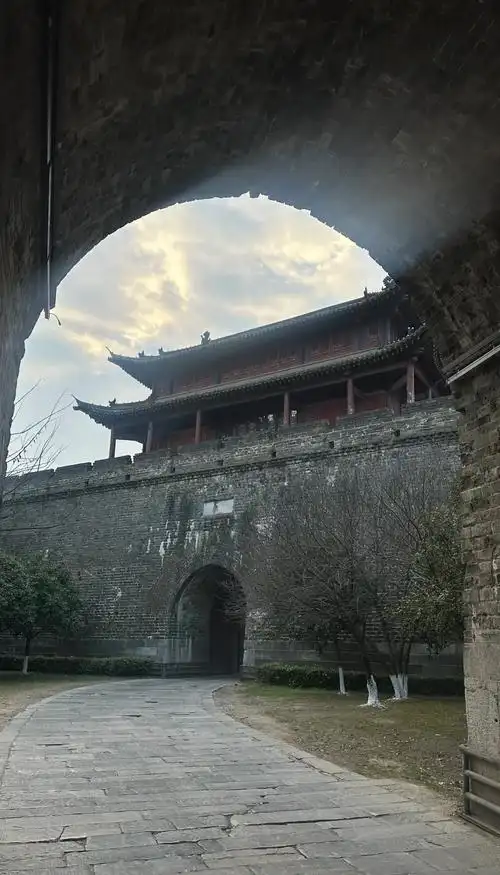 Jingzhou's fortifications trace their origins to the Spring and Autumn period (770-476 BCE), when this strategic Yangtze River hub served as the southern capital of the powerful Chu state—an era that paralleled the flourishing of Greek city-states and early Rome. The city later became a focal point of the Three Kingdoms drama (220-280 CE), immortalized in the Romance of the Three Kingdoms when warlord Guan Yu famously defended it. Comparable in scale to Rome's Aurelian Walls and substantially larger than medieval Dubrovnik or Carcassonne, Jingzhou's 11.28-kilometer circuit stands as the most extensive preserved ancient city wall in southern China.
The wall rises 8.83 meters and measures ten meters thick, bristling with 26 horse-face bastions, hidden soldier chambers, and enclosed urn-city killing grounds. Six monumental gates punctuate the circuit; the most celebrated is Chaozong Tower at the Great North Gate, the sole surviving Qing-dynasty gatehouse built in classic late-imperial style. What truly astonishes visitors is the wall's internal anatomy: cutting through its profile reveals compressed layers of Tang rammed earth, Five Dynasties brickwork, Song retaining walls, and Ming-Qing facing brick—essentially a vertical timeline of Chinese military engineering stacked within a single structure.
Designated a National Key Cultural Relics Protection Site in 1996, the wall is revered as an open-air textbook of fortification evolution. Its atmospheric ramparts inspired poets from Li Bai to Du Fu and continue to anchor local identity—residents practice tai chi at dawn beneath fluttering banners. The adjacent Jingzhou Museum enhances any visit with extraordinary Chu bamboo-slip manuscripts and bronze relics, while Zhang Juzheng's Ming-dynasty residence and a Guandi Temple add literary and martial heritage to a wander through cobbled old streets.
The rampart walkway is freely accessible year-round for strolling, jogging, and cycling—a rare privilege at a major Chinese heritage site. Climbing the principal gate towers, including Binyang Tower at the East Gate, requires a modest ticket of 30-40 yuan; Jingzhou residents enter free with identification. Allow three hours for the recommended route: enter at Binyang Tower, walk north along the wall to Chaozong Tower across the scenic 2-3 kilometer highlight, descend into the old quarter, then finish at the museum.
Spring and autumn offer ideal walking weather, while summer evenings reward visitors with illuminated ramparts and water shows along the surrounding moat. Bring sun protection, water, and sturdy non-slip footwear, as rampart surfaces can be uneven. Unlike many heavily reconstructed Chinese sites, Jingzhou's layered interior and working moat deliver an uncommonly honest encounter with two millennia of urban defense—an experience that rivals Europe's famous fortifications while offering a distinctly Chinese perspective on imperial city life.
Jingzhou's fortifications trace their origins to the Spring and Autumn period (770-476 BCE), when this strategic Yangtze River hub served as the southern capital of the powerful Chu state—an era that paralleled the flourishing of Greek city-states and early Rome. The city later became a focal point of the Three Kingdoms drama (220-280 CE), immortalized in the Romance of the Three Kingdoms when warlord Guan Yu famously defended it. Comparable in scale to Rome's Aurelian Walls and substantially larger than medieval Dubrovnik or Carcassonne, Jingzhou's 11.28-kilometer circuit stands as the most extensive preserved ancient city wall in southern China.
The wall rises 8.83 meters and measures ten meters thick, bristling with 26 horse-face bastions, hidden soldier chambers, and enclosed urn-city killing grounds. Six monumental gates punctuate the circuit; the most celebrated is Chaozong Tower at the Great North Gate, the sole surviving Qing-dynasty gatehouse built in classic late-imperial style. What truly astonishes visitors is the wall's internal anatomy: cutting through its profile reveals compressed layers of Tang rammed earth, Five Dynasties brickwork, Song retaining walls, and Ming-Qing facing brick—essentially a vertical timeline of Chinese military engineering stacked within a single structure.
Designated a National Key Cultural Relics Protection Site in 1996, the wall is revered as an open-air textbook of fortification evolution. Its atmospheric ramparts inspired poets from Li Bai to Du Fu and continue to anchor local identity—residents practice tai chi at dawn beneath fluttering banners. The adjacent Jingzhou Museum enhances any visit with extraordinary Chu bamboo-slip manuscripts and bronze relics, while Zhang Juzheng's Ming-dynasty residence and a Guandi Temple add literary and martial heritage to a wander through cobbled old streets.
The rampart walkway is freely accessible year-round for strolling, jogging, and cycling—a rare privilege at a major Chinese heritage site. Climbing the principal gate towers, including Binyang Tower at the East Gate, requires a modest ticket of 30-40 yuan; Jingzhou residents enter free with identification. Allow three hours for the recommended route: enter at Binyang Tower, walk north along the wall to Chaozong Tower across the scenic 2-3 kilometer highlight, descend into the old quarter, then finish at the museum.
Spring and autumn offer ideal walking weather, while summer evenings reward visitors with illuminated ramparts and water shows along the surrounding moat. Bring sun protection, water, and sturdy non-slip footwear, as rampart surfaces can be uneven. Unlike many heavily reconstructed Chinese sites, Jingzhou's layered interior and working moat deliver an uncommonly honest encounter with two millennia of urban defense—an experience that rivals Europe's famous fortifications while offering a distinctly Chinese perspective on imperial city life.